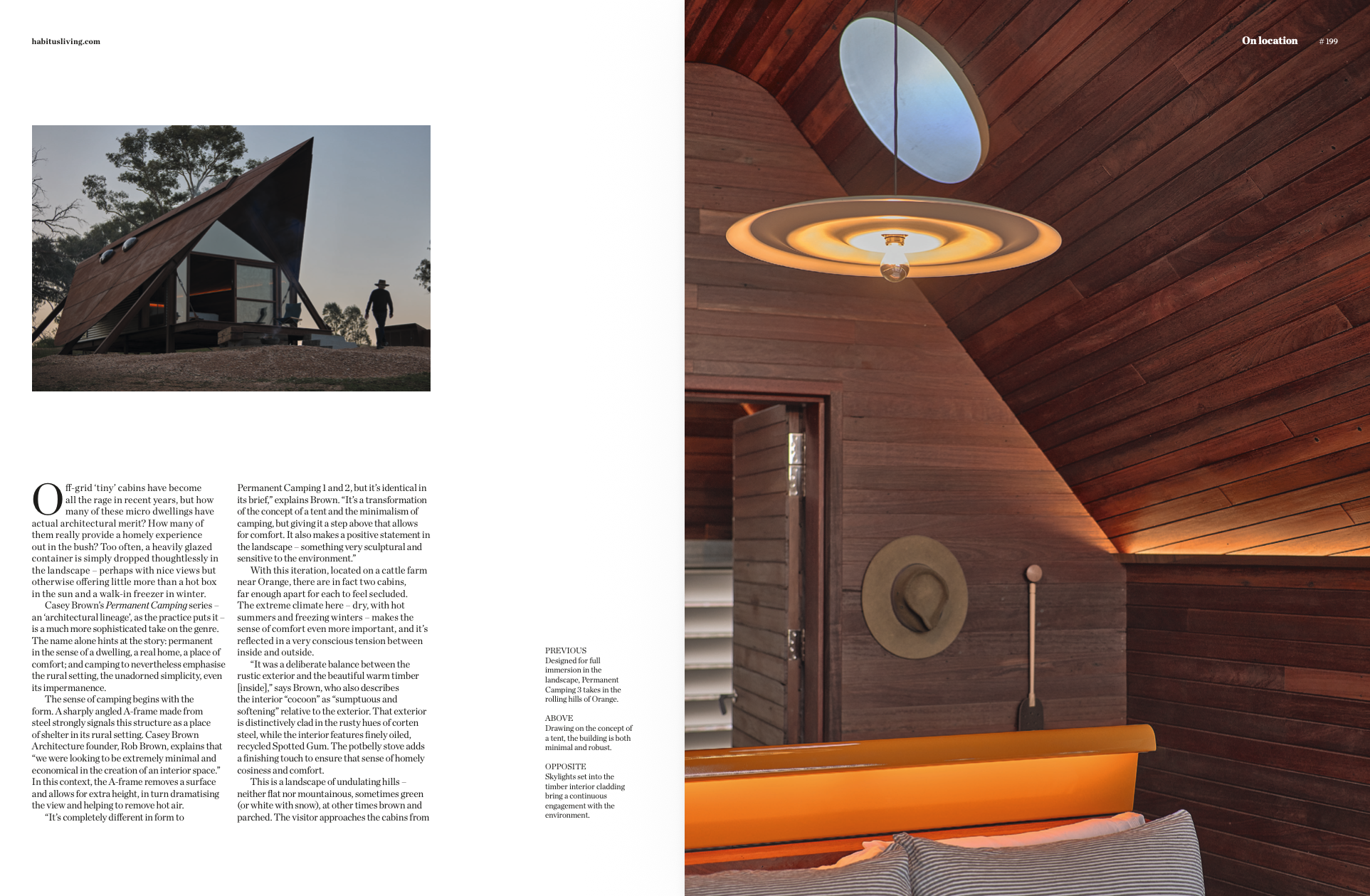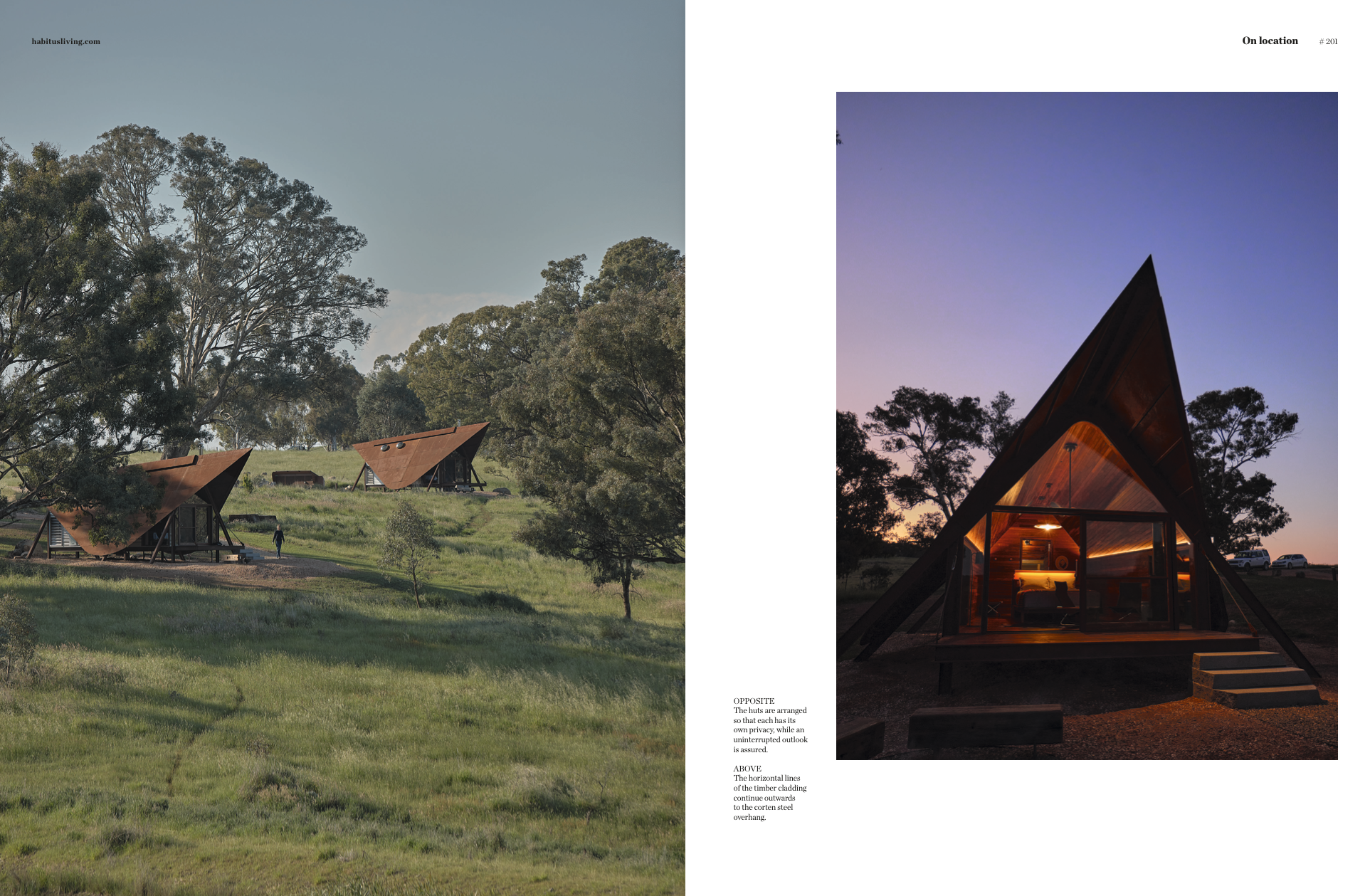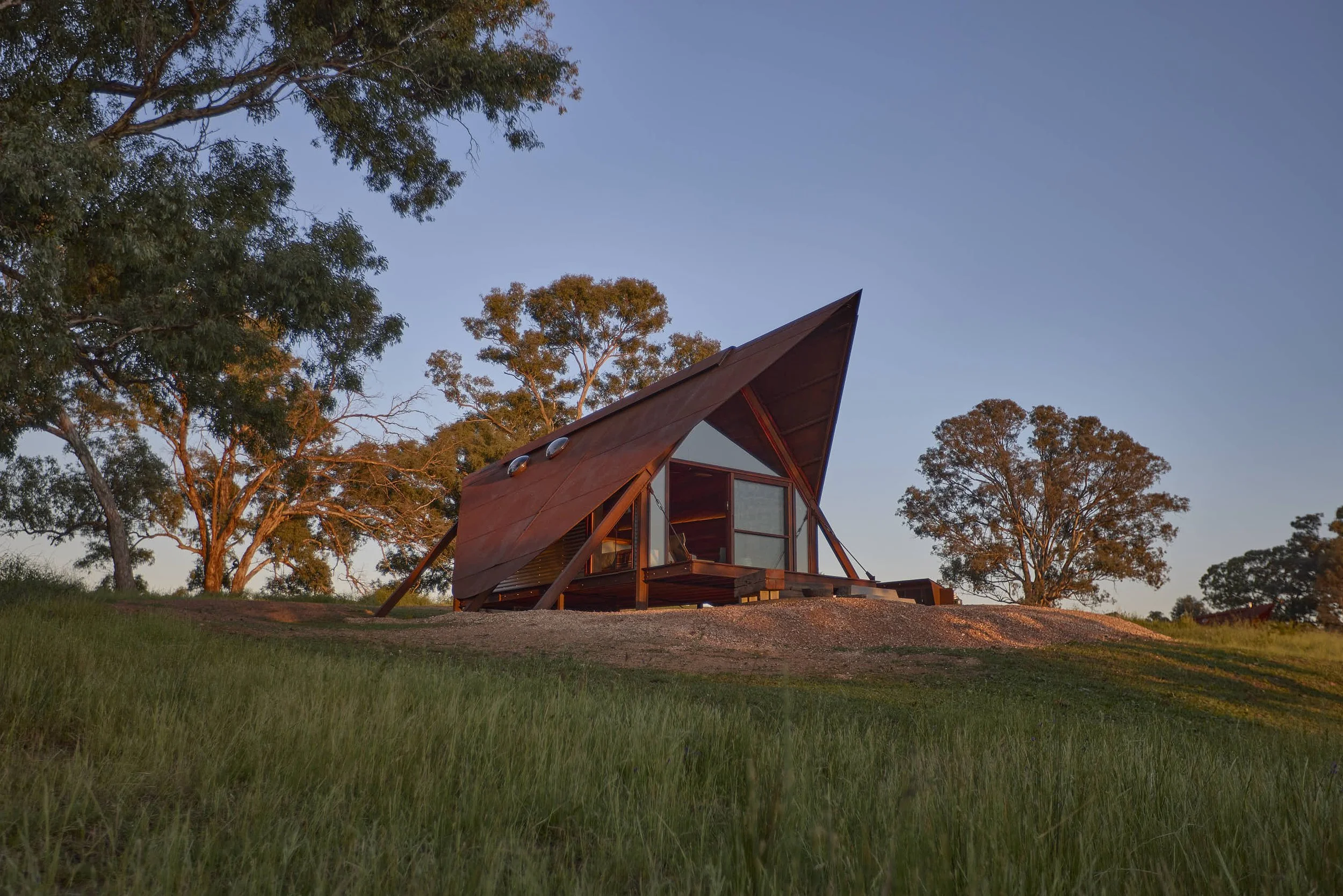
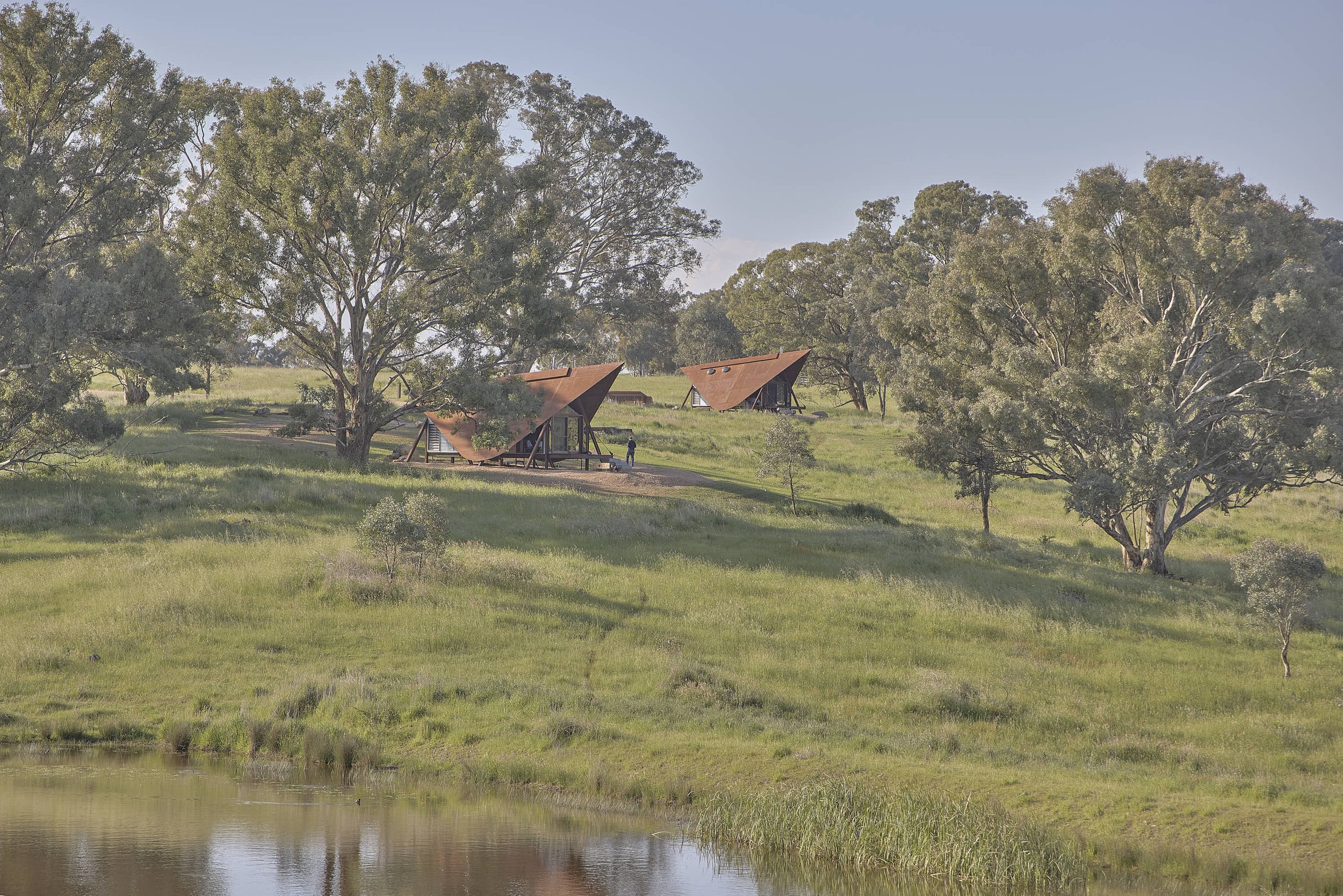
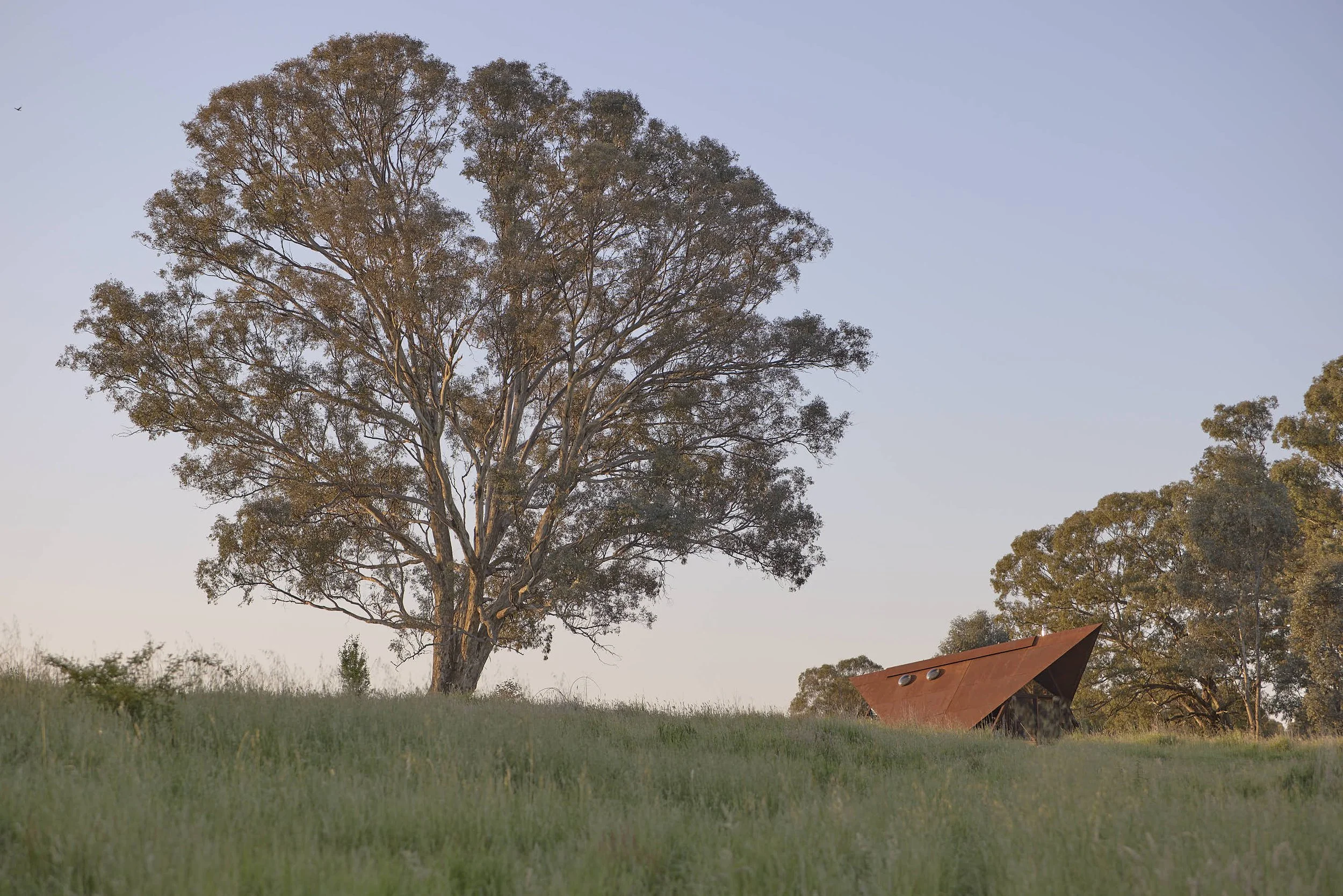
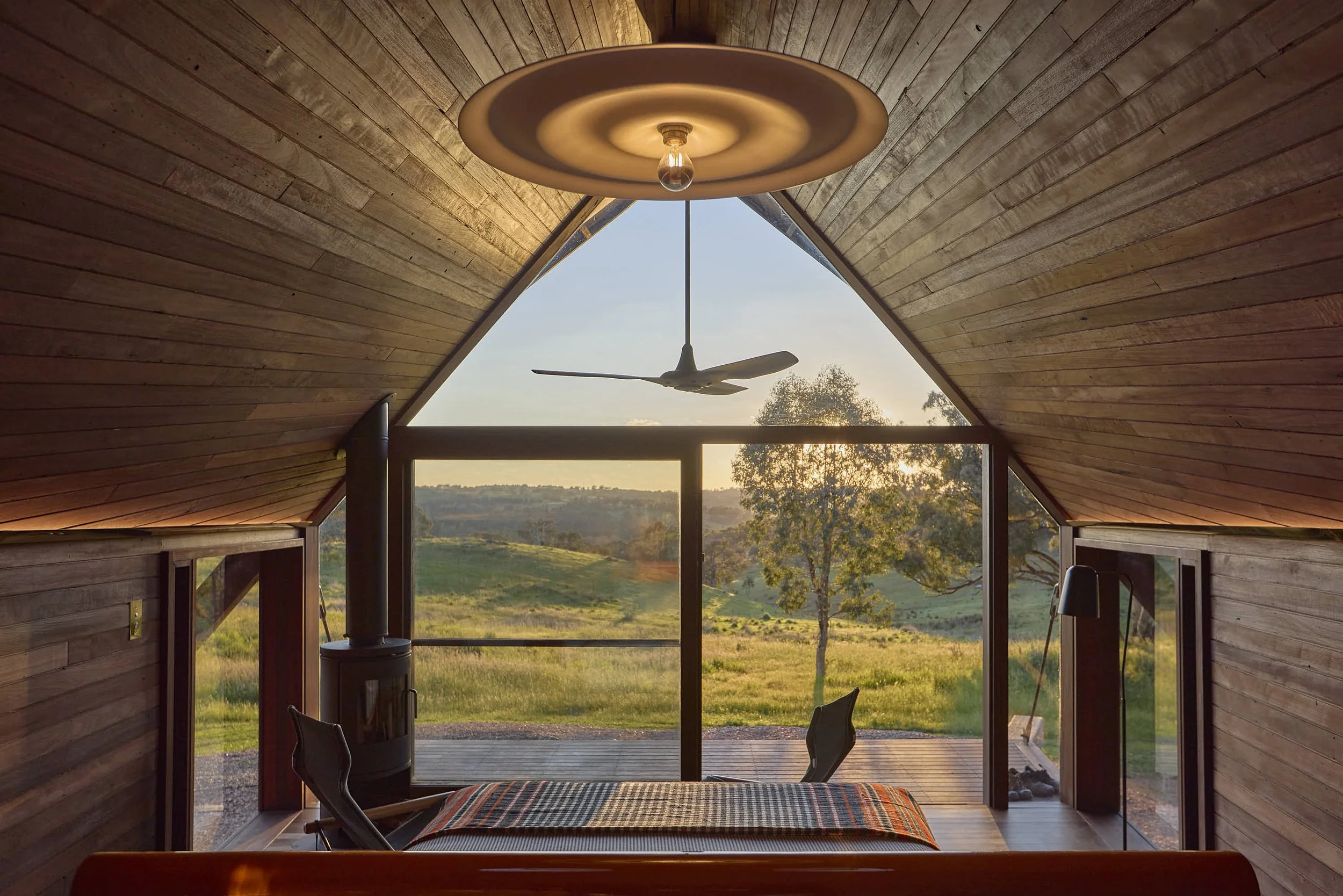
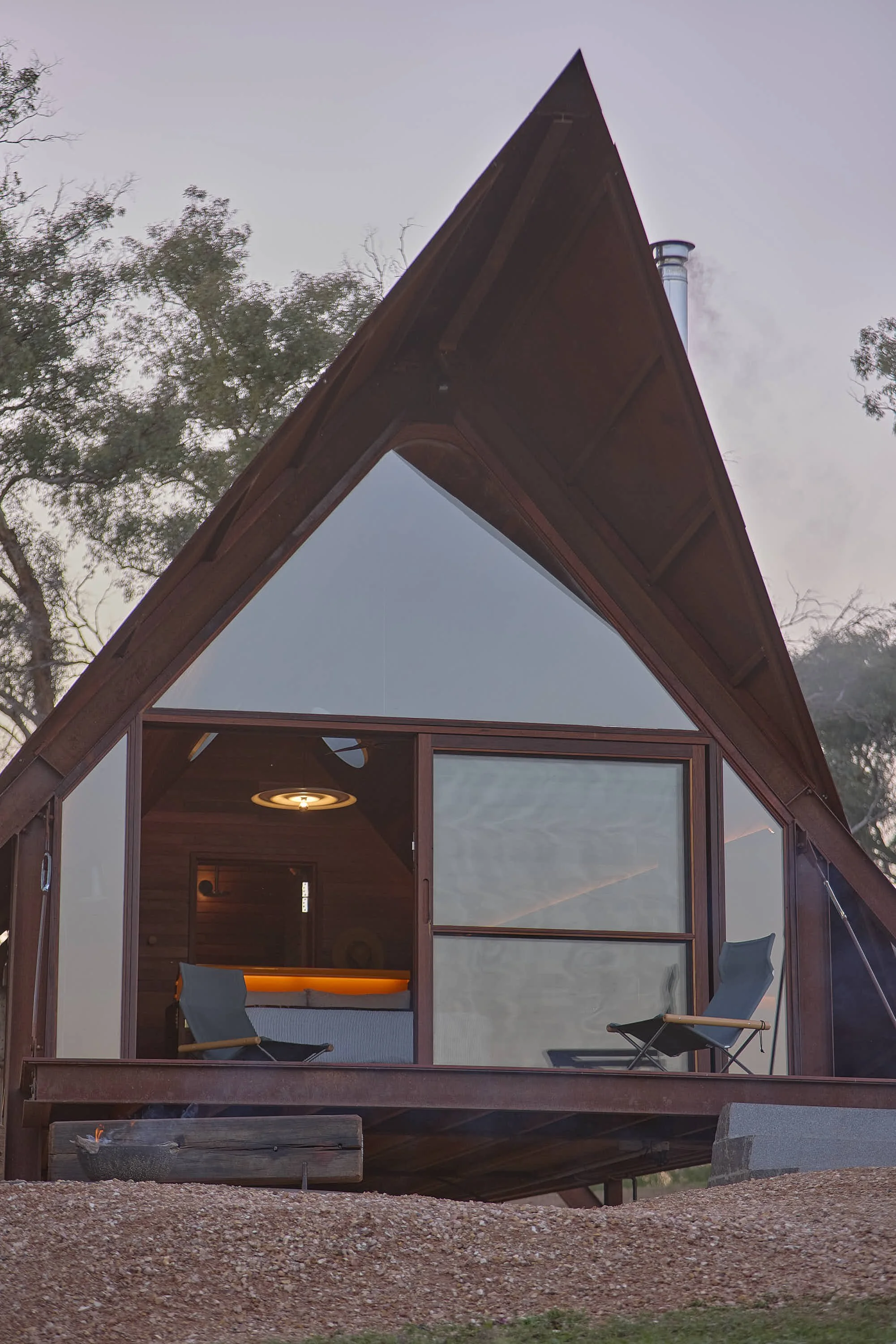
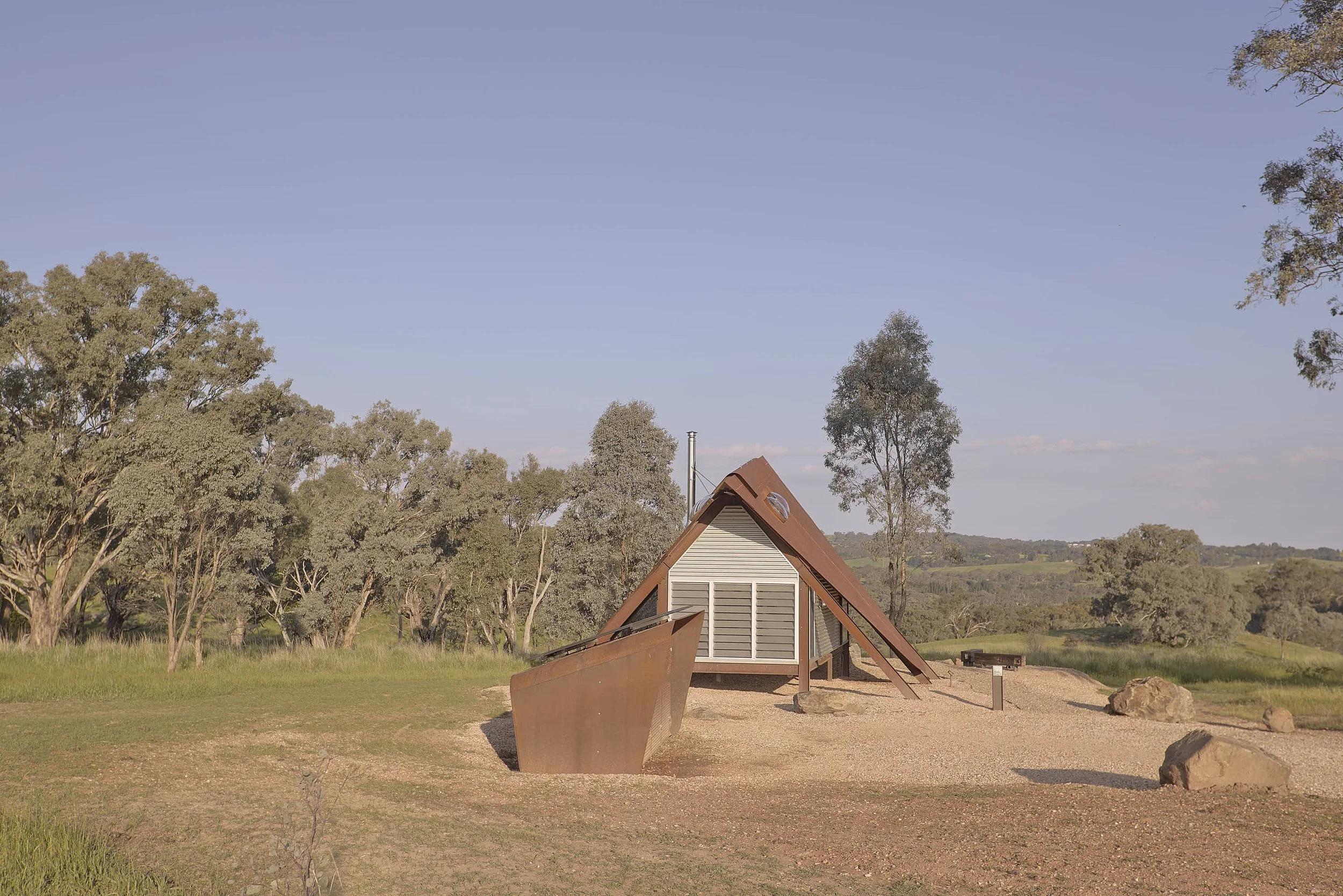
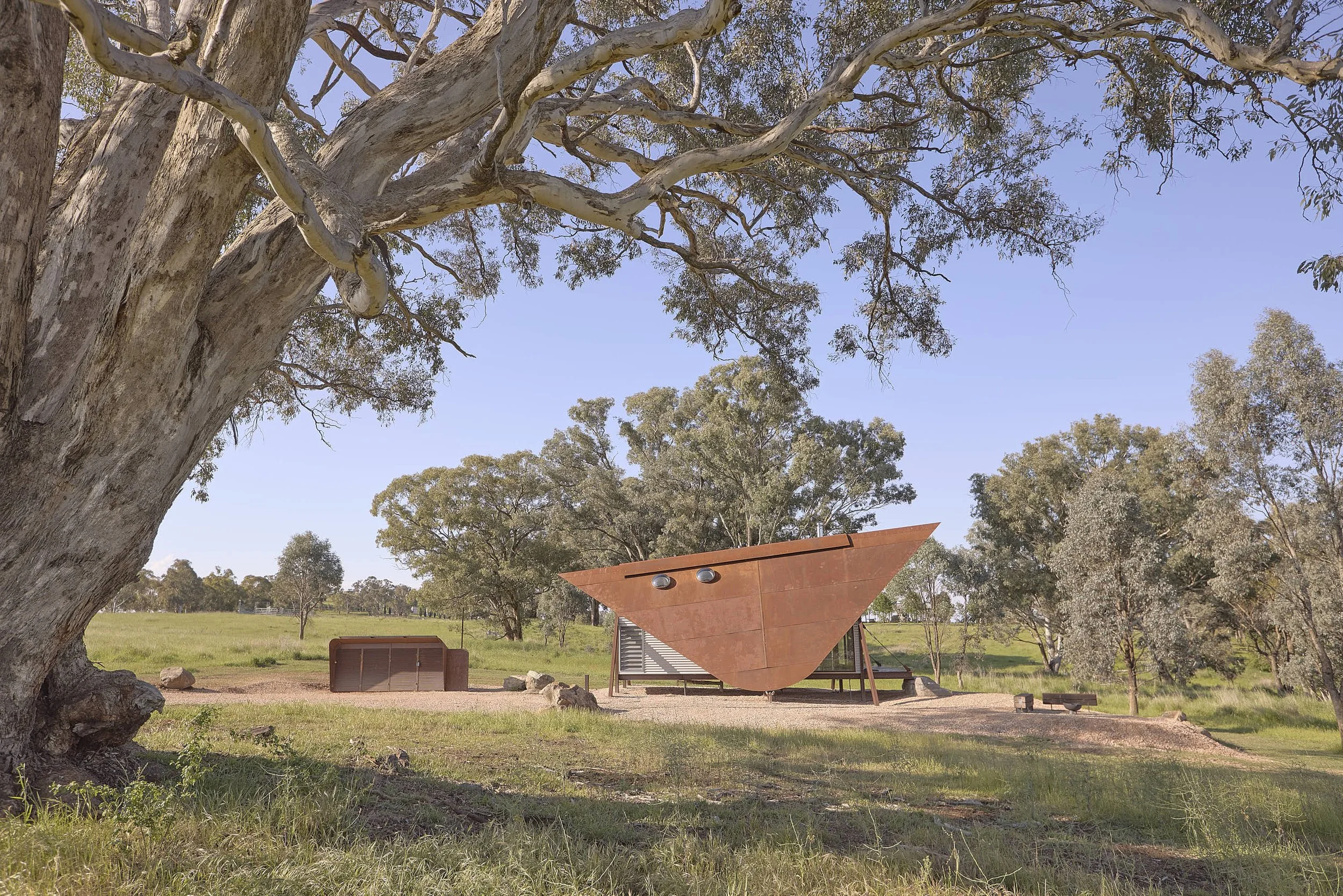
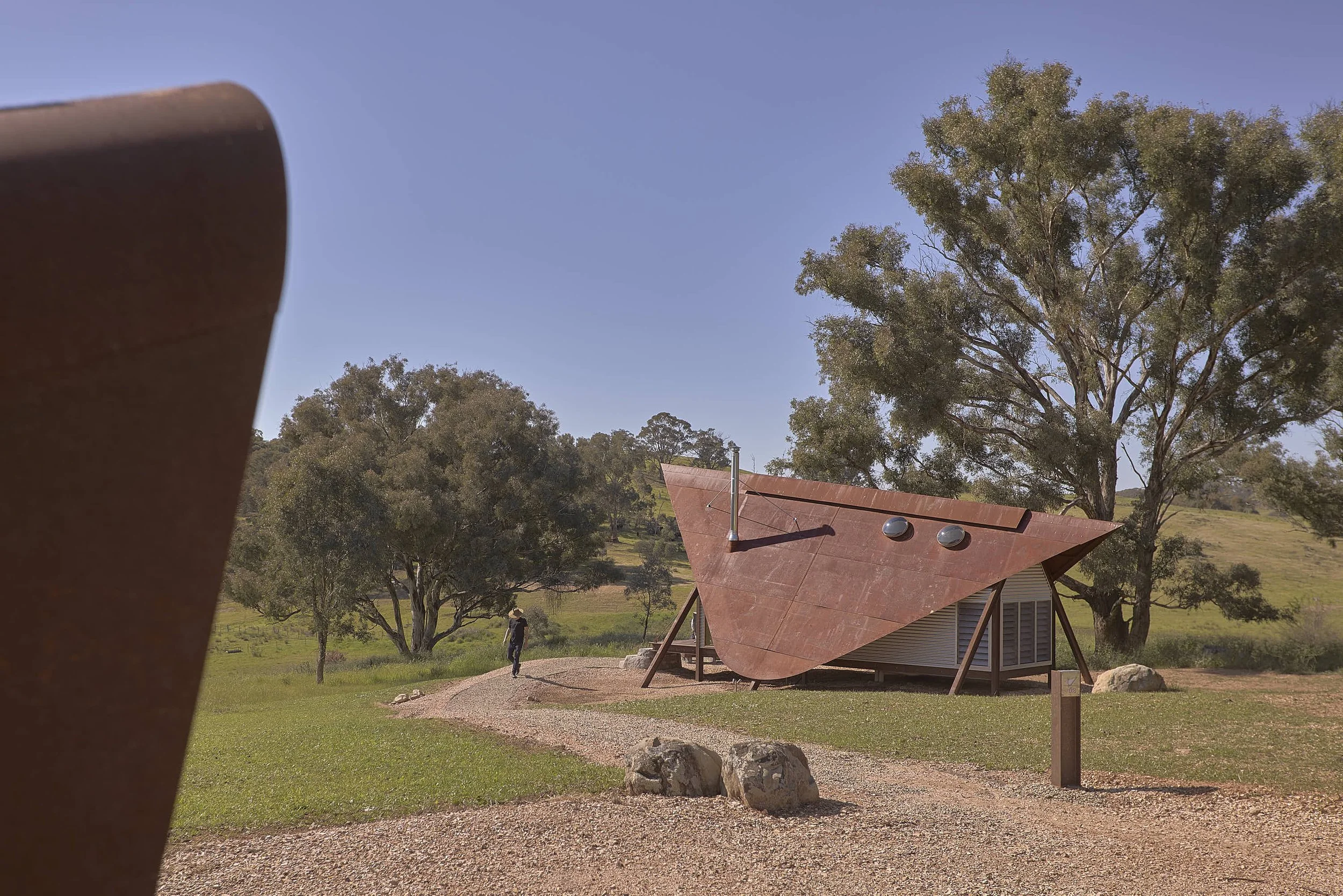
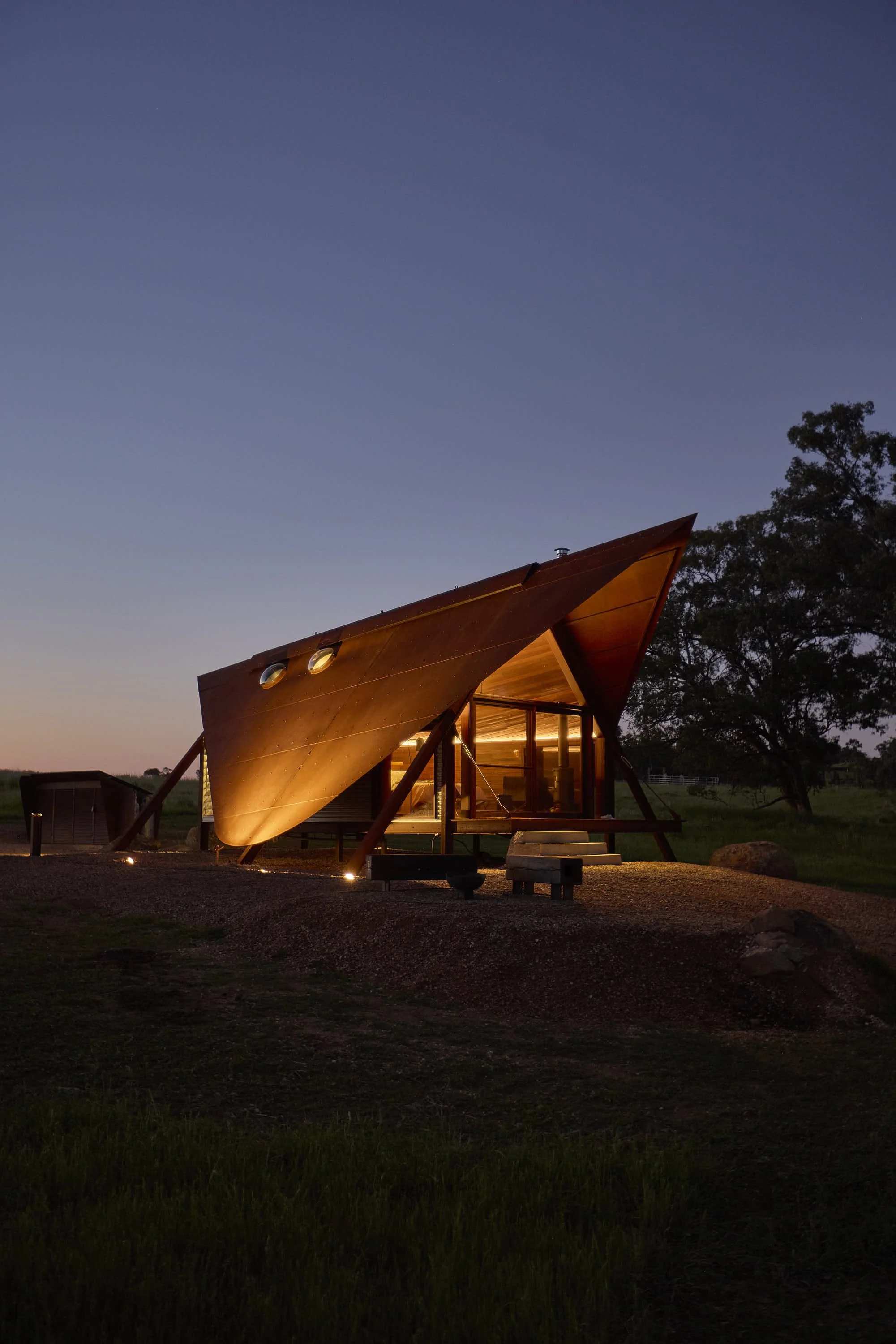
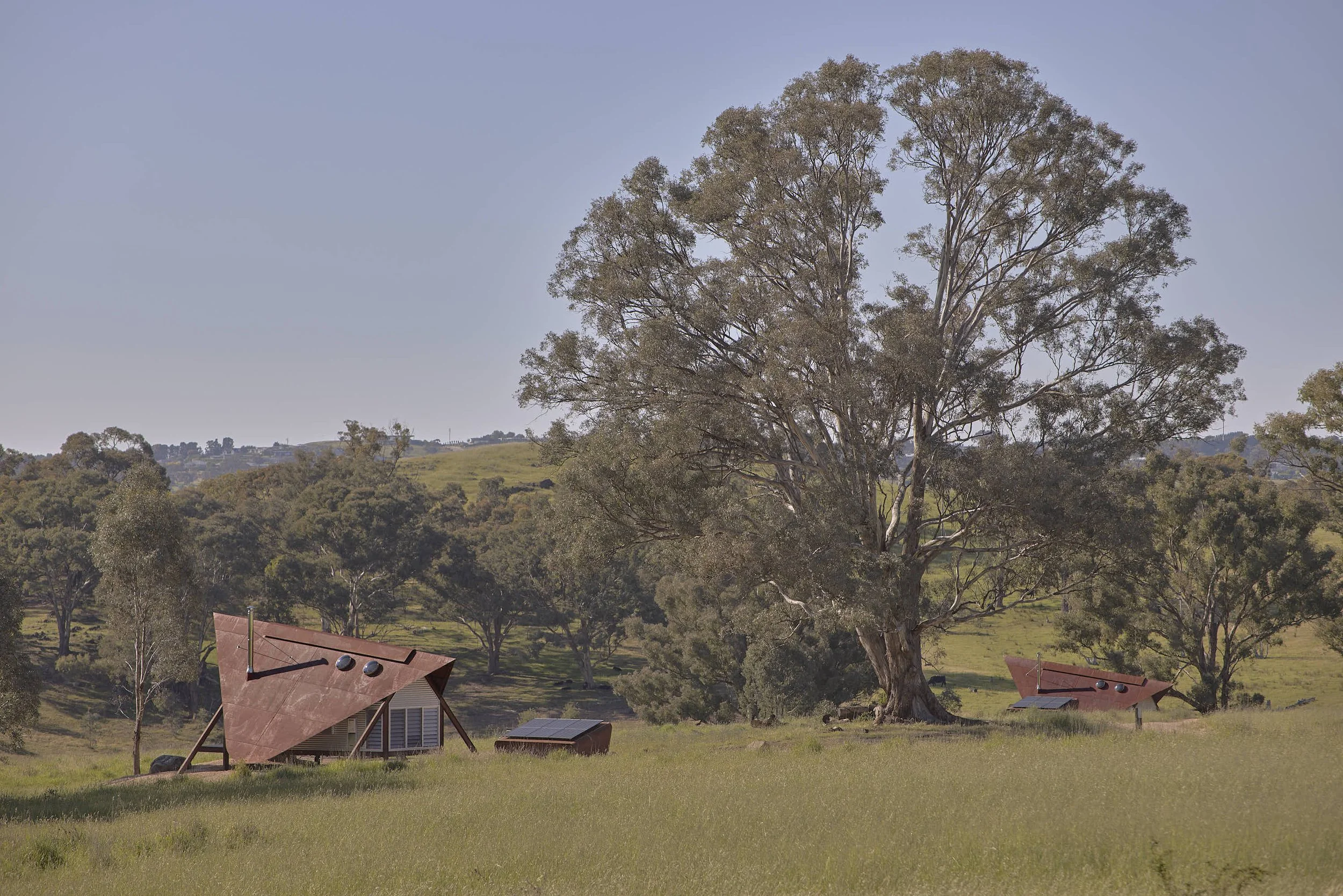
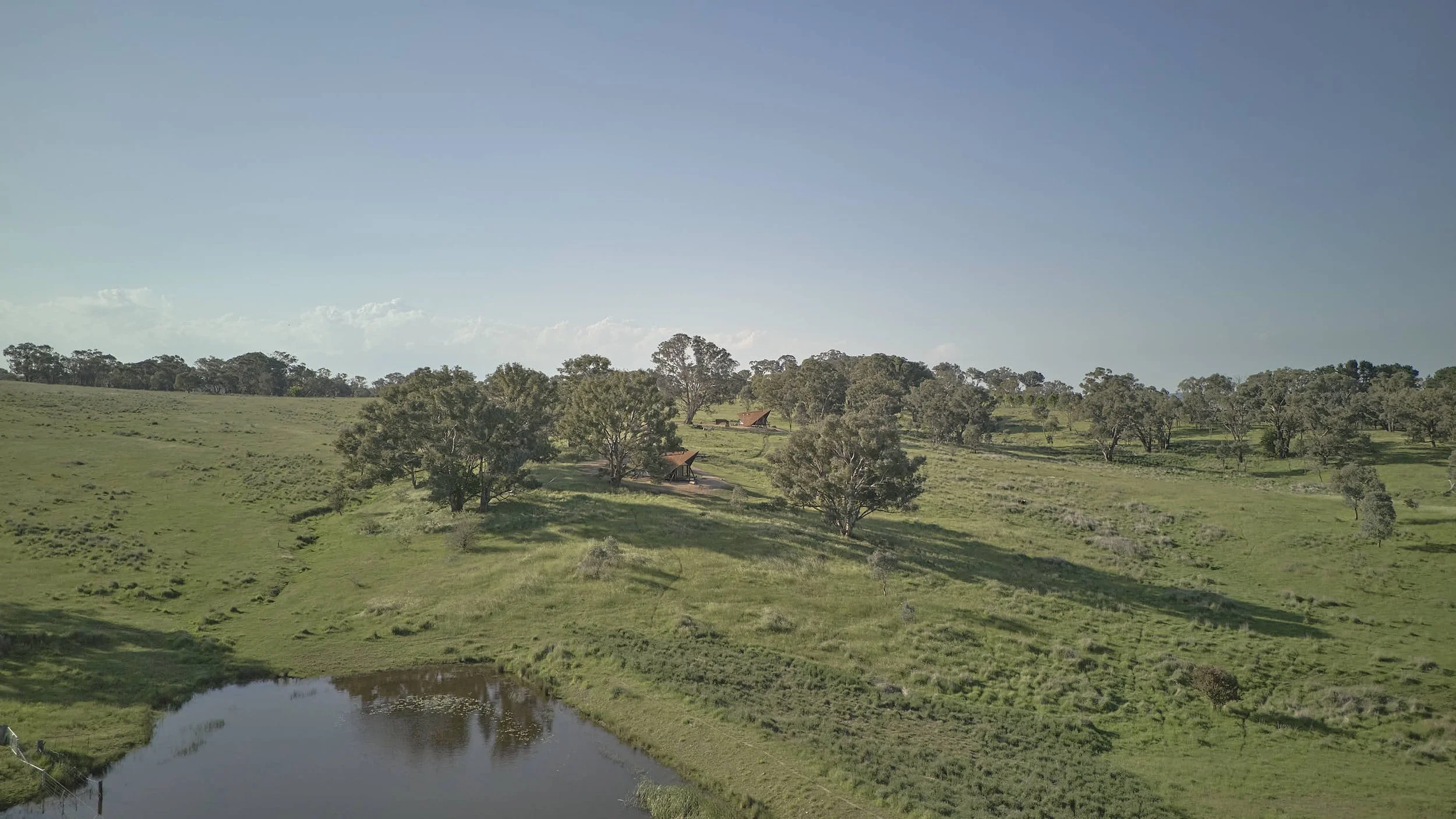
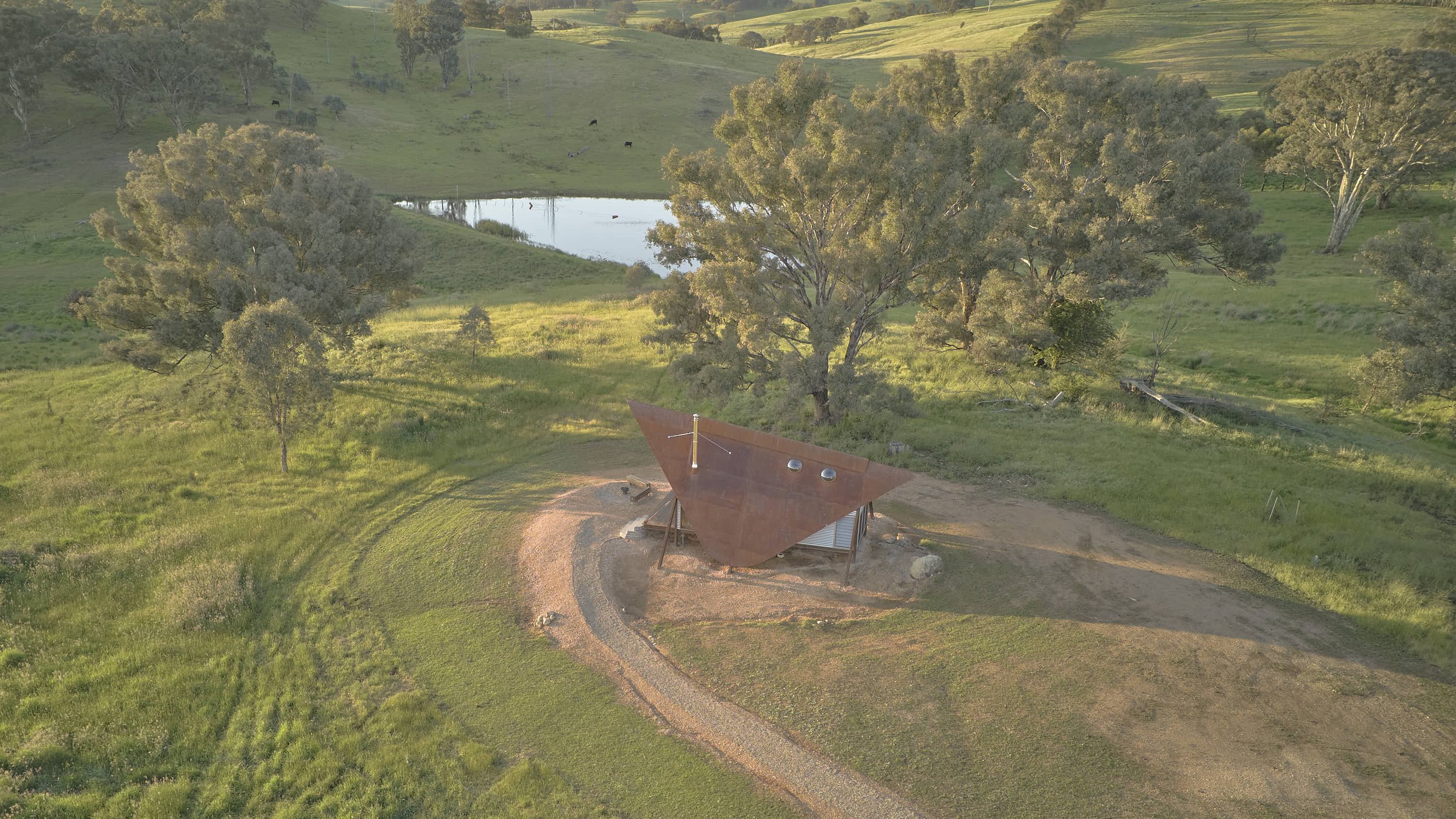
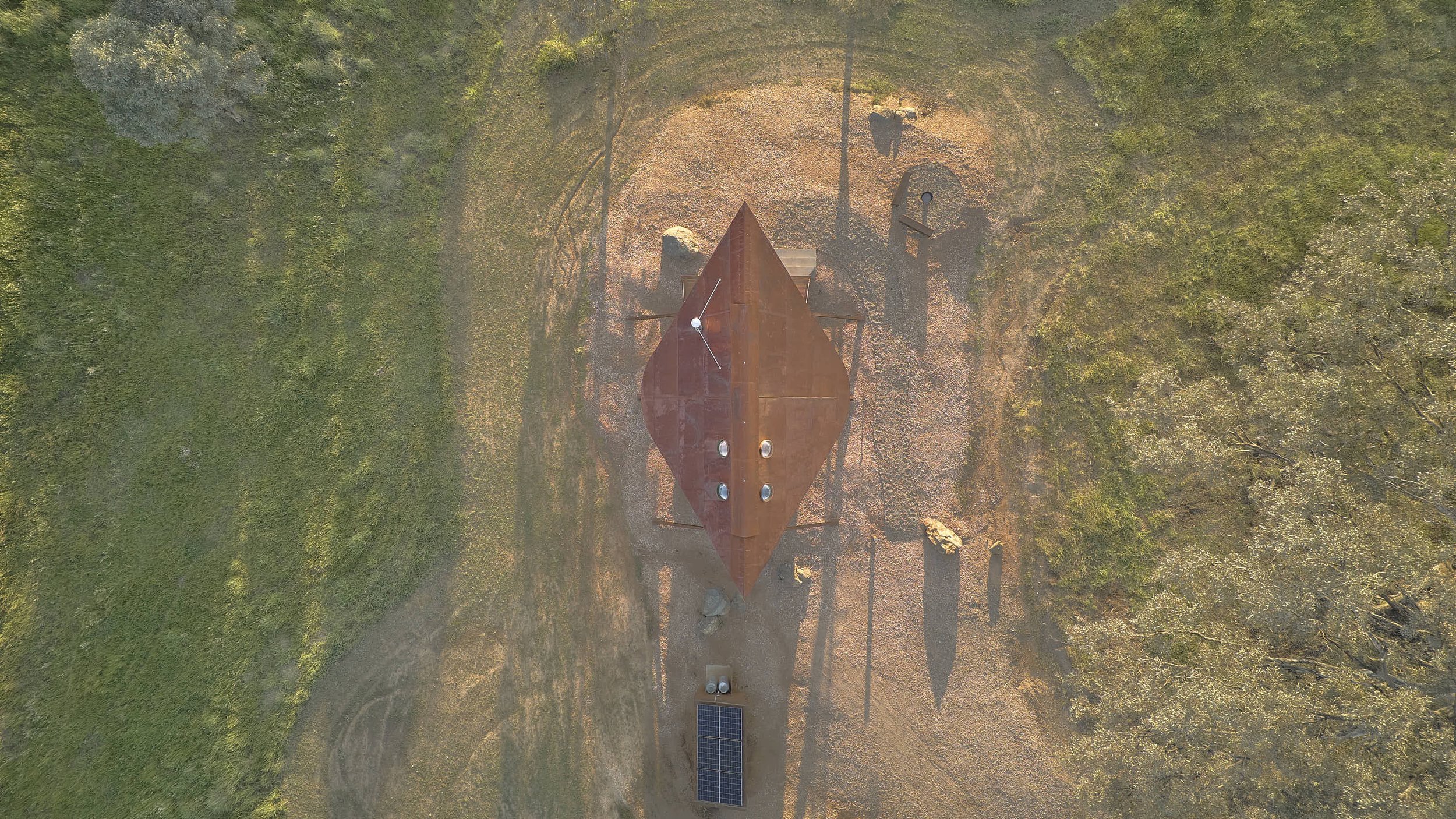
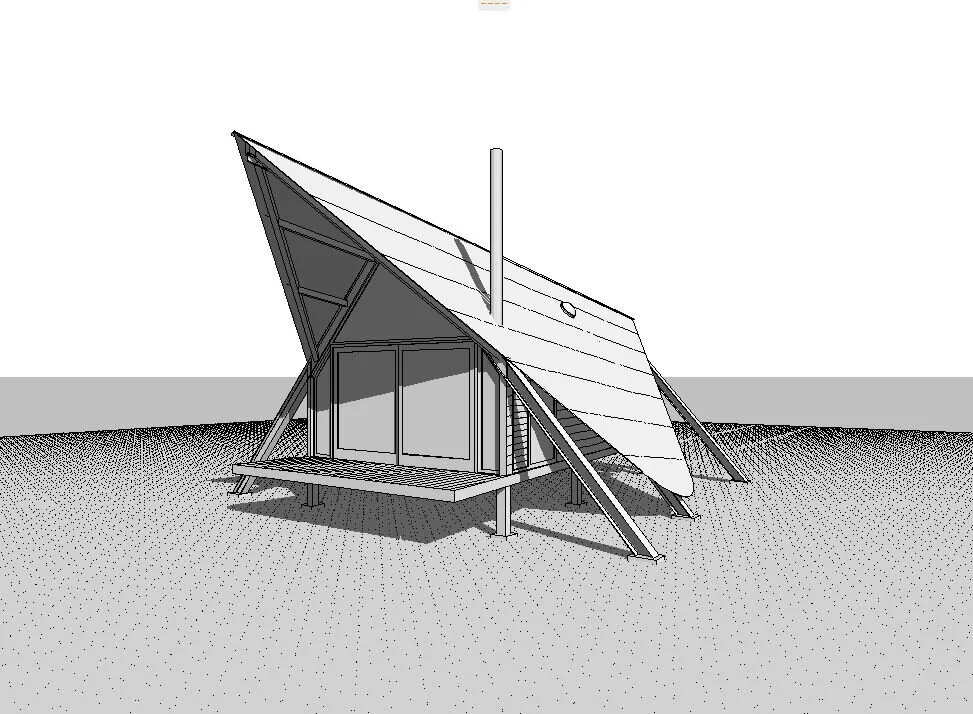
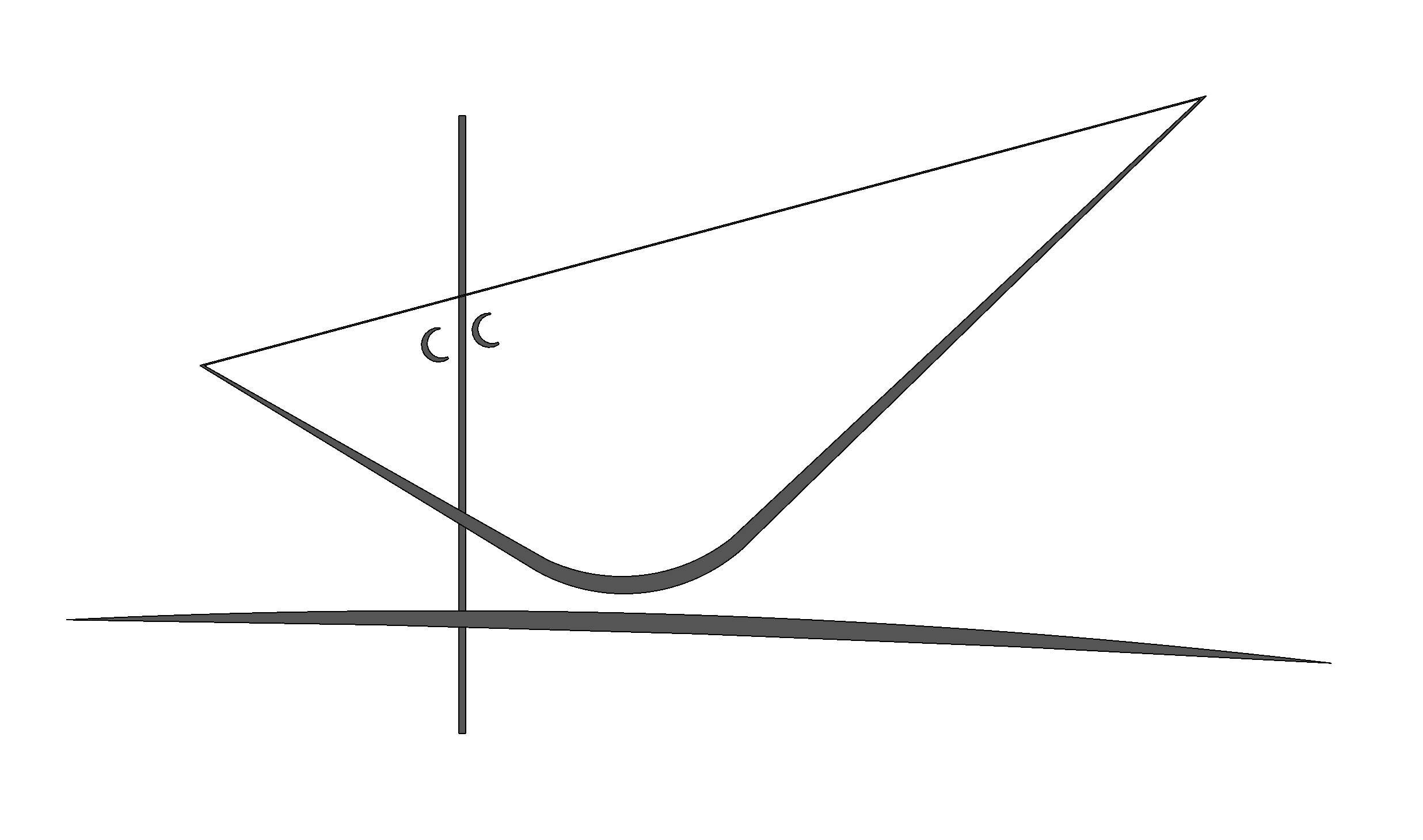
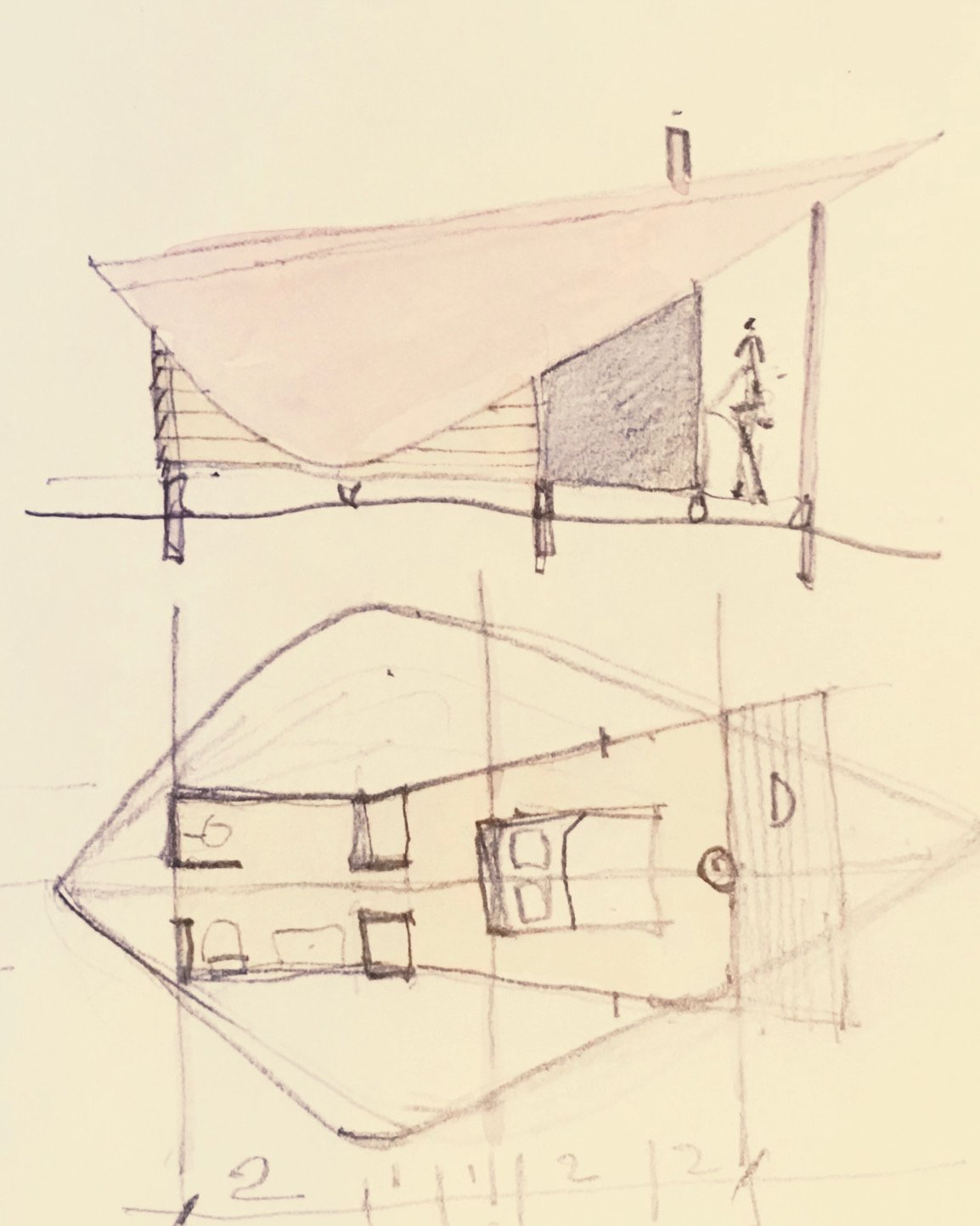
Permanent Camping 3 (PC3) at Orange continues an architectural lineage that began with PC1 in Mudgee and PC2 in Berry, yet stands as its own distinctive response to place, climate, and the evolving ethos of minimal living. Built on a working sheep farm, as short stay boutique accommodation, the cabins are the product of a long process of iterative design. Located some ten minutes outside the NSW regional centre of Orange the project comprises two sharply profiled A-frame steel cabins that rest lightly on the undulating terrain in a form reminiscent of a tent. Their presence is both utilitarian and sculptural, shaped by economy, climate, and the desire for retreat. The cabins had to support reflection, allow engagement with the environment, and offer a degree of shelter that feels both grounded and elevated above everyday life.
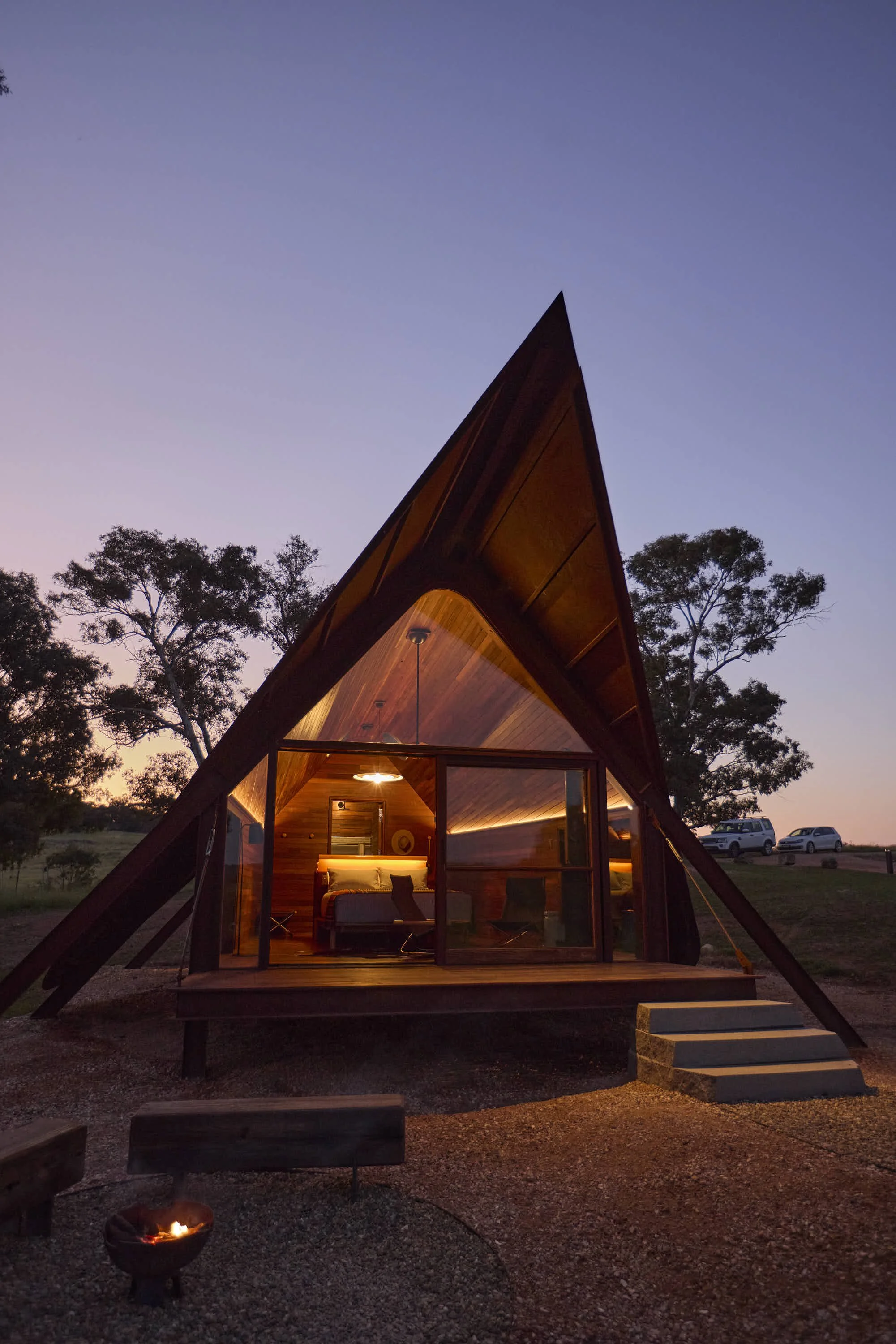
The brief for each cabin was refined over years, it called for an uncompromisingly minimal building for two people; compact, efficient, and deeply connected to the landscape. Like its predecessors, PC3 was conceived as a distilled version of habitation providing only what is essential for comfort. A bed, an outdoor deck, a fireplace, a bathroom, a place to sit, and to pause.
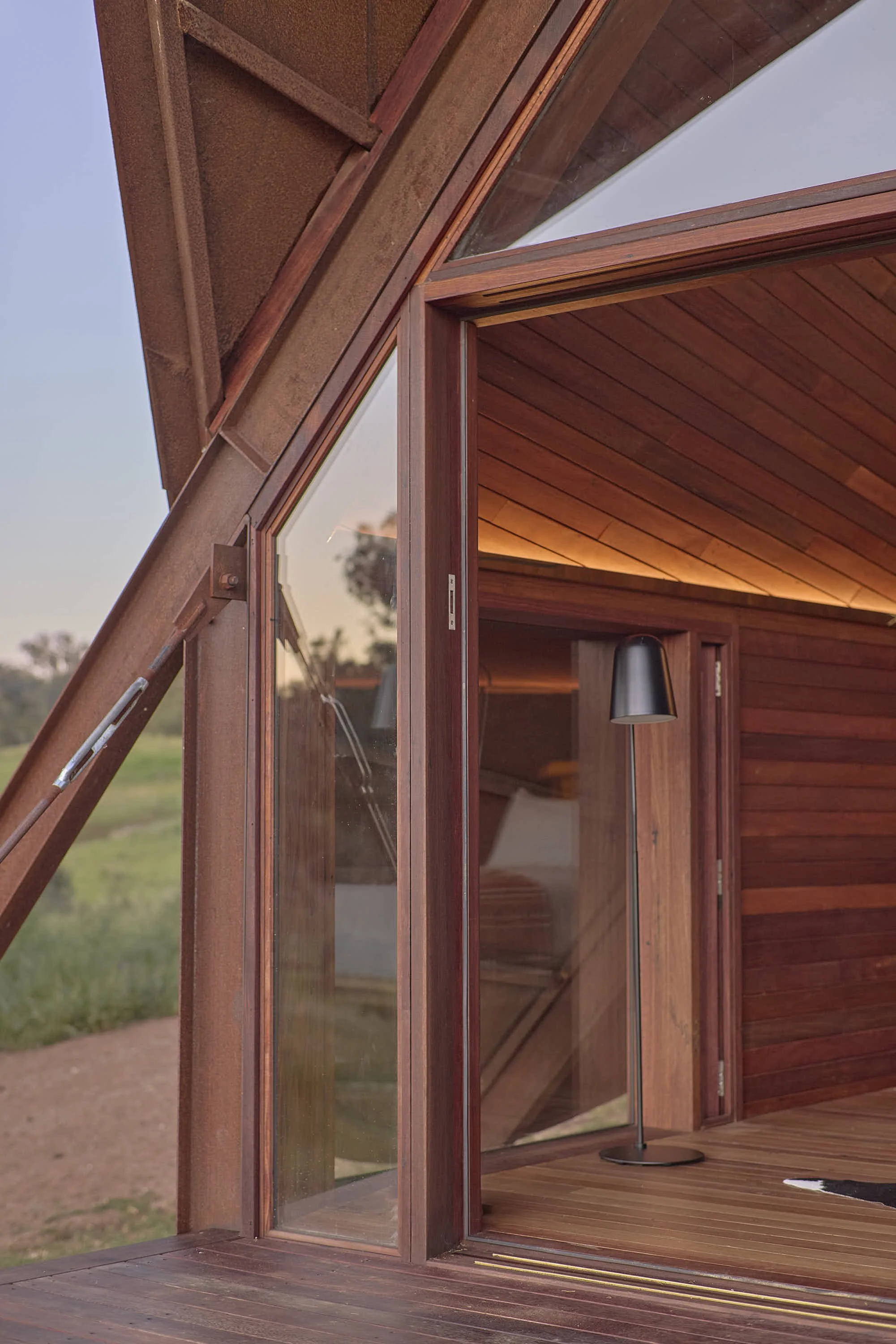
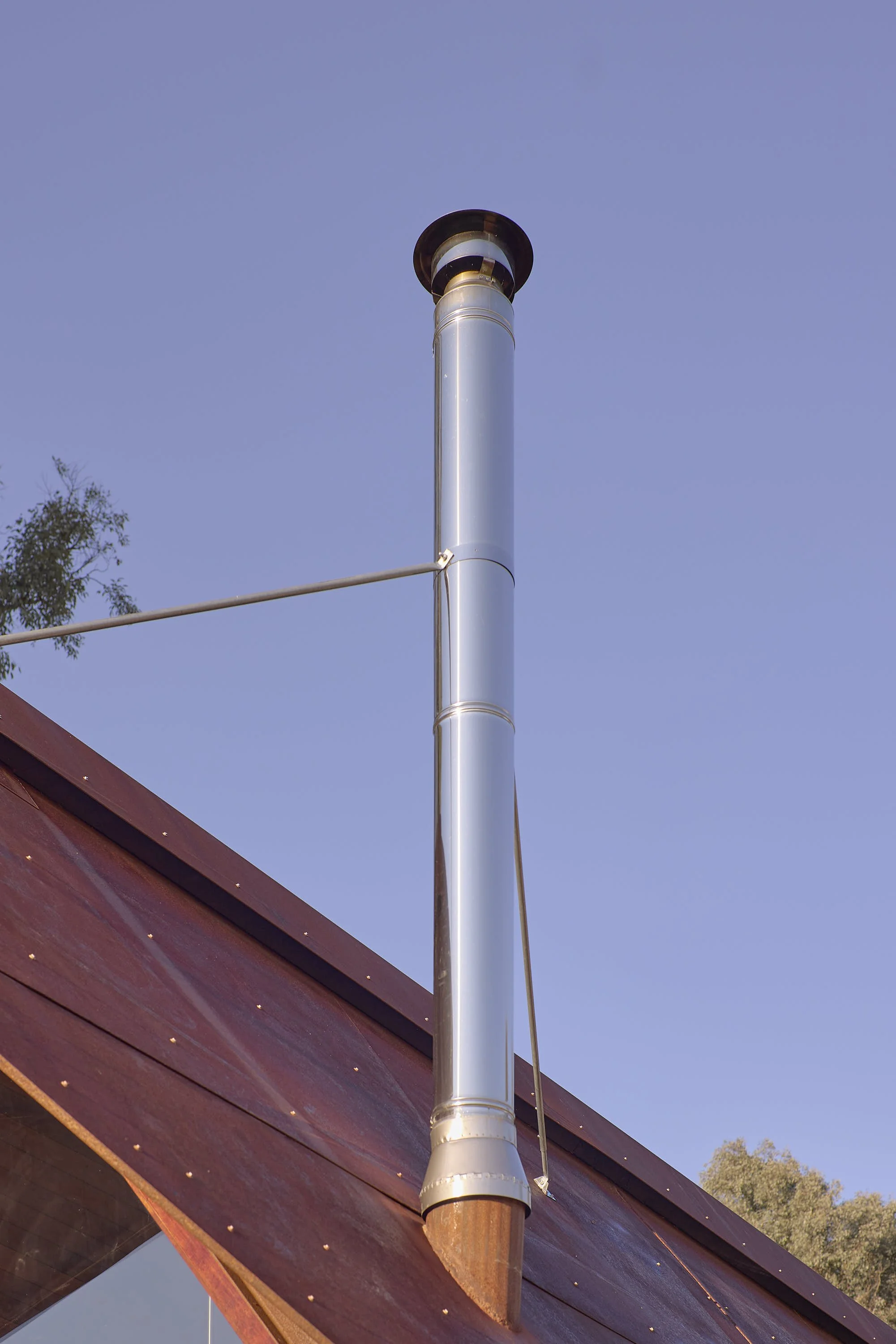
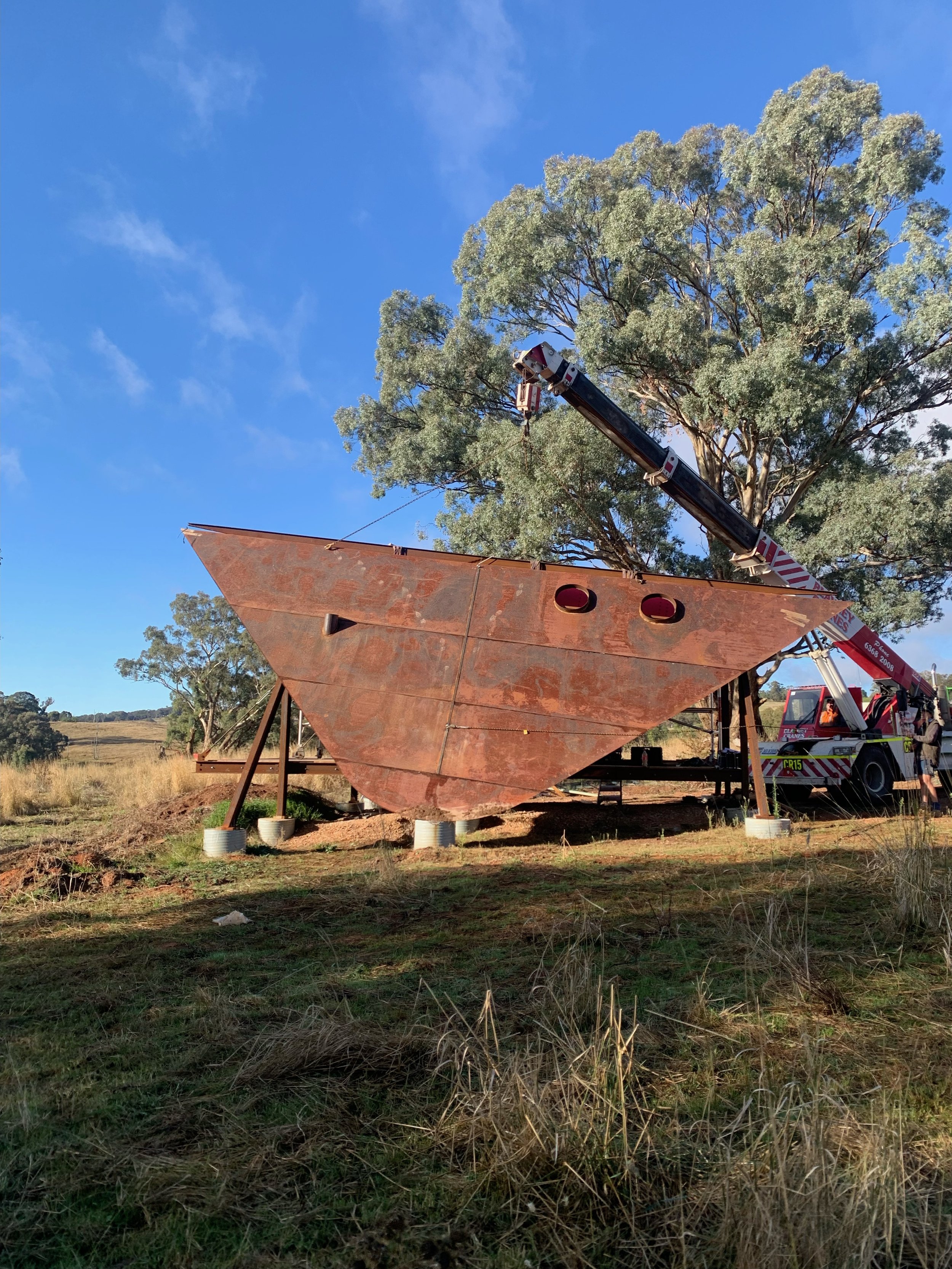
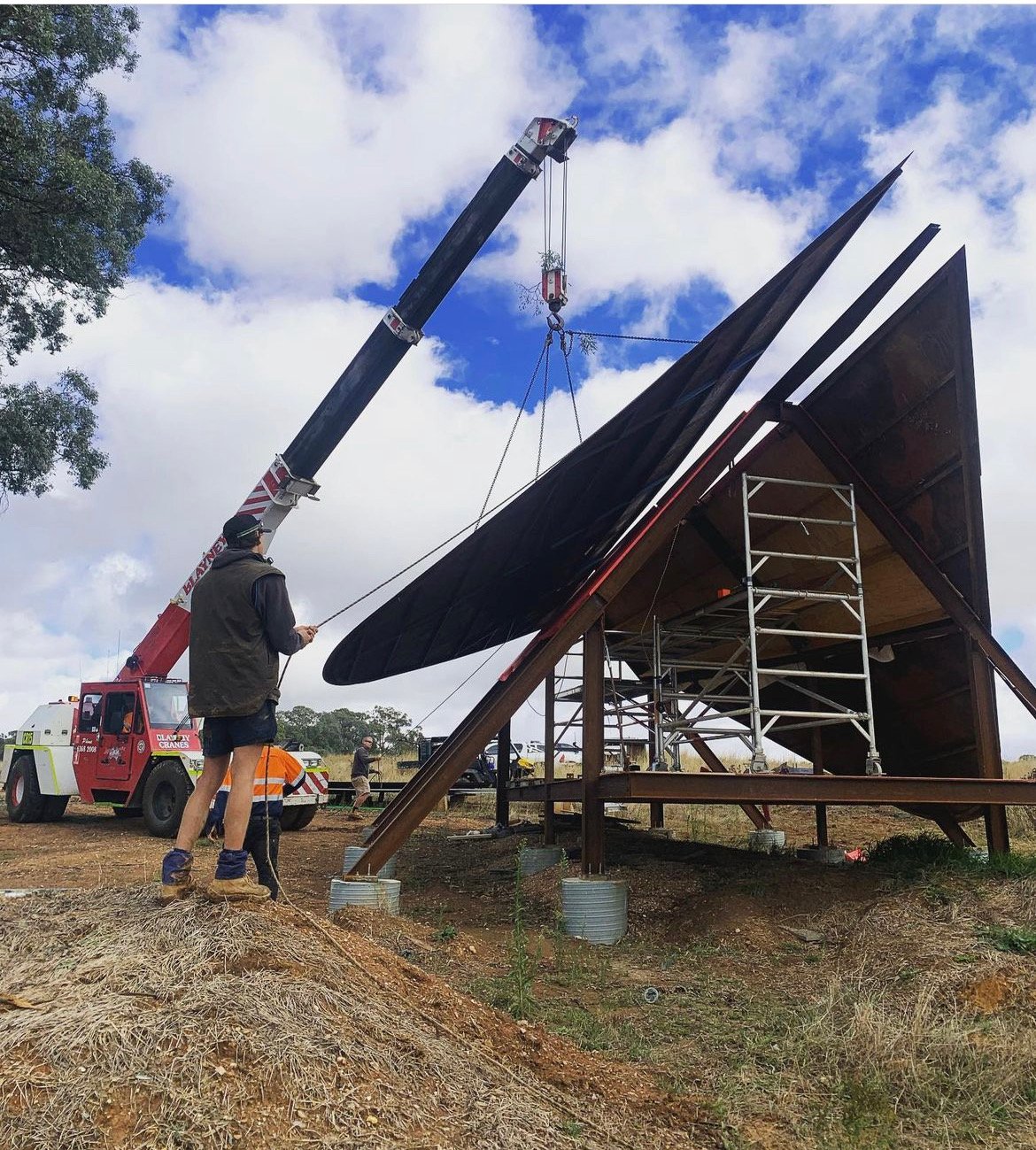
The site’s beauty comes with environmental challenges: cold winters with enough snow to fell trees, hot summers prone to bushfire, strong winds sweeping across open paddocks, and termites that ensure the longevity of timber structures is always in question. The architectural response is therefore unapologetically robust. Each cabin’s structure is built entirely of steel, pre-fabricated off site and clad in corten to anchor against the region’s extremes. Elevated from the ground to avoid moisture, pests, and encourage air flow the structures visually dissolve into the rural palette of rust, earth, and pasture.
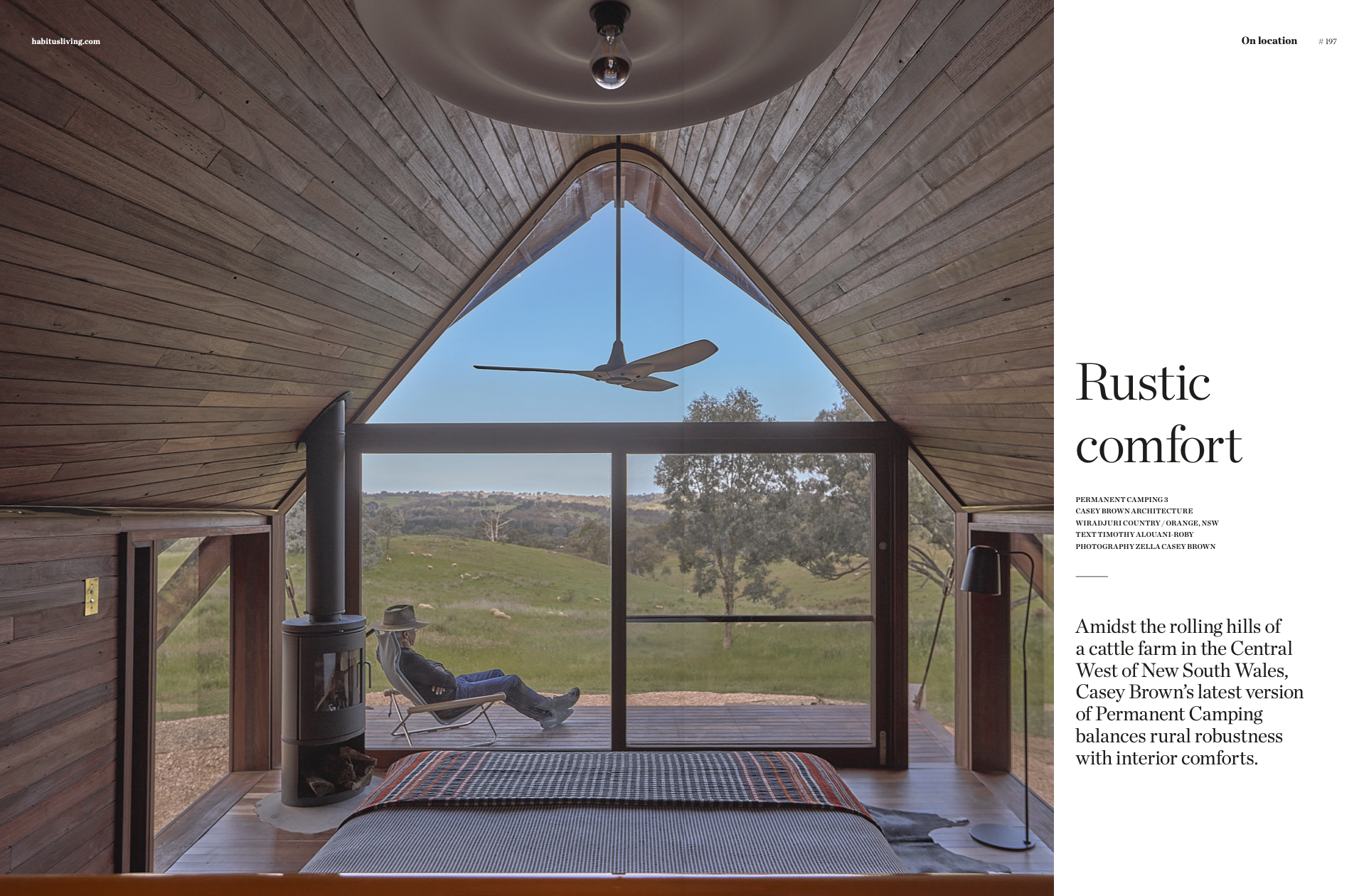
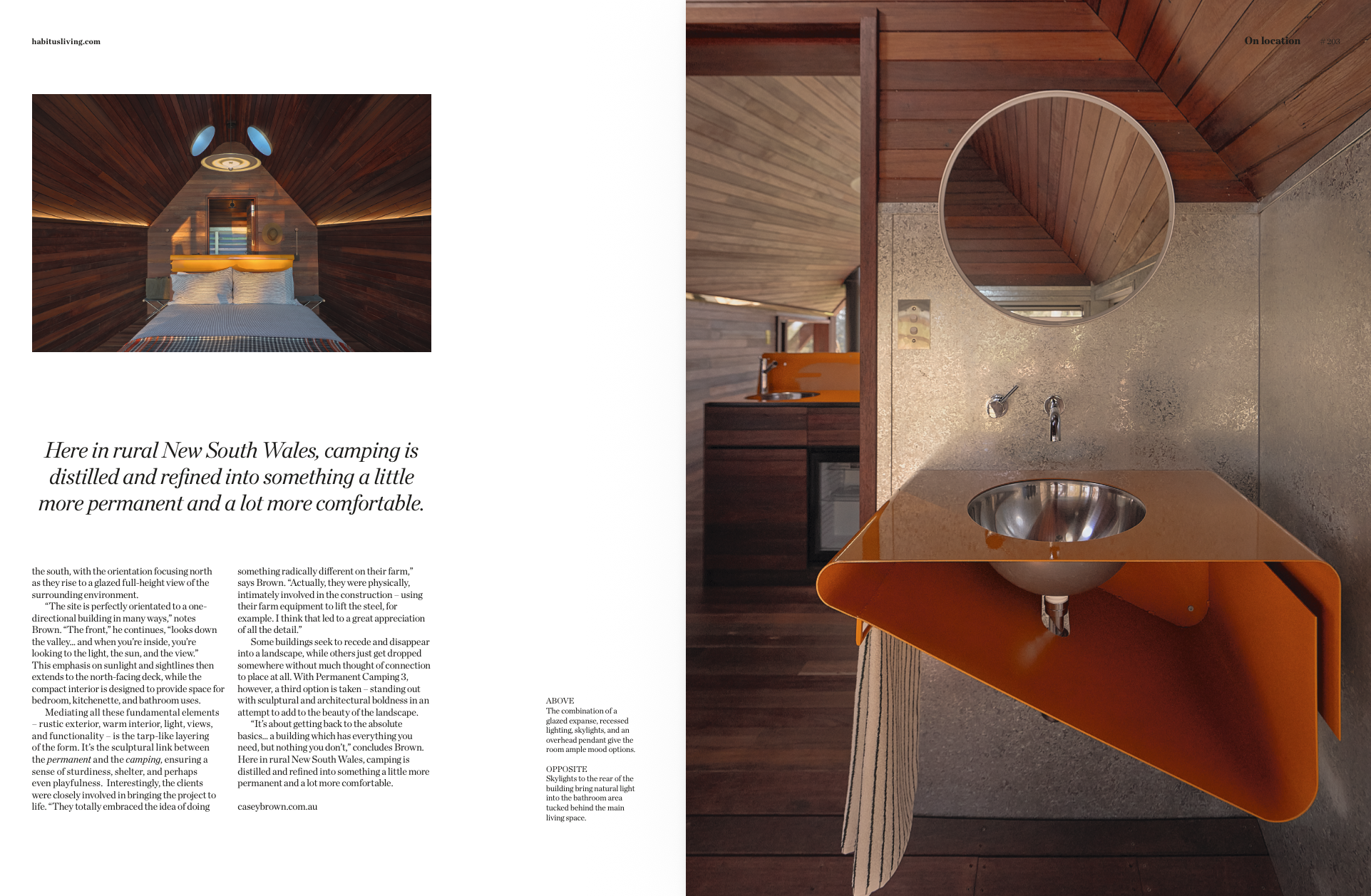
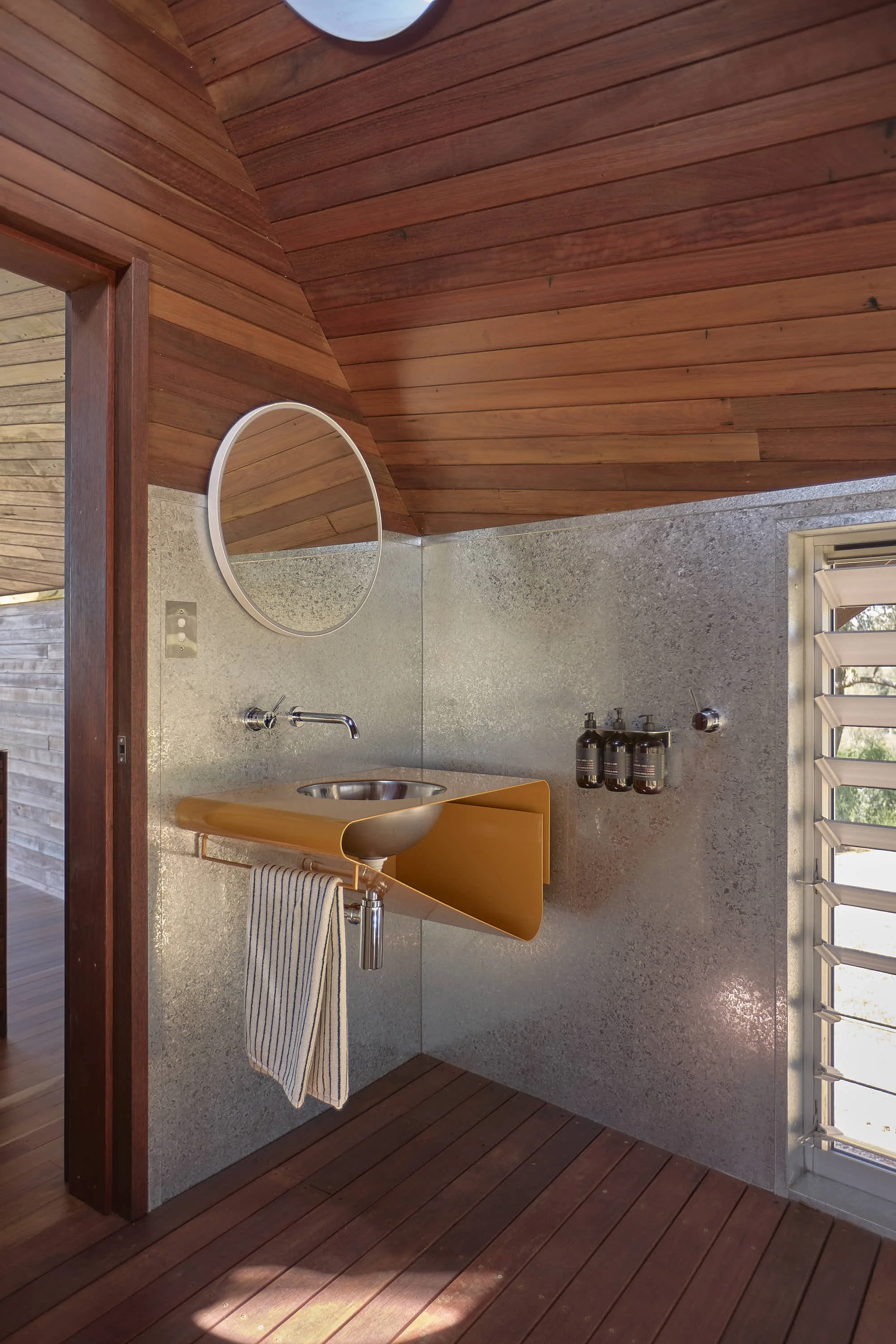
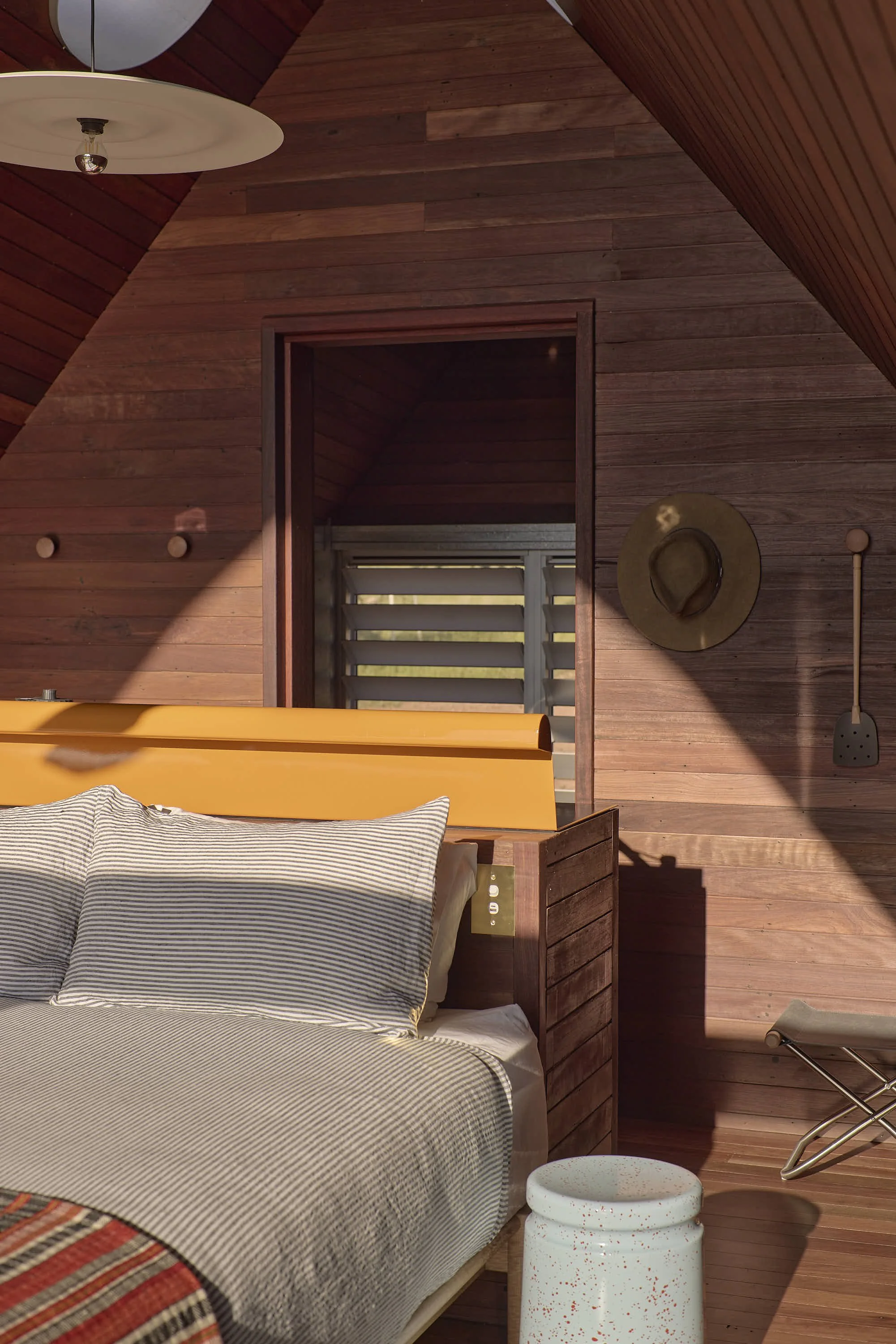
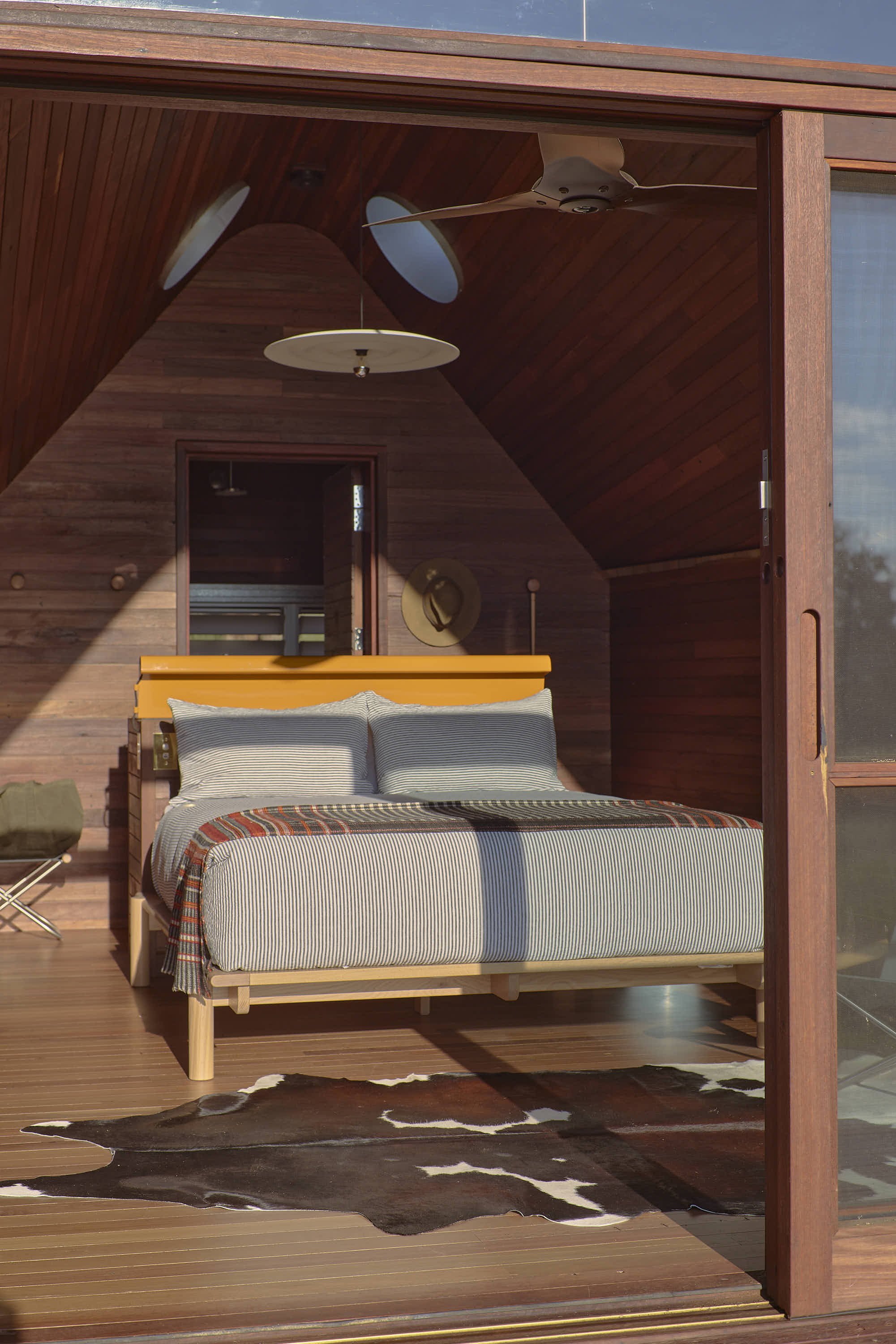
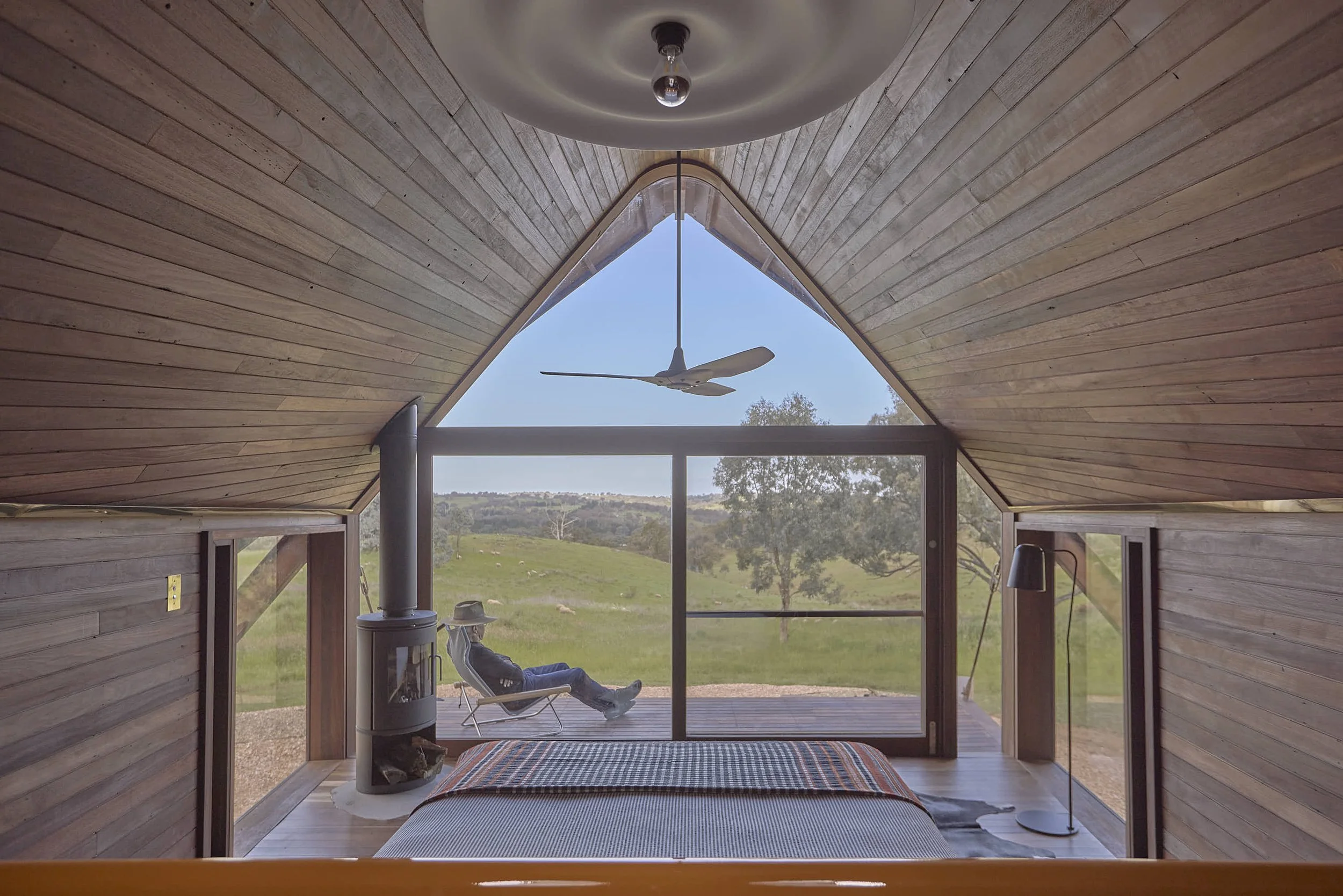
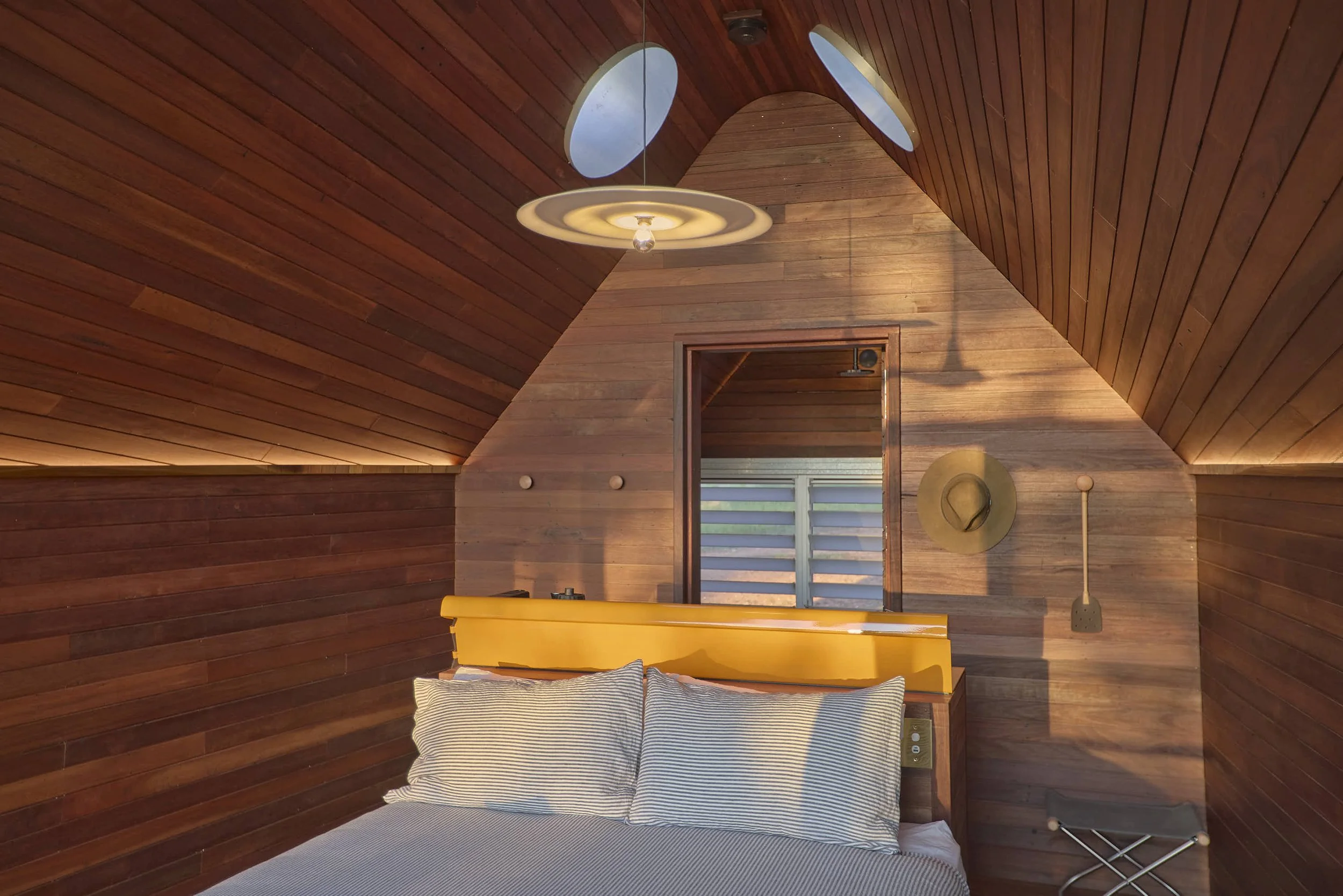
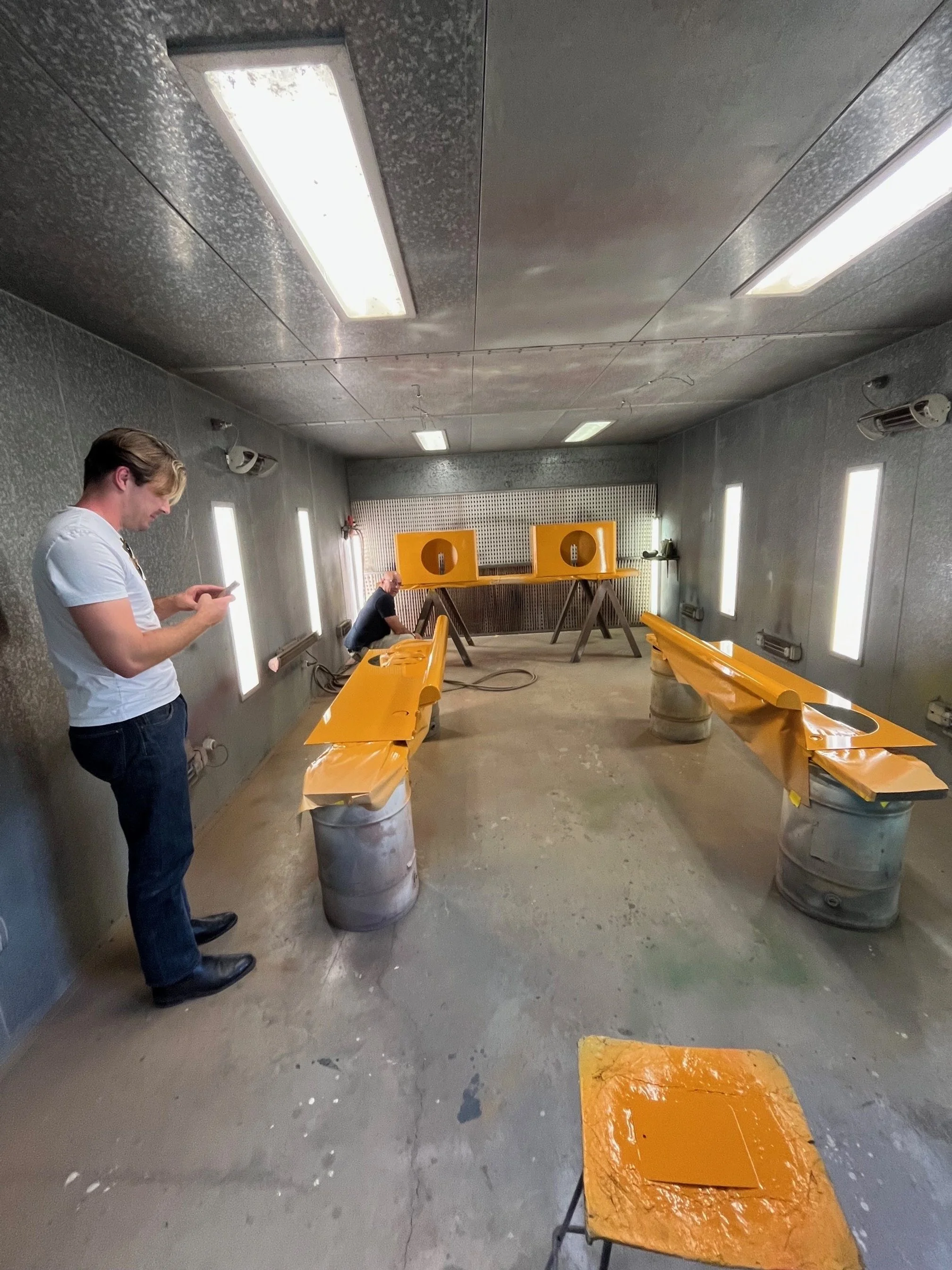
Built by the owner and his son over many years, every weld, joint and detail has been lovingly considered. The sharply angled A-frame form creates a compact footprint while expanding the interior volume upward, encouraging light and air to move through the space. Circular skylights pierce the steel envelope, casting precise shafts of light that shift throughout the day, introducing a sense of drama to the modest interior. In contrast to the rustic exterior, the cabins are lined with warm boards of oiled recycled ironbark, bespoke brass lighting and custom steel details, painted bright orange by the local smash repair garage. The plan tapers to the rear of each cabin where a fully louvred bathroom immerses the user to the landscape, allowing cross-ventilation and openness, without compromising privacy. A reminder that simplicity does not exclude beauty.
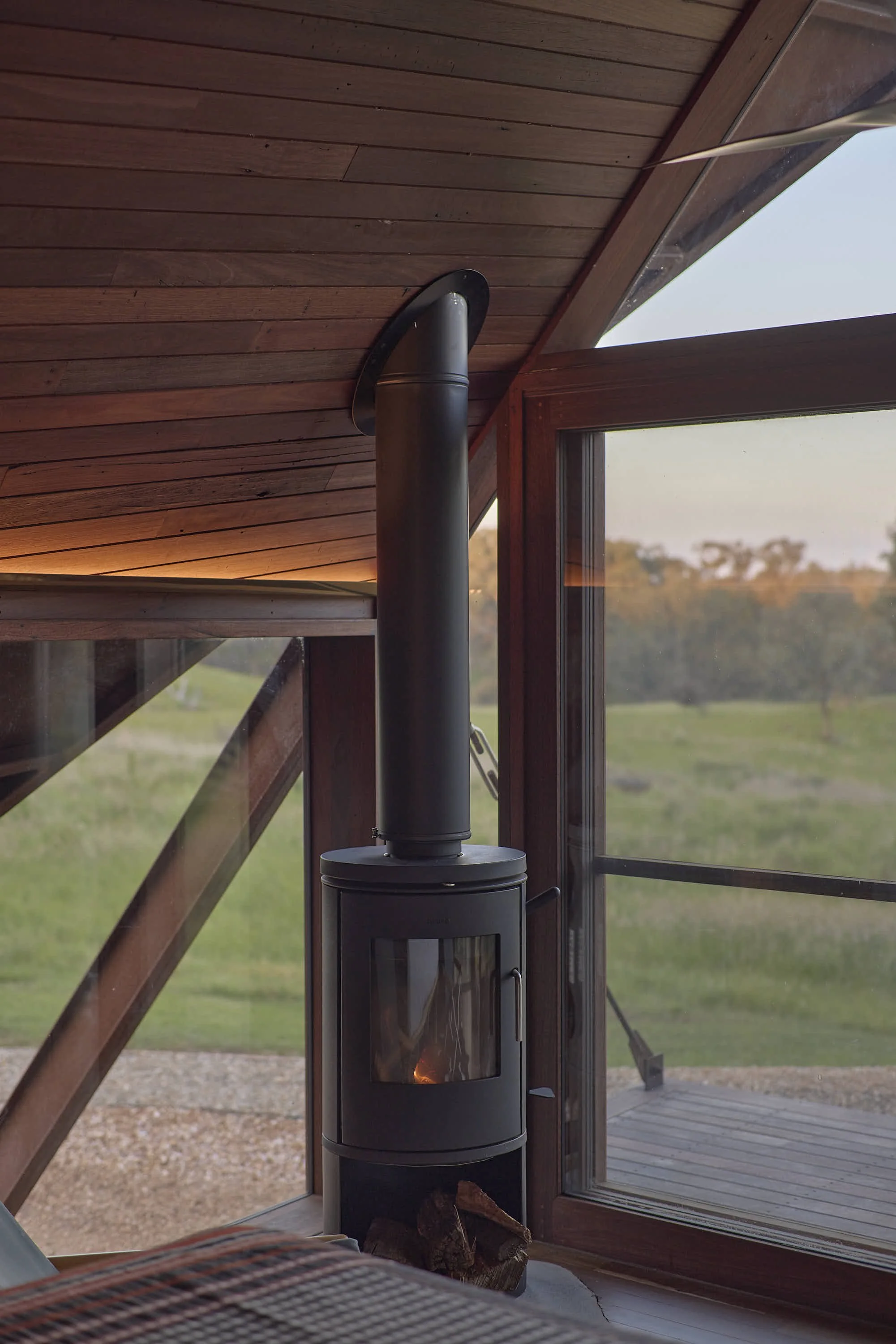
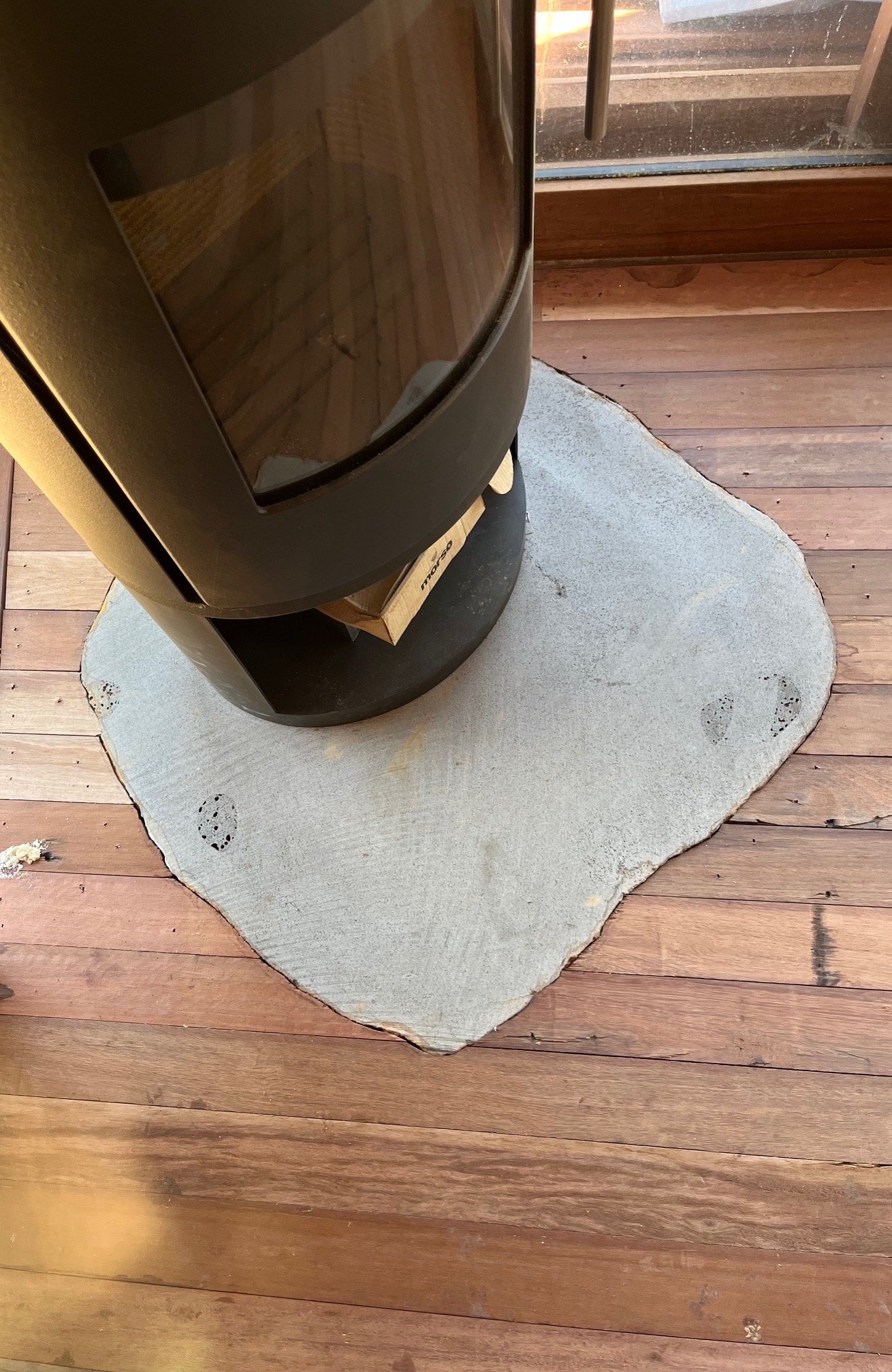
A pot-belly stove warms winter nights, a compact kitchen bar provides for simple meals, and an expansive deck opens to long views over the rolling country side. These gestures reinforce the project’s central ambition, to offer an experience of living pared back to essentials, where there is everything you need and nothing you don’t.
The cabins function entirely off-grid. To preserve the rusty form of the buildings, an adjacent service box generates power, collects rain water, stores firewood and hides batteries and pumps. All waste is processed on site. This self-sufficiency is not an environmental gimmick but an essential requirement of the location. Here, every element has purpose; nothing is superfluous PC3 is a living sculpture in the landscape.
PC3 is not an expansive retreat in the conventional sense; it proposes a deeper and more thoughtful kind of luxury one rooted in architectural detail and the deliberate act of doing less. In a region known increasingly for its food, wine, and tourism, the cabins offer a counterpoint: a contemplative space where architecture is a frame for landscape, and life is reduced to its elemental pleasures.
Project Architect: Daniel Weber
Photography: Zella Casey Brown