
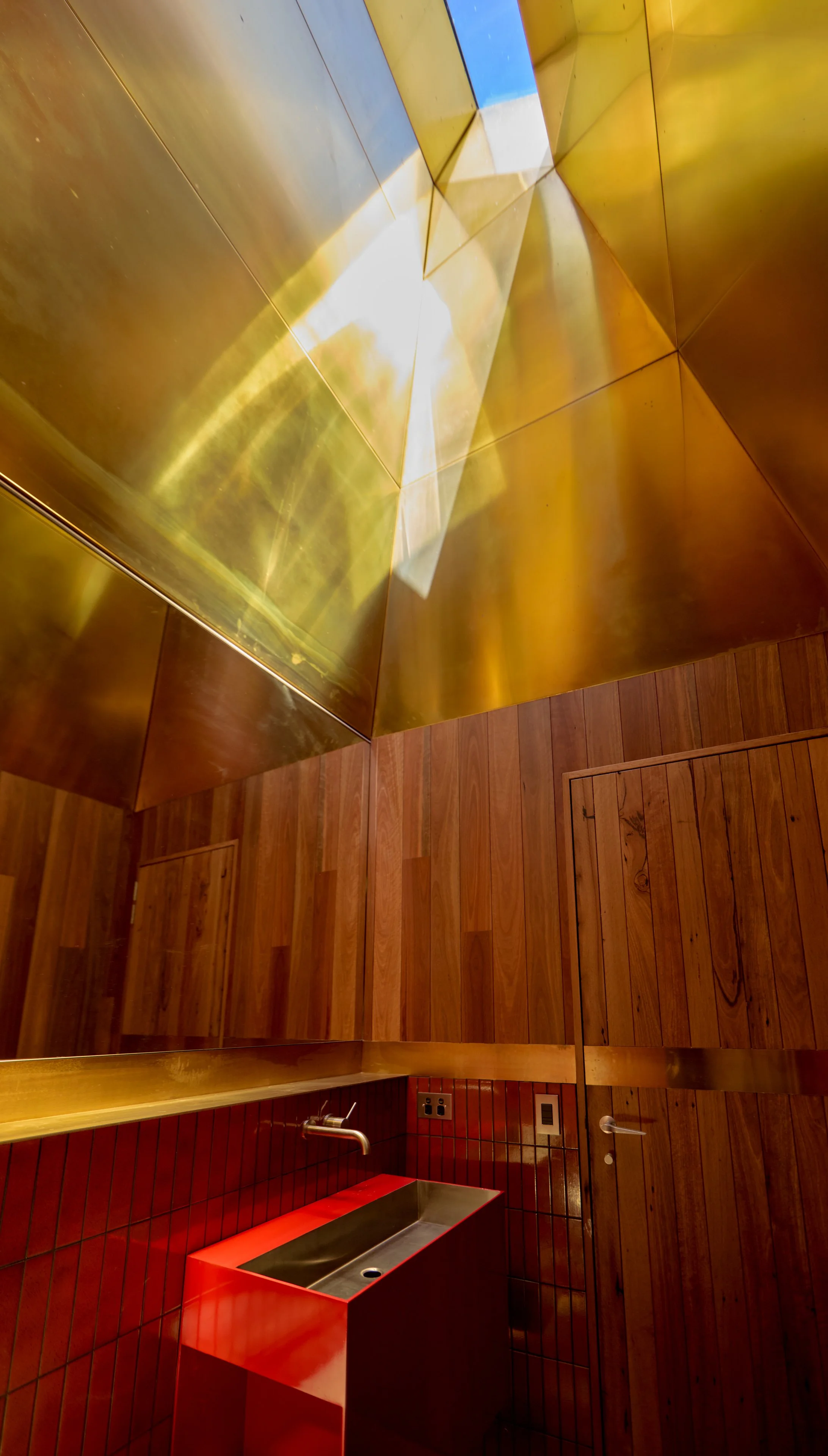
Saddleback mountain house is the result of eight years of planning and construction to fulfill a family’s dream for a home that would support their growing children, and a lifestyle strongly connected to the outdoors. From the beginning, the clients asked for a house that responded directly to its landscape, using robust materials and passive design principles to create a sustainable home that would endure and adapt over time.
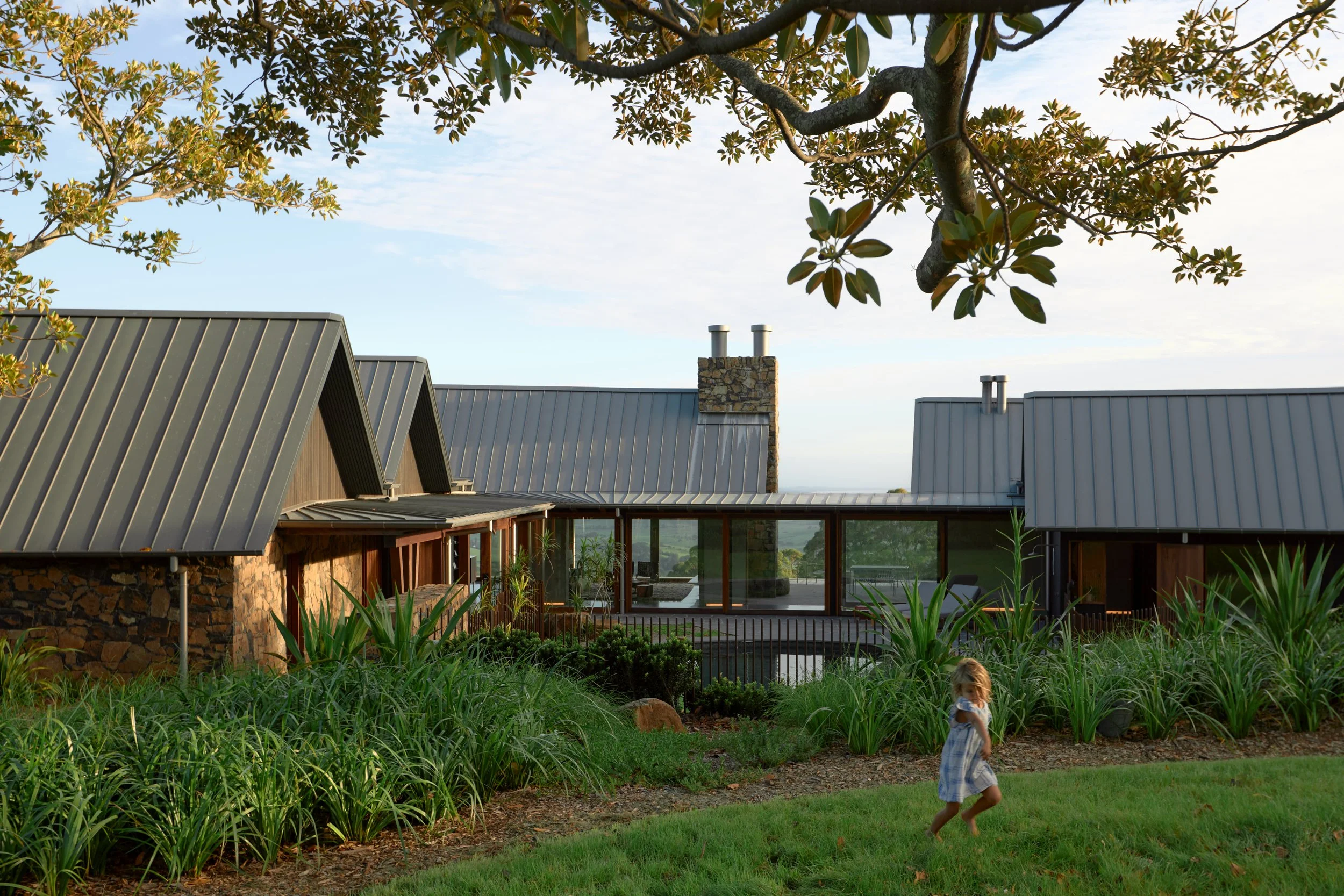
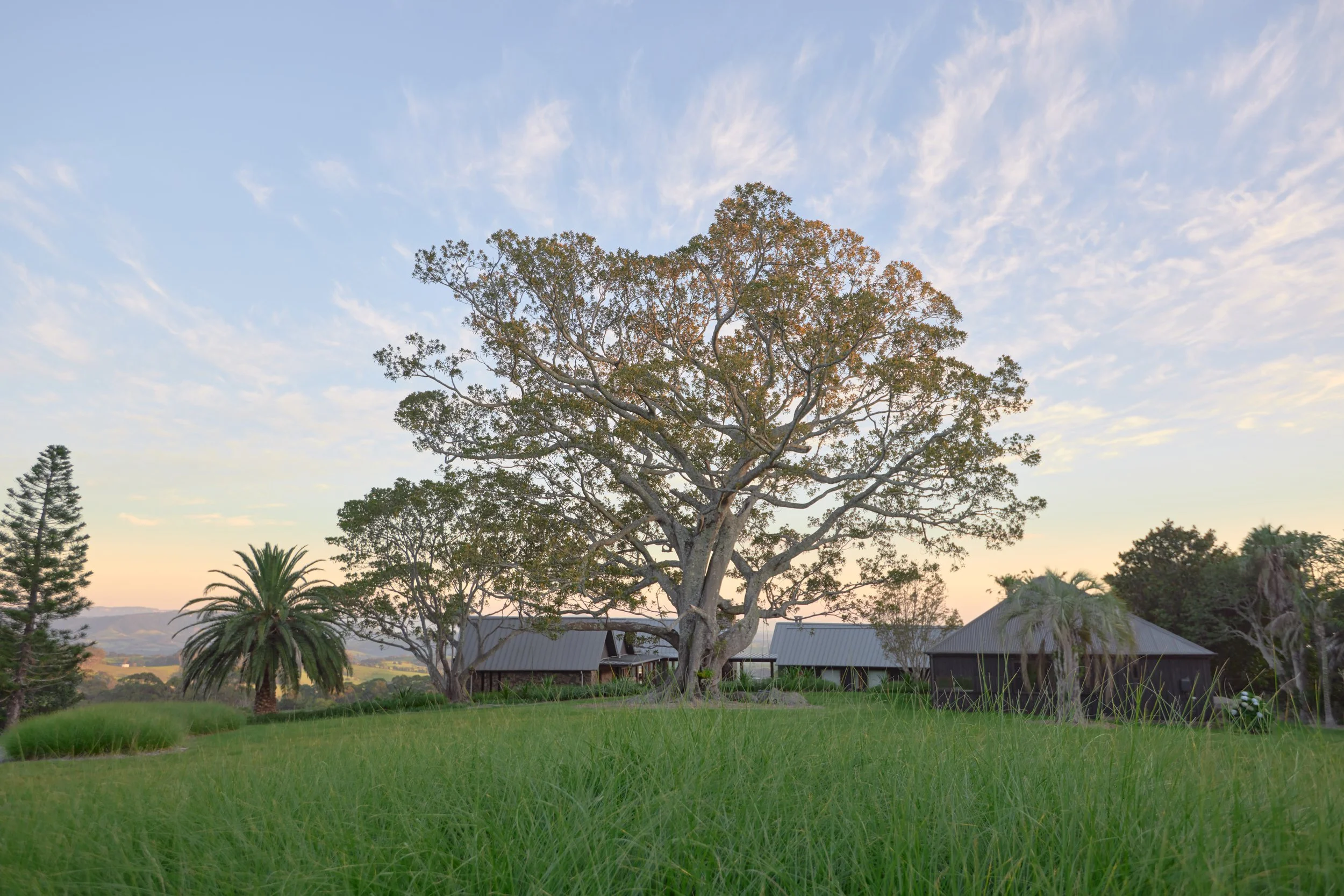
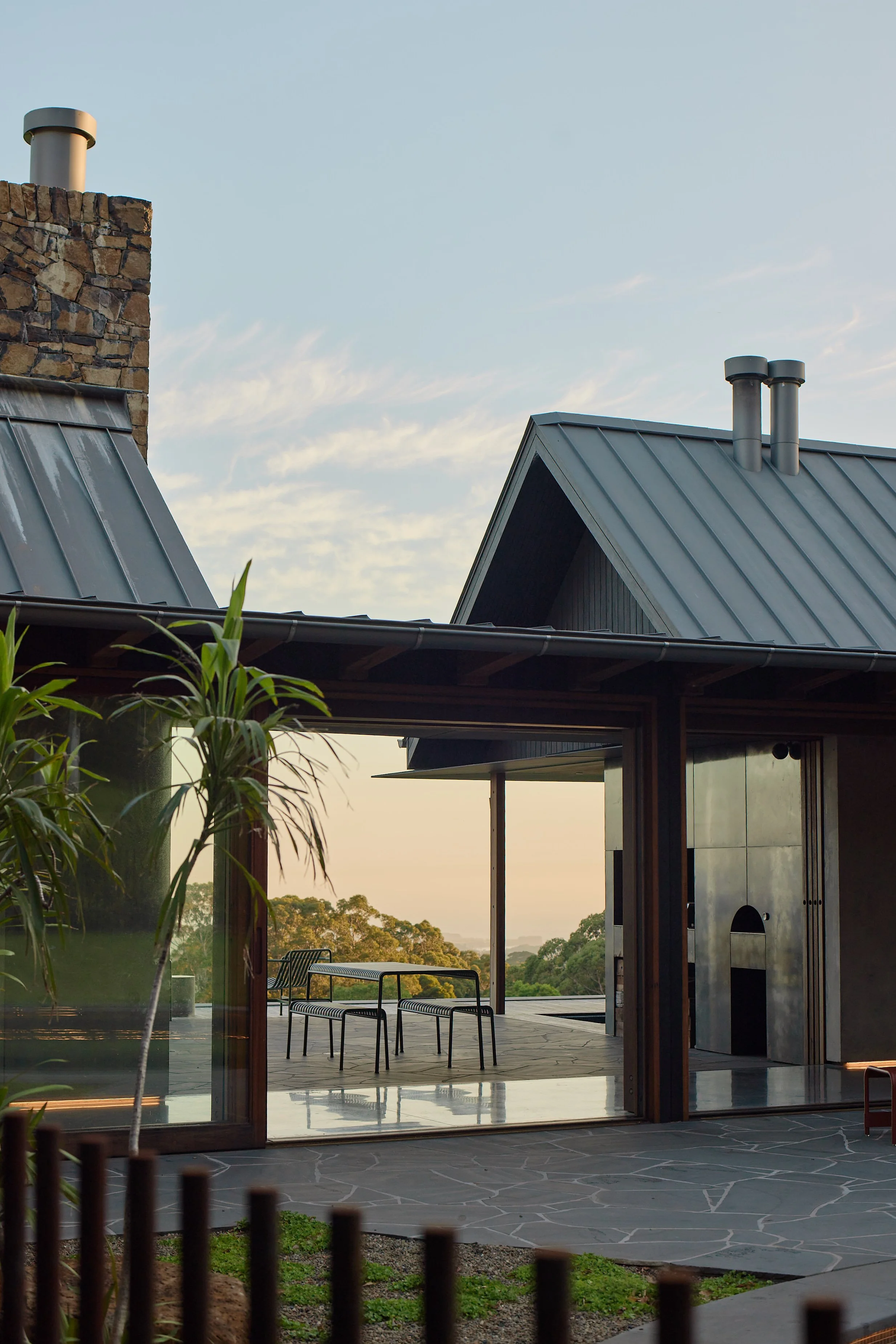
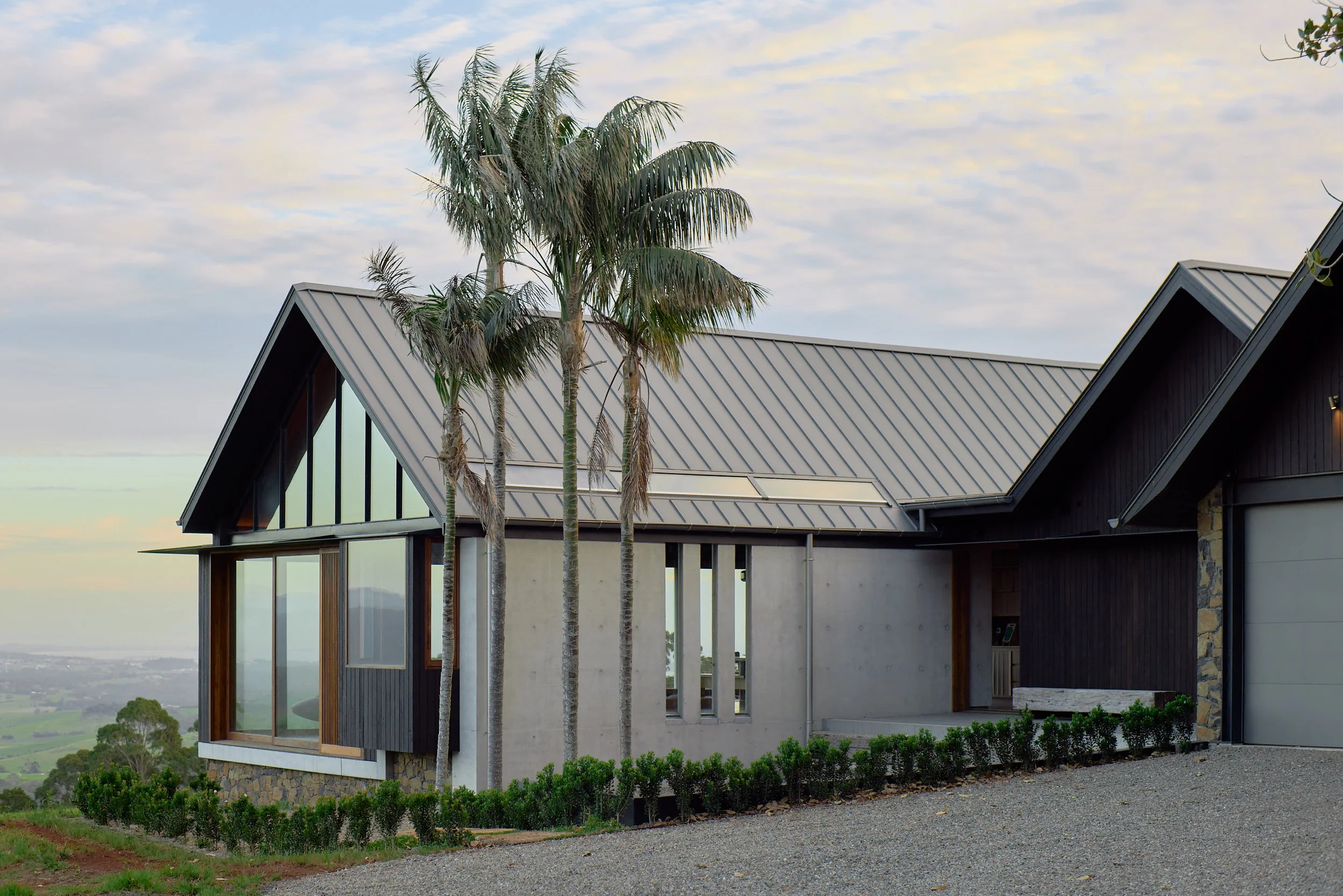
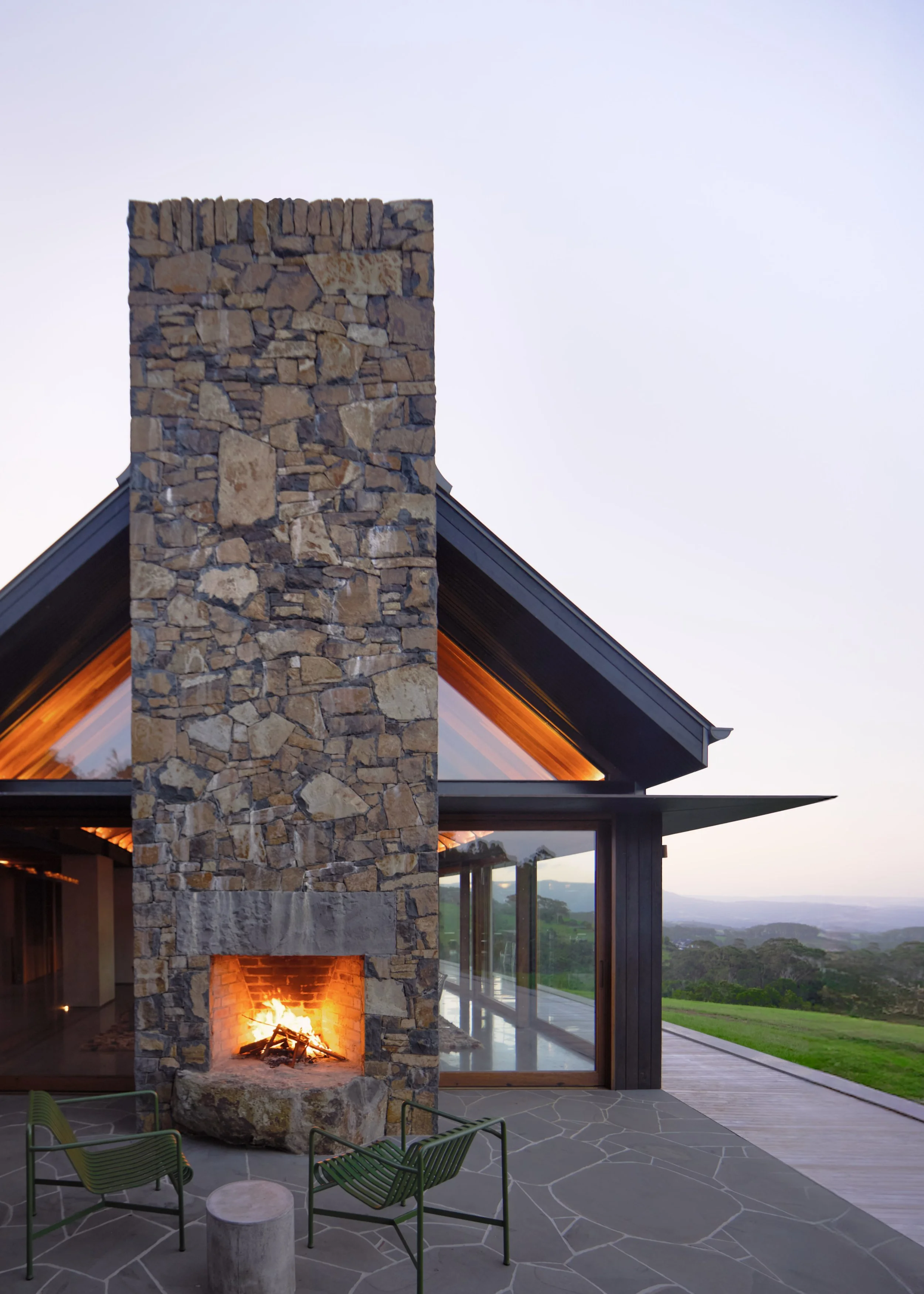
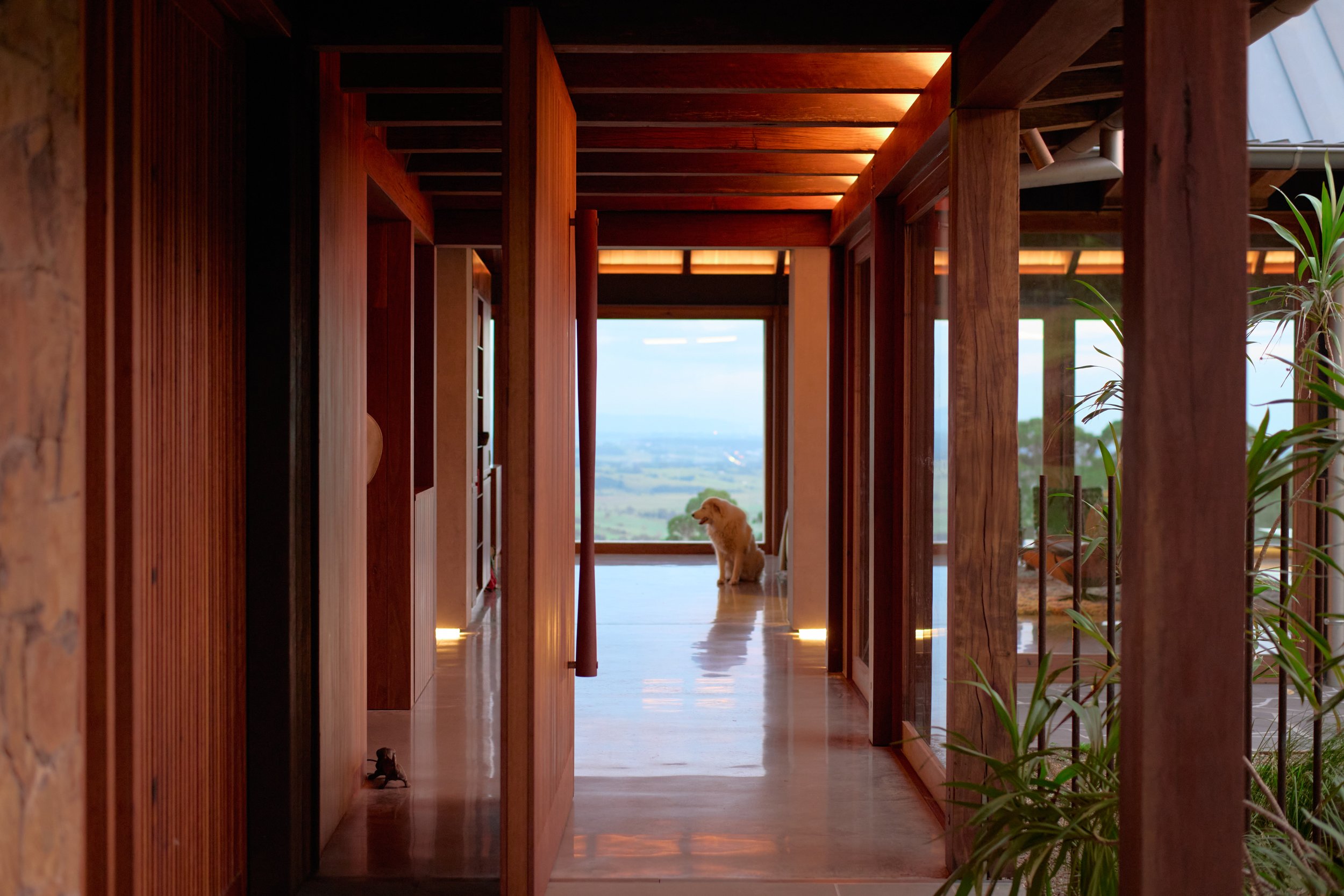
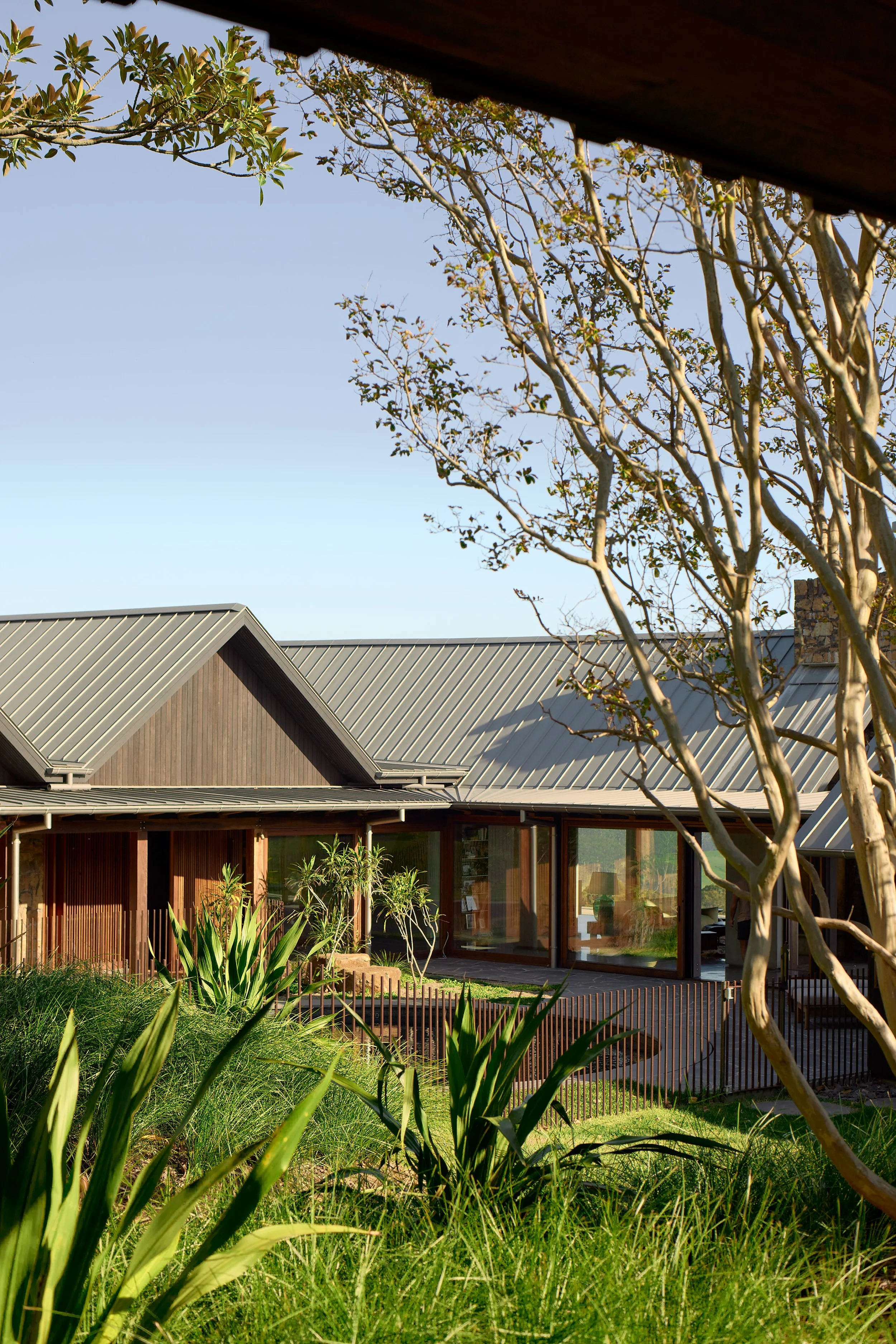
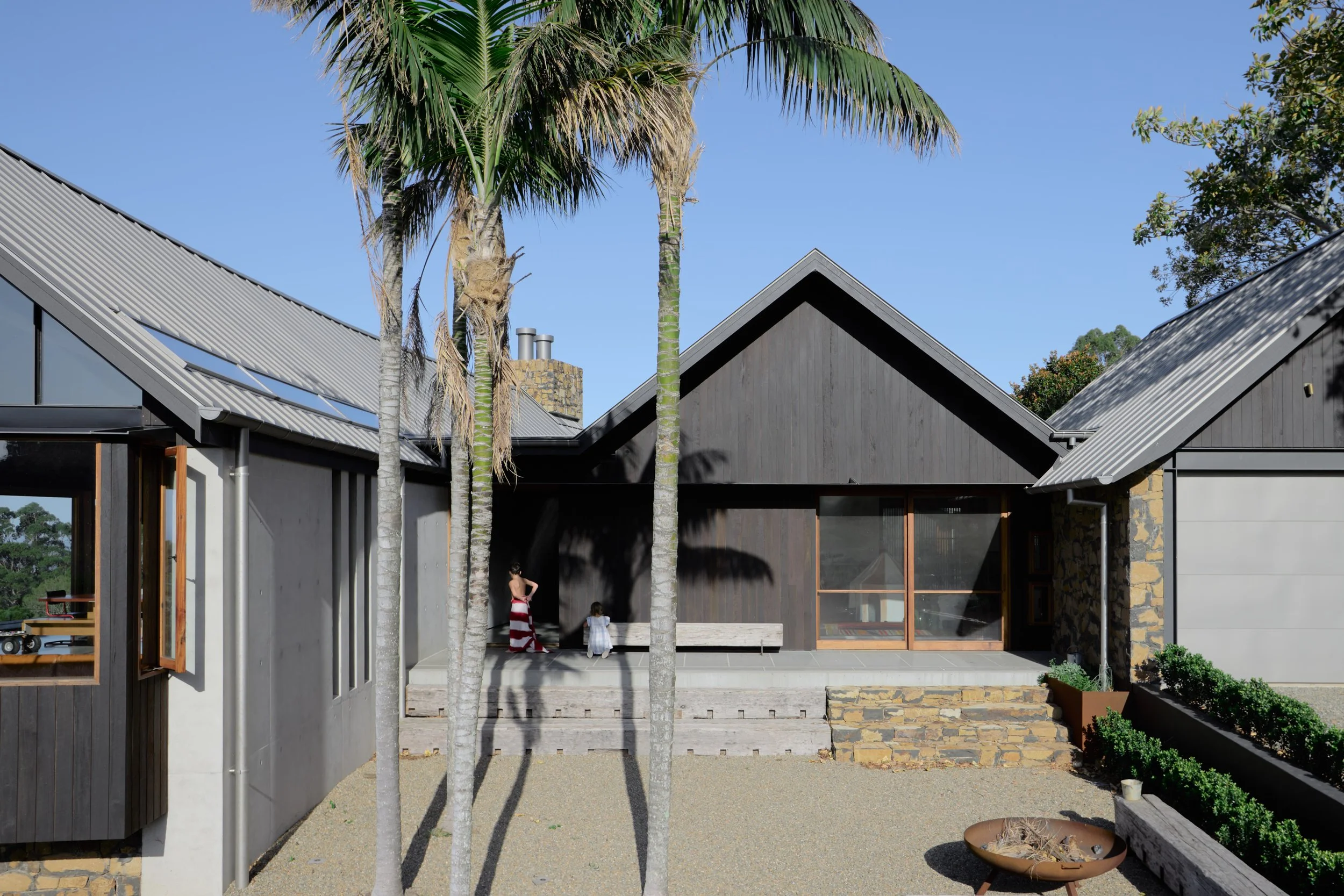
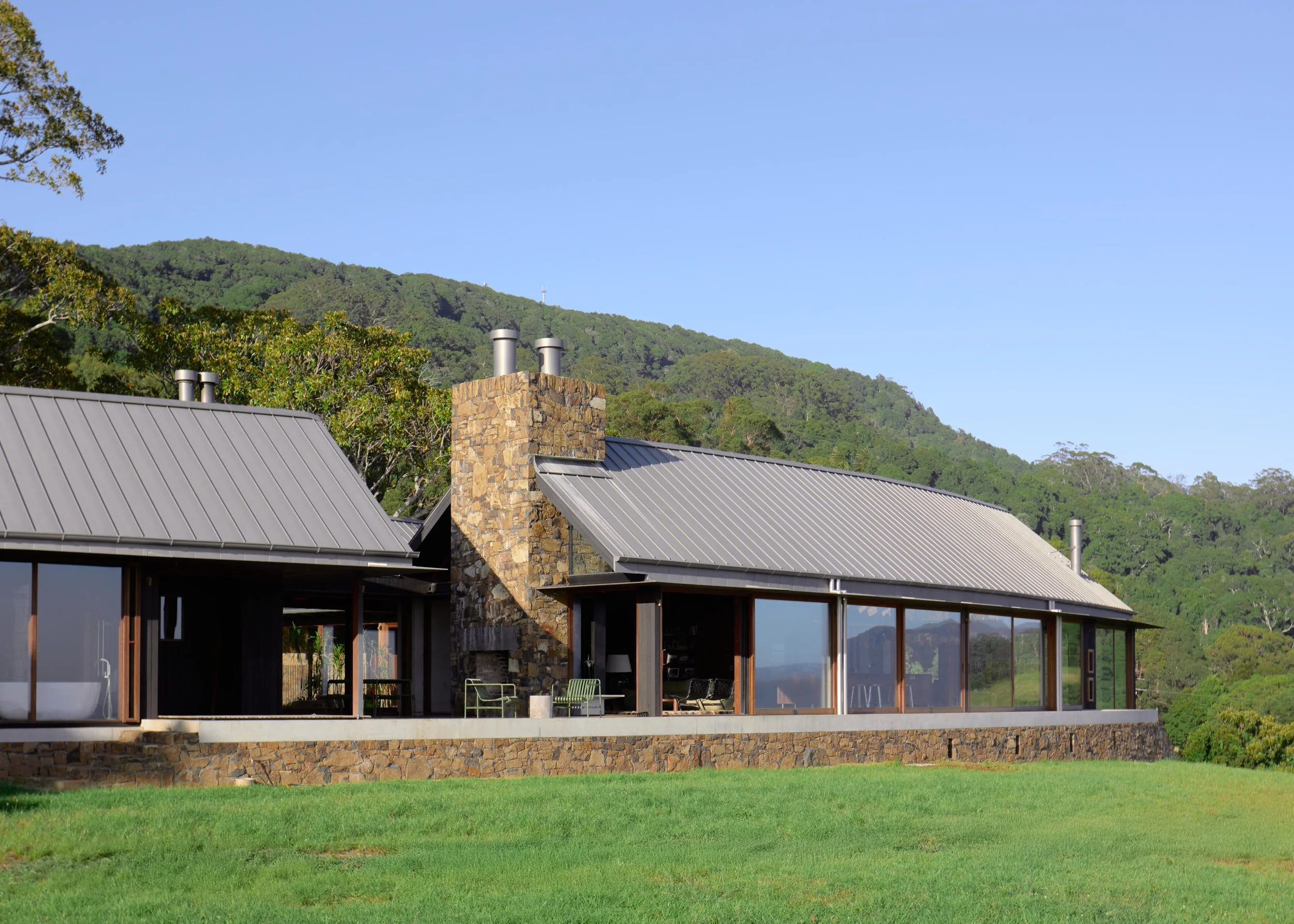
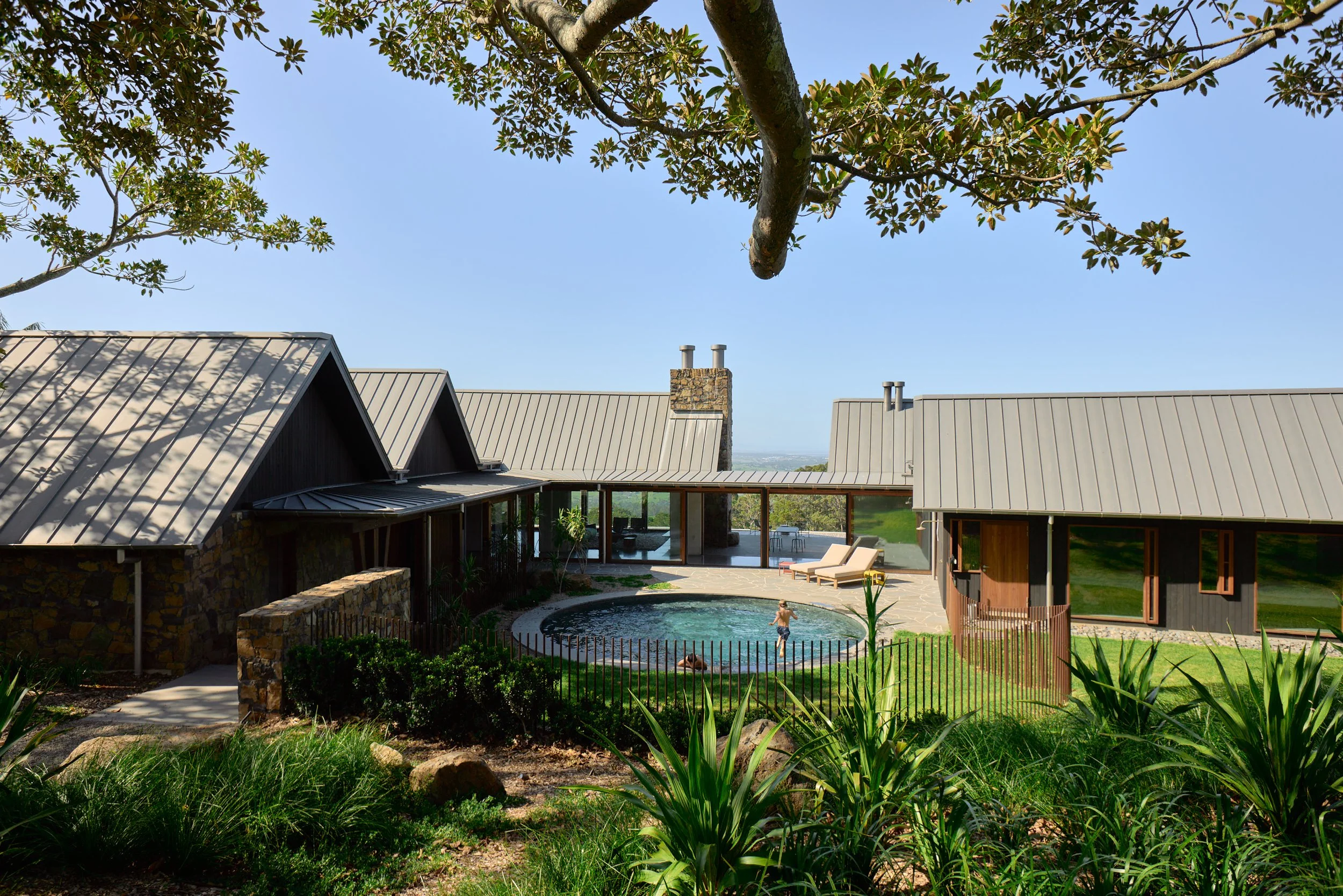
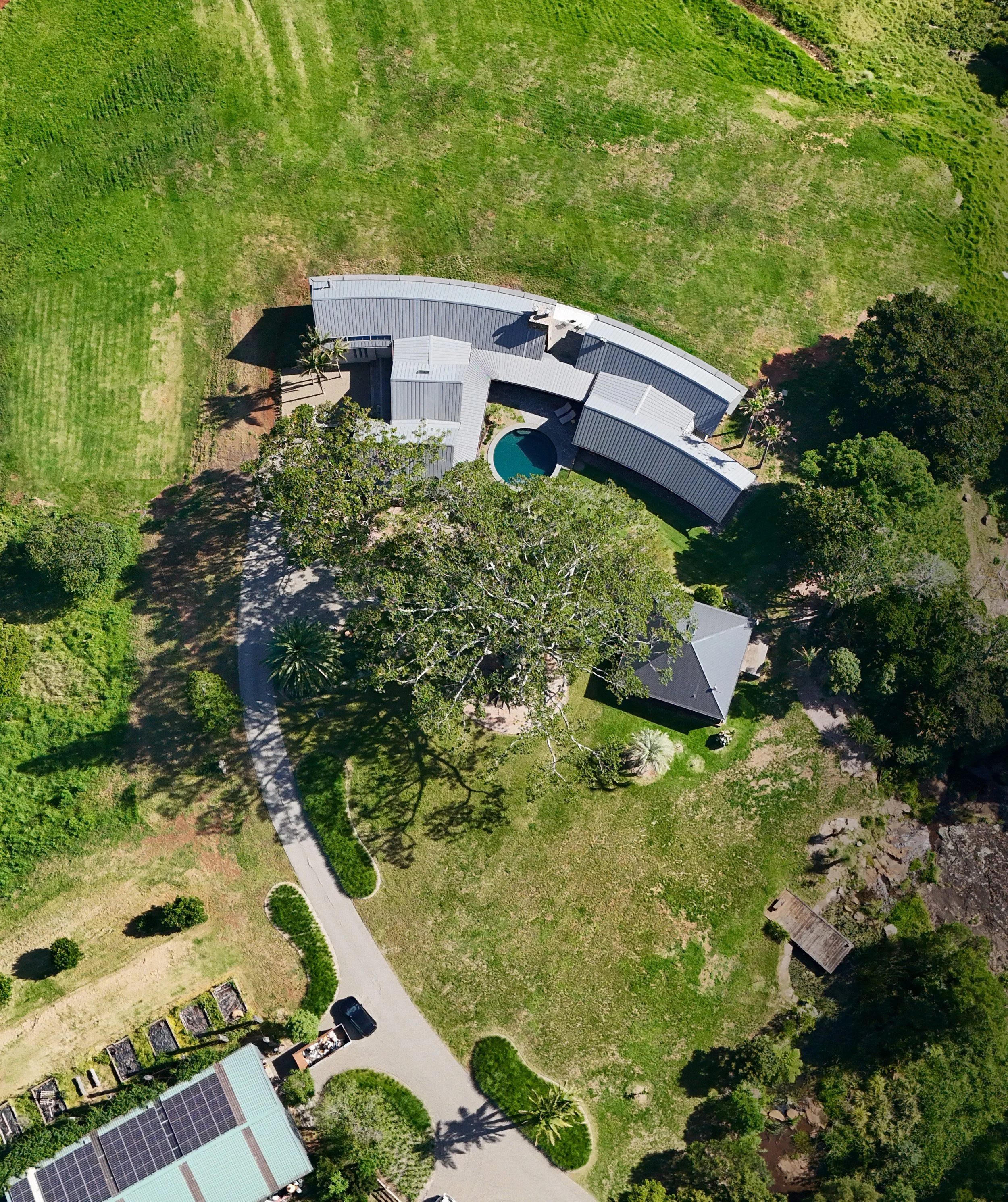
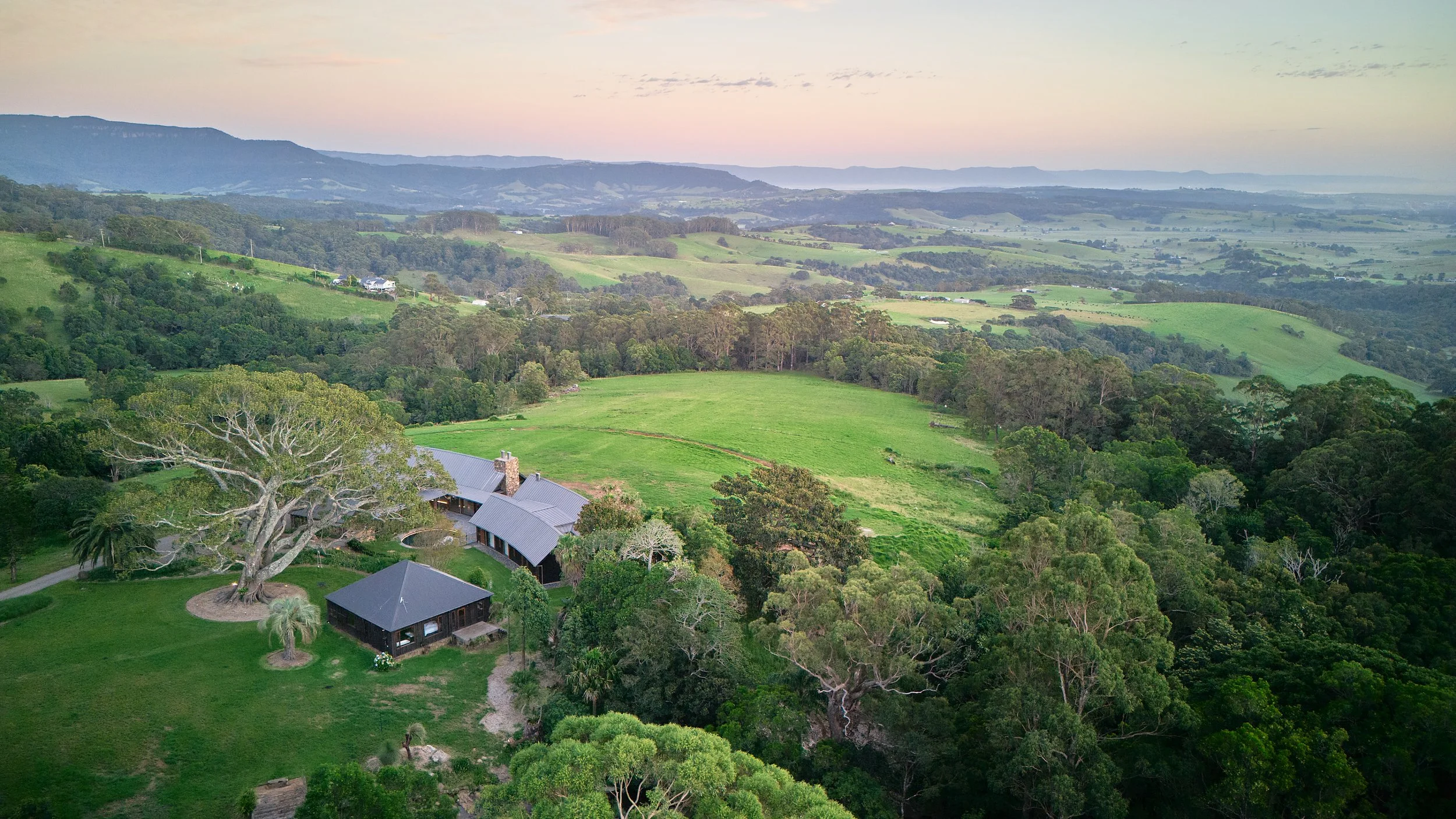
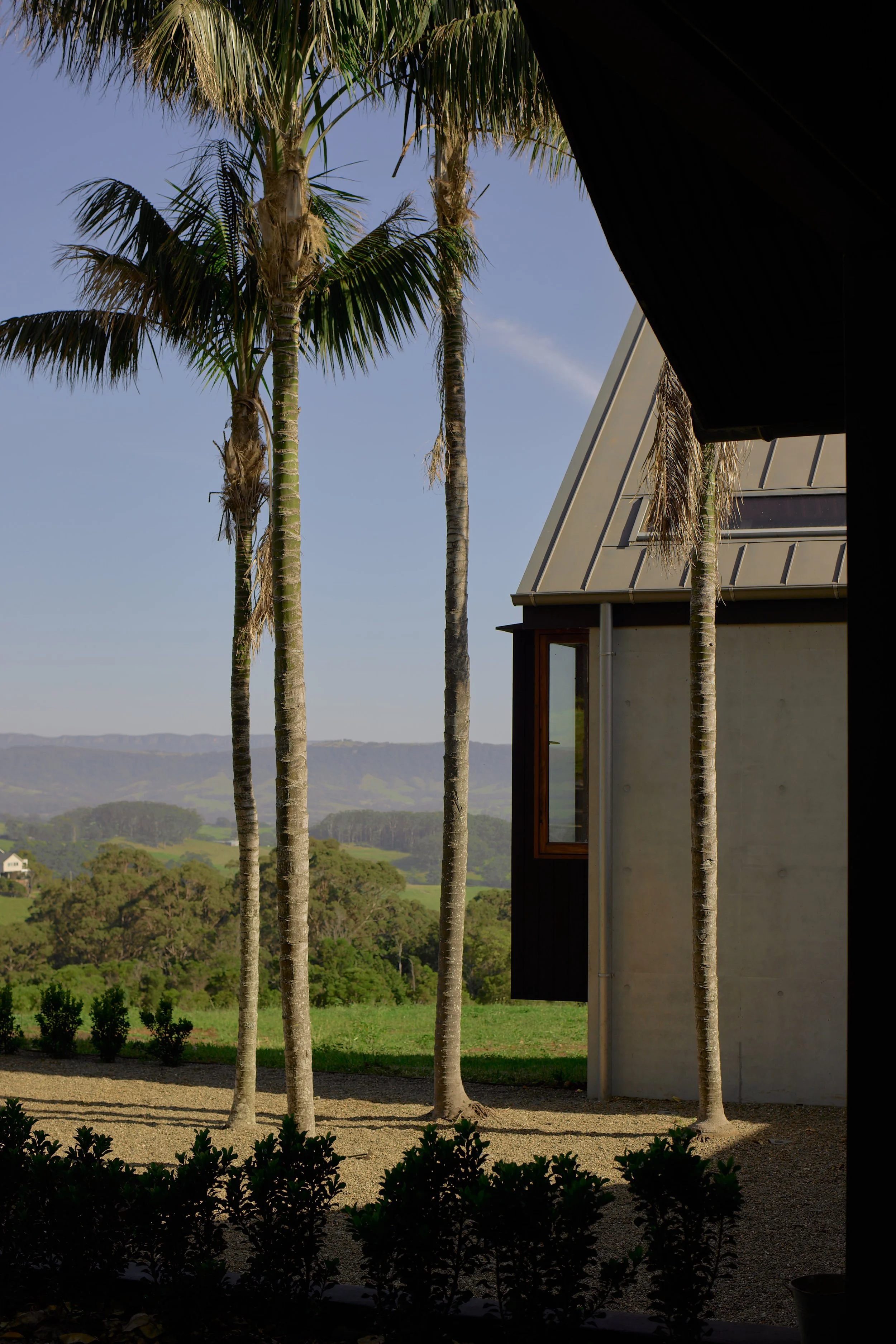
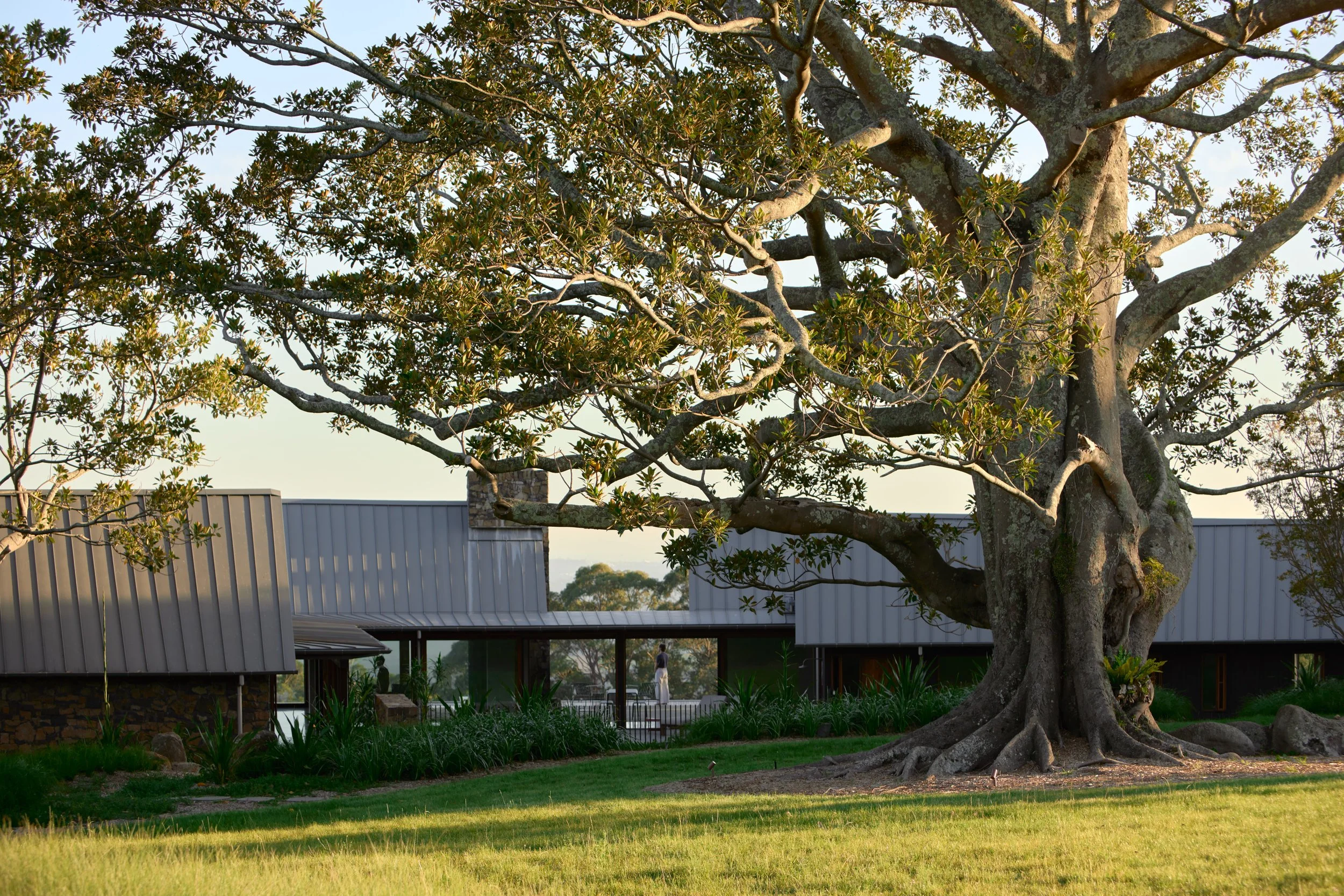
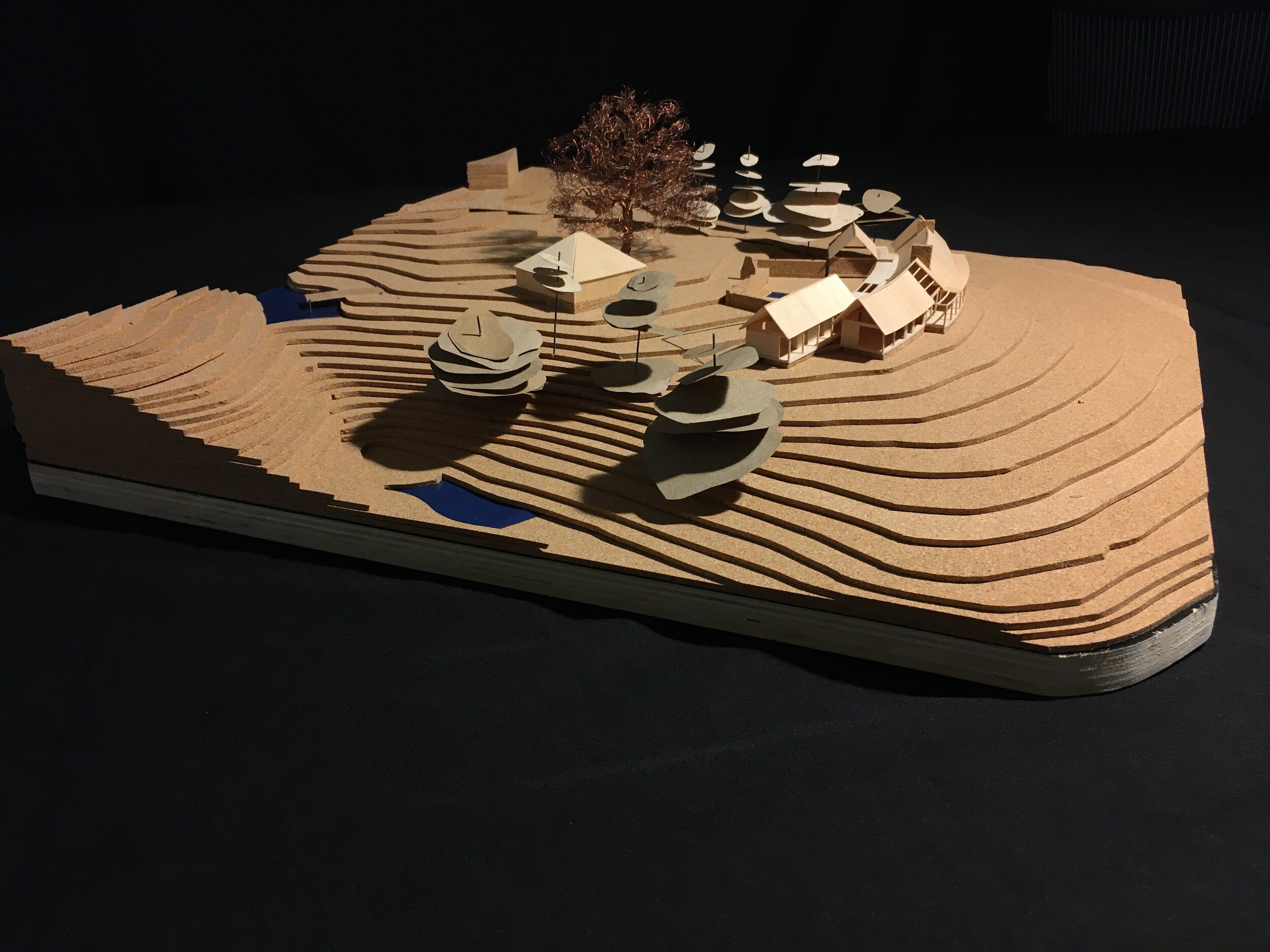
The defining move of the design comes from the site itself. An ancient Moreton Bay fig stands at the centre of a prominent dome on the slope, creating and anchor point around which the plan pivots. The house is arranged as a series of pavilions, each slightly offset, curving in a gentle radius centred on the fig. This curvature helps the home settle into the natural dome of the hill, while the pavilions break down the scale of the building to provide protected courtyards between them. This ensures that on a very exposed and windy site, there is always a place to sit either out of the wind, sun or both.
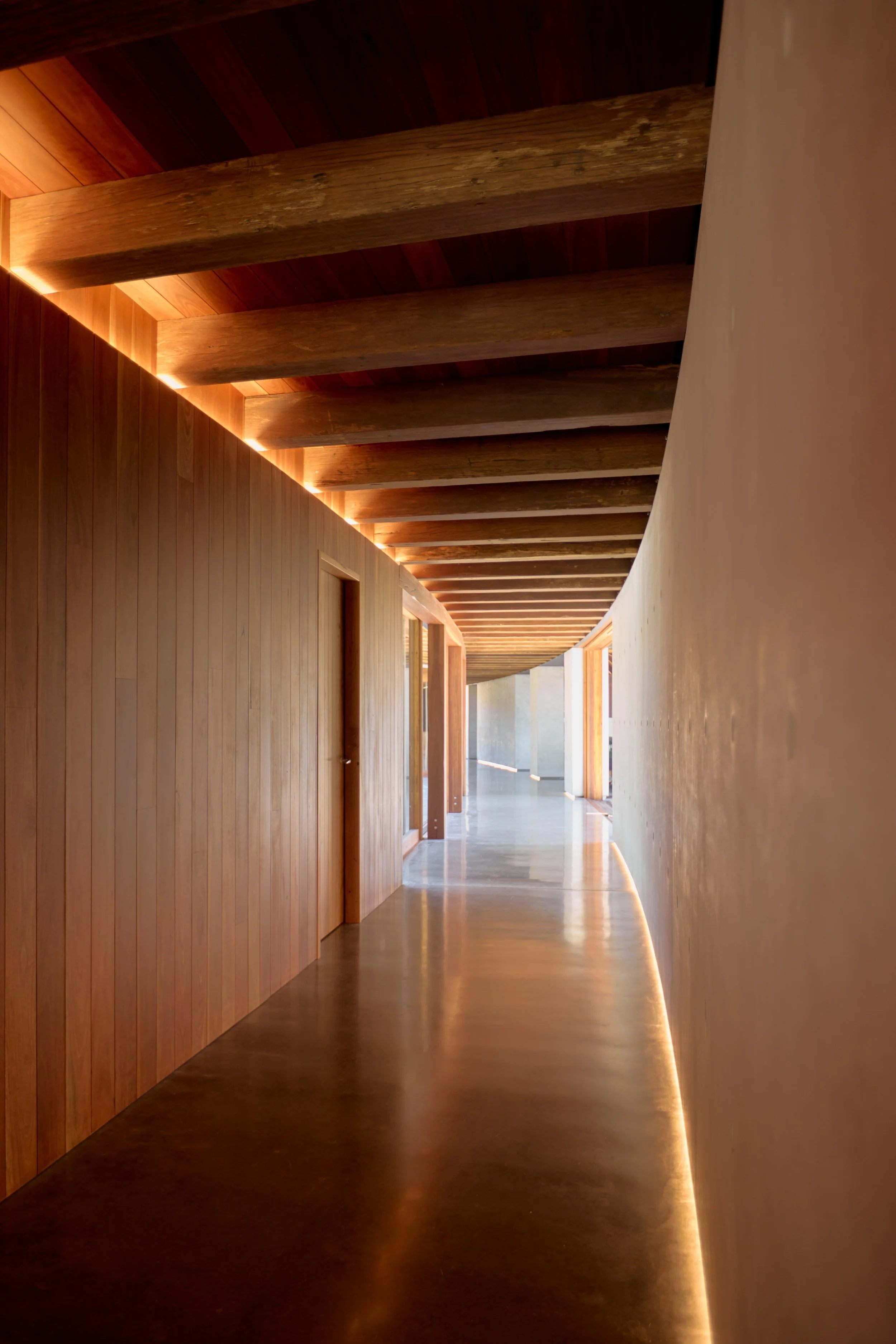
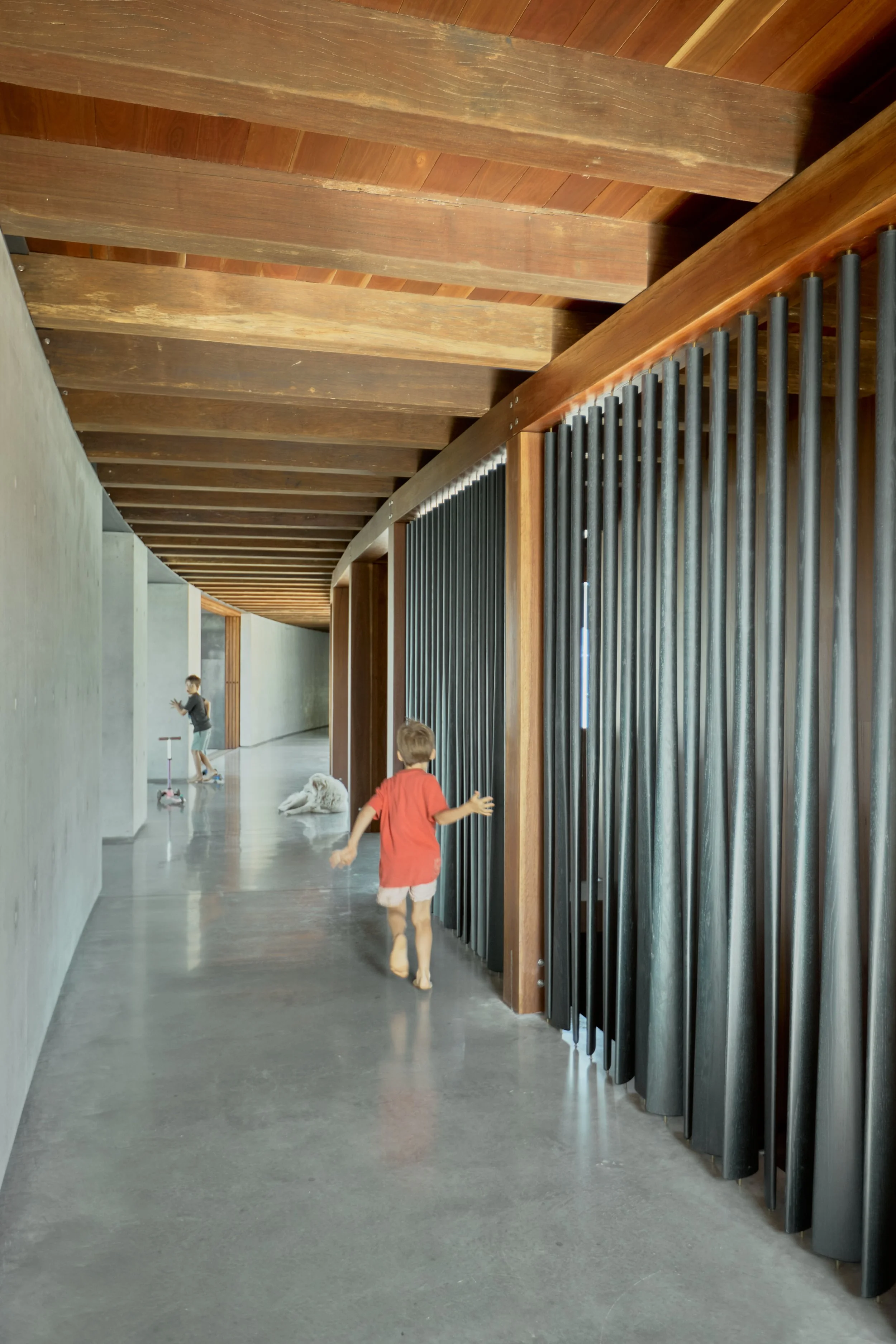
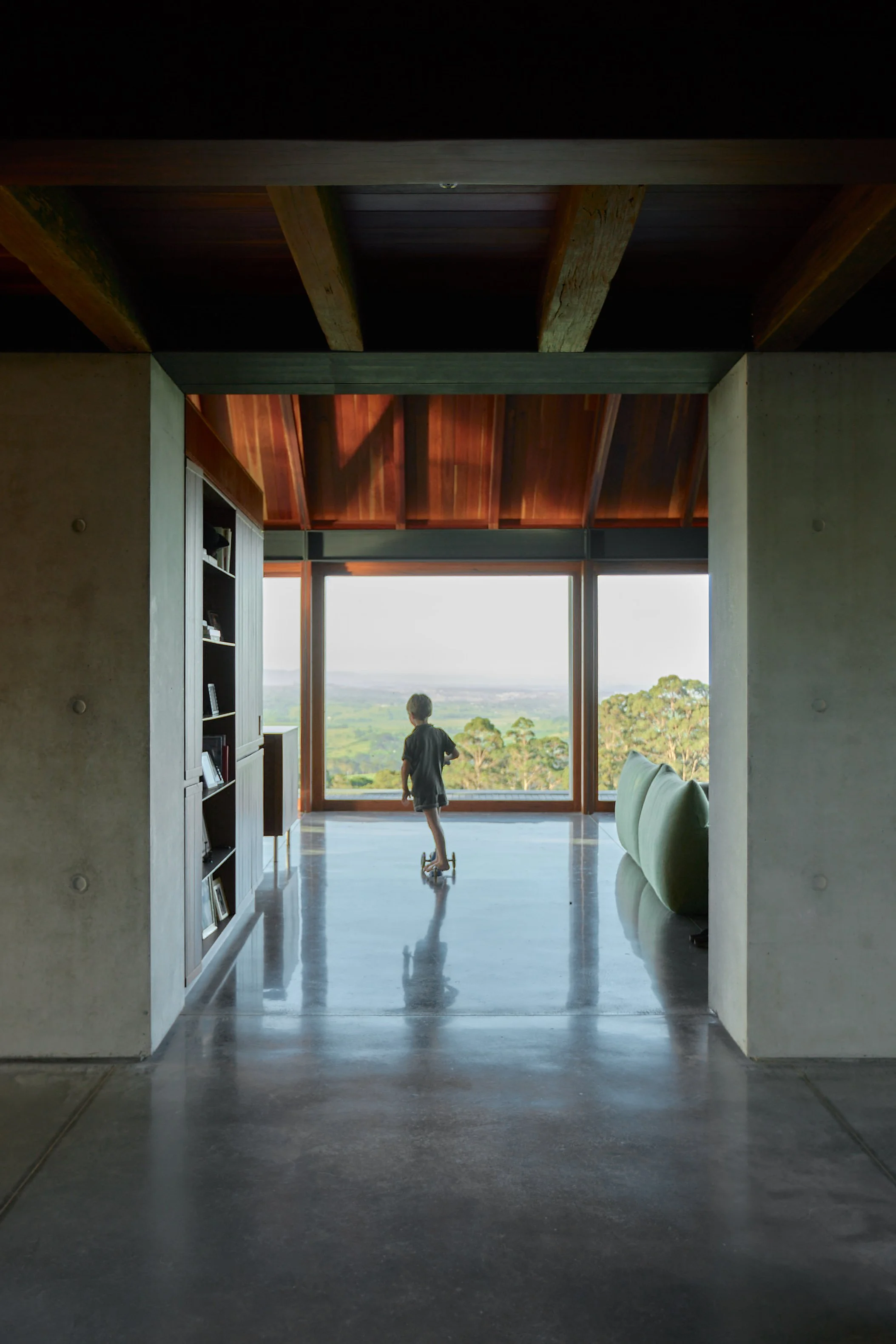
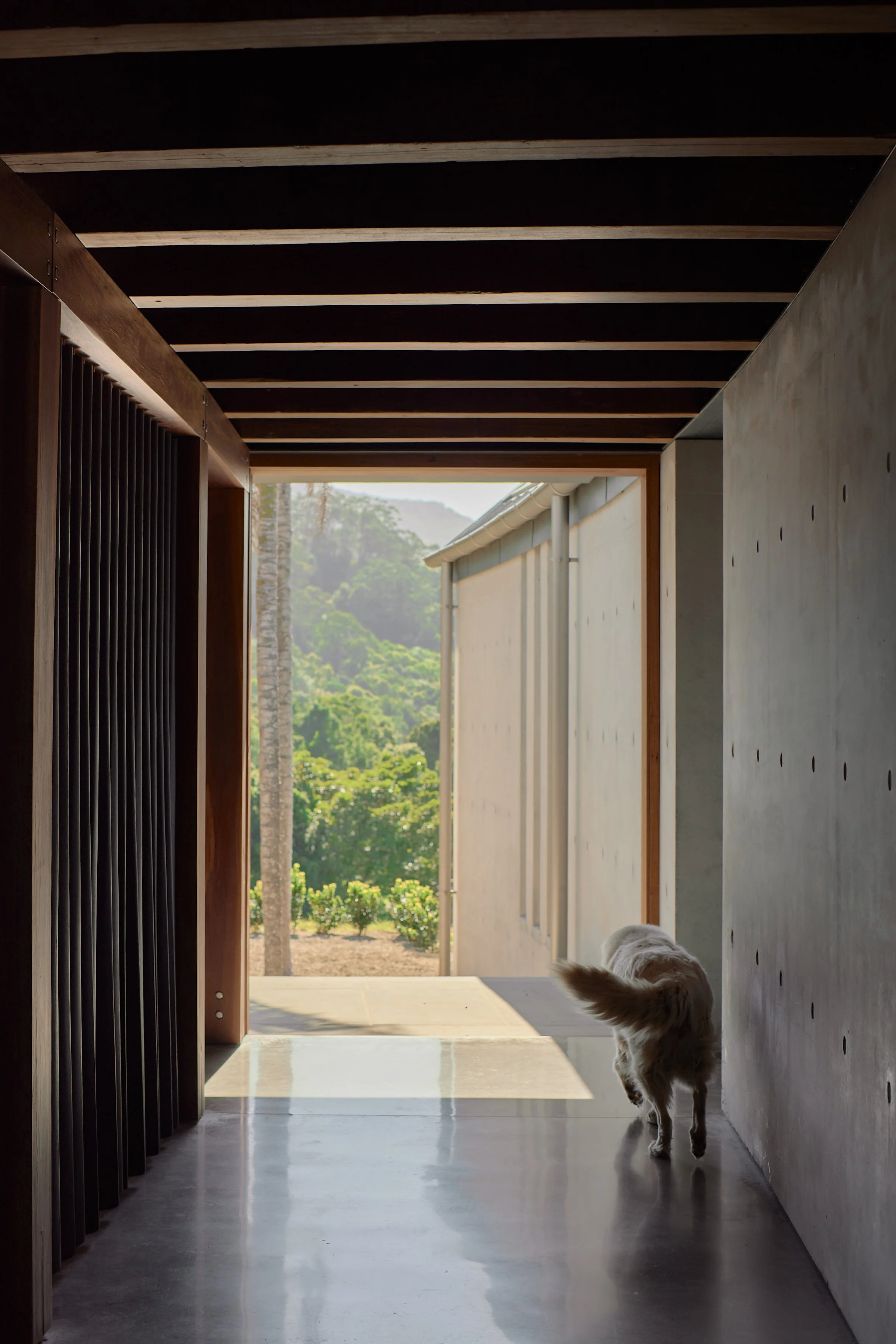
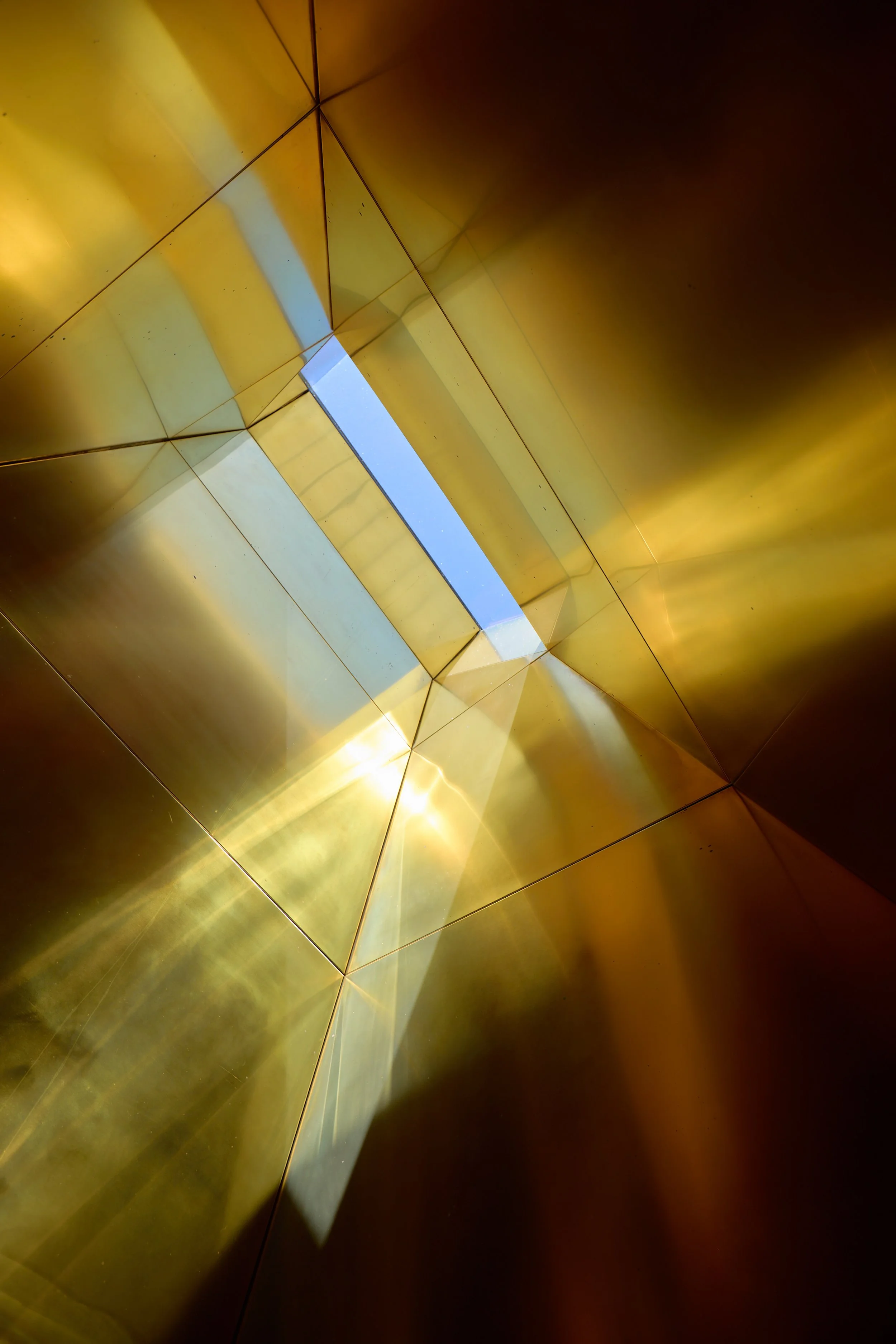
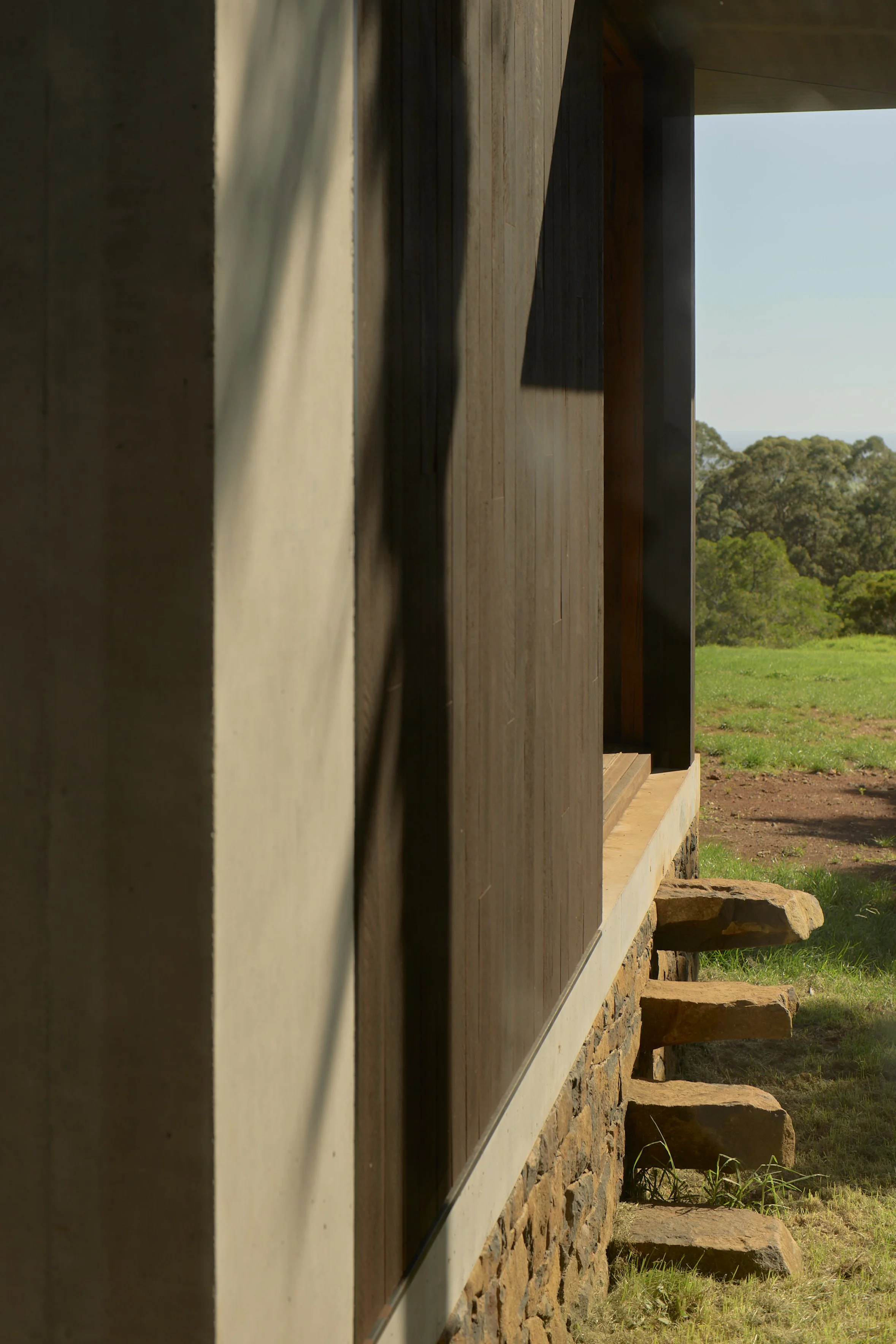
A concrete spine wall runs through the centre of the house, down its entire length, separating public and private areas, acting as both structure and organiser. The spine’s thermal mass also supports passive heating and cooling strategies, working together with geothermal hydronic heating, cross‑ventilation, and carefully oriented glazing and overhangs to maintain comfort year‑round.
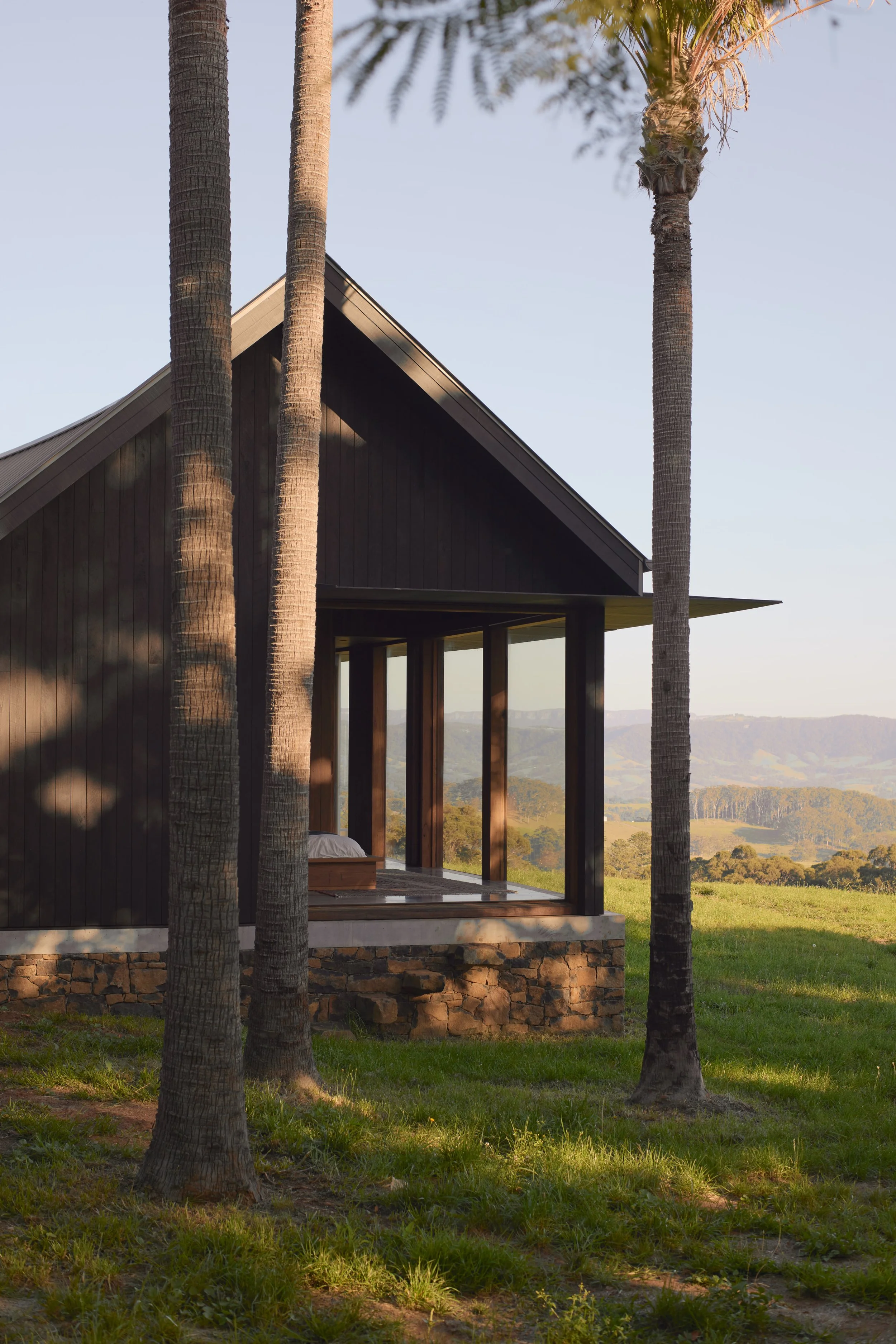
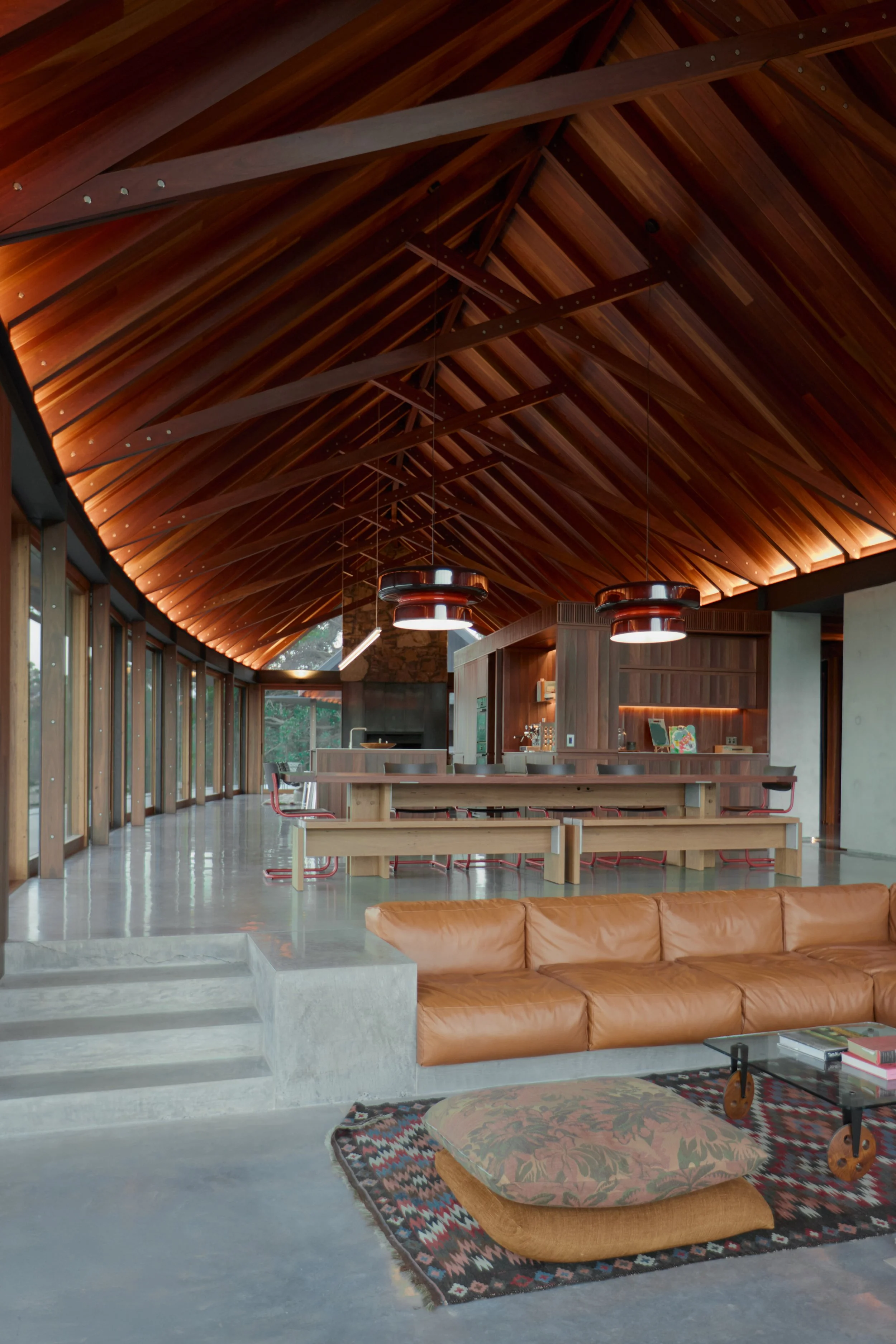
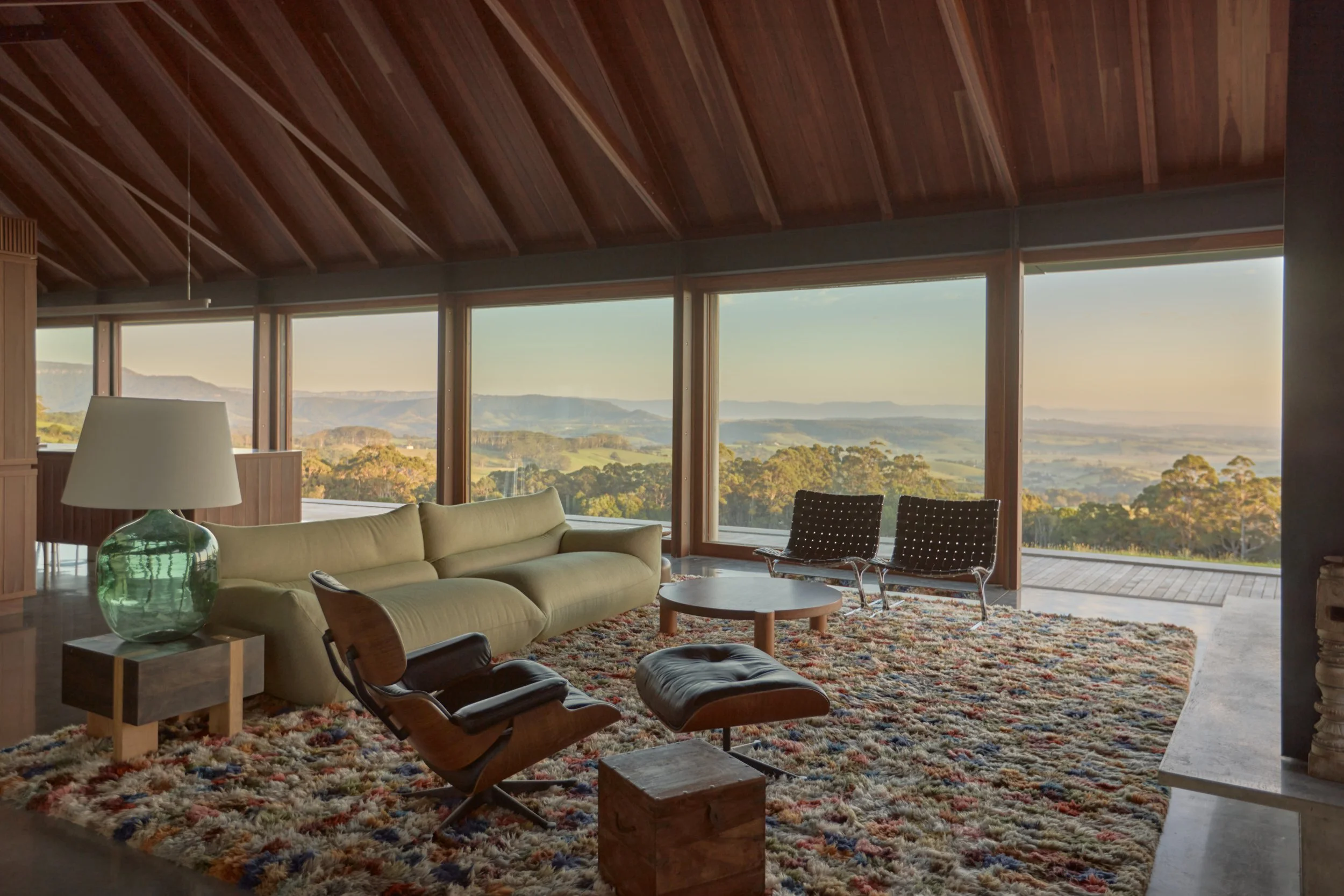
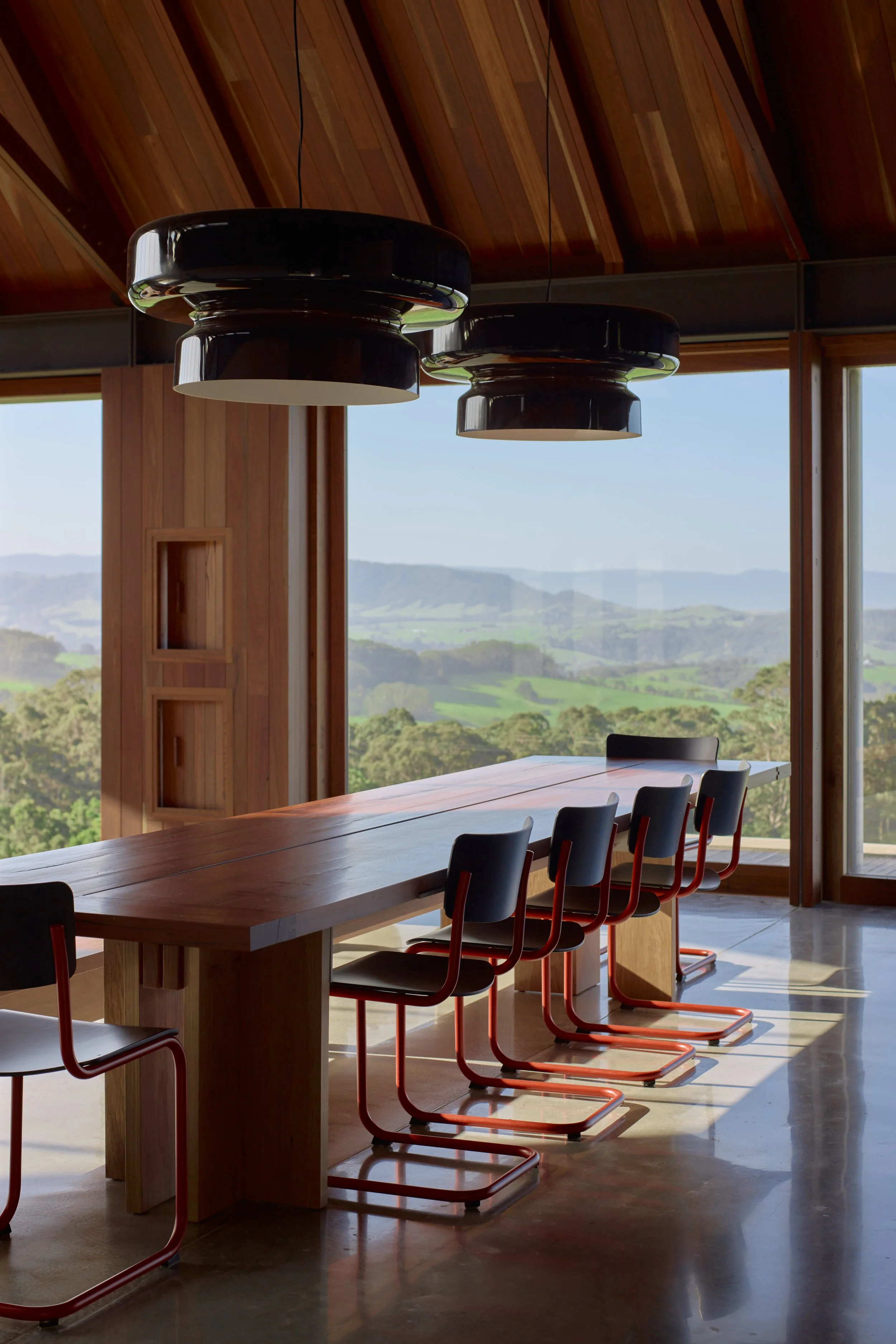
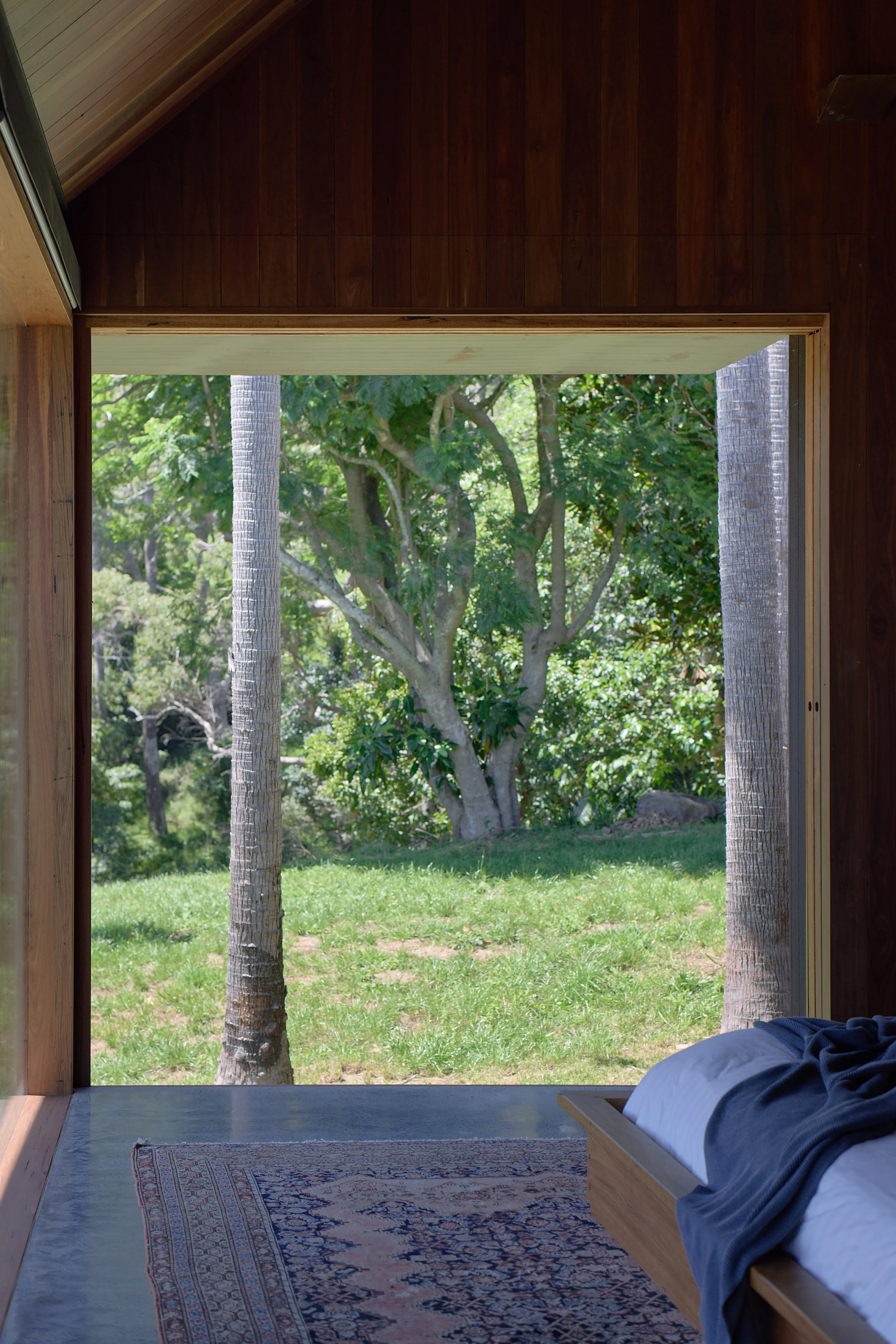
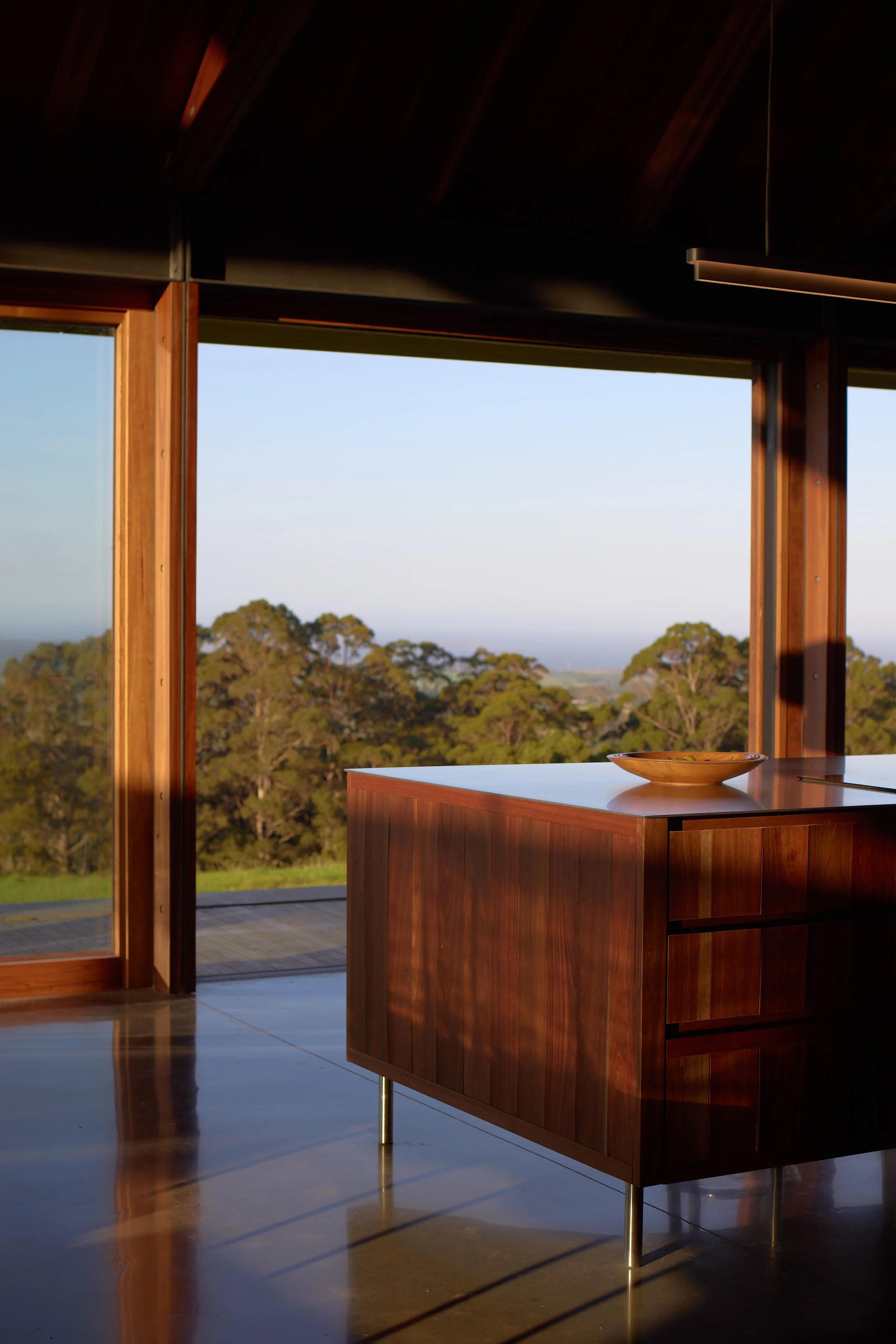
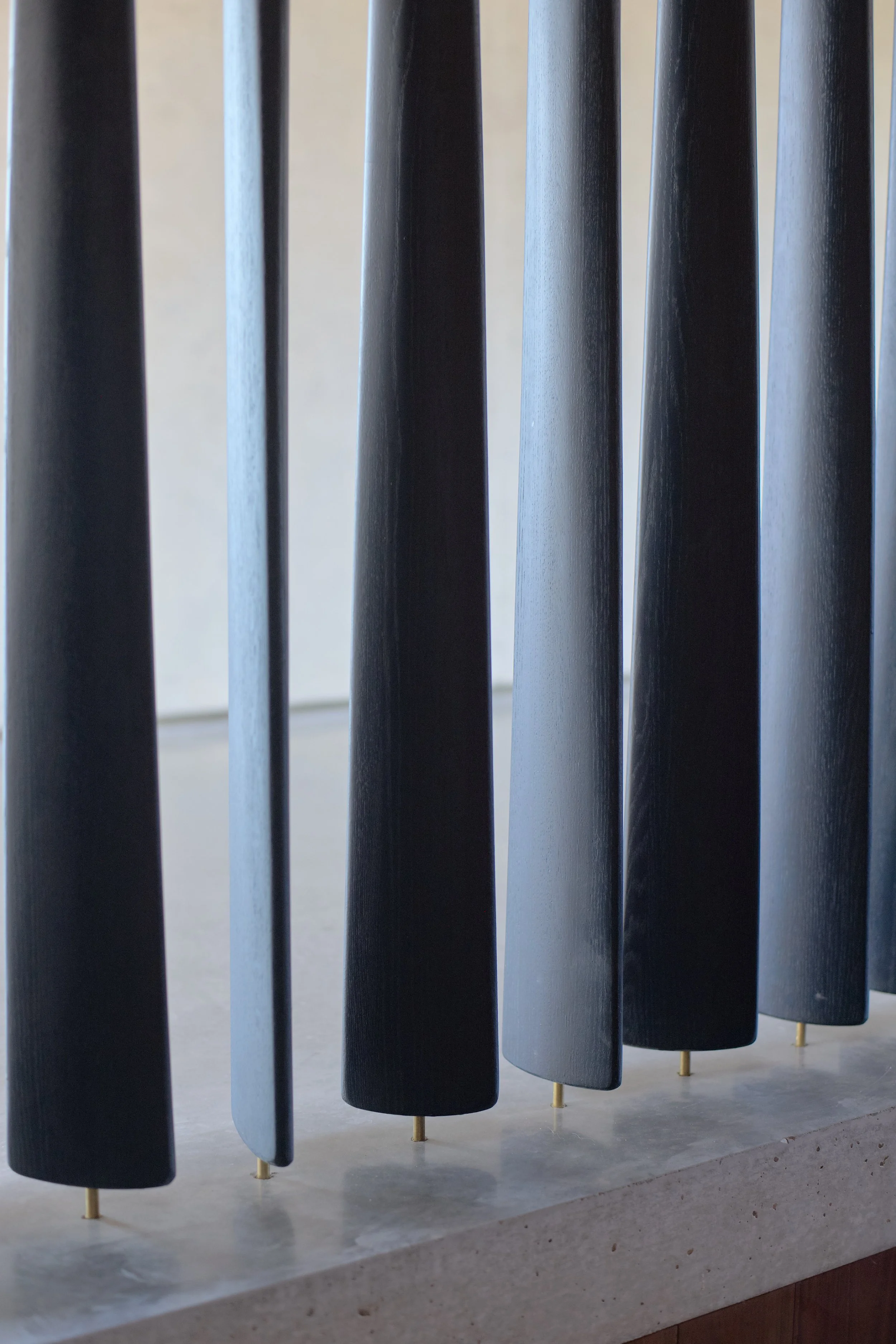
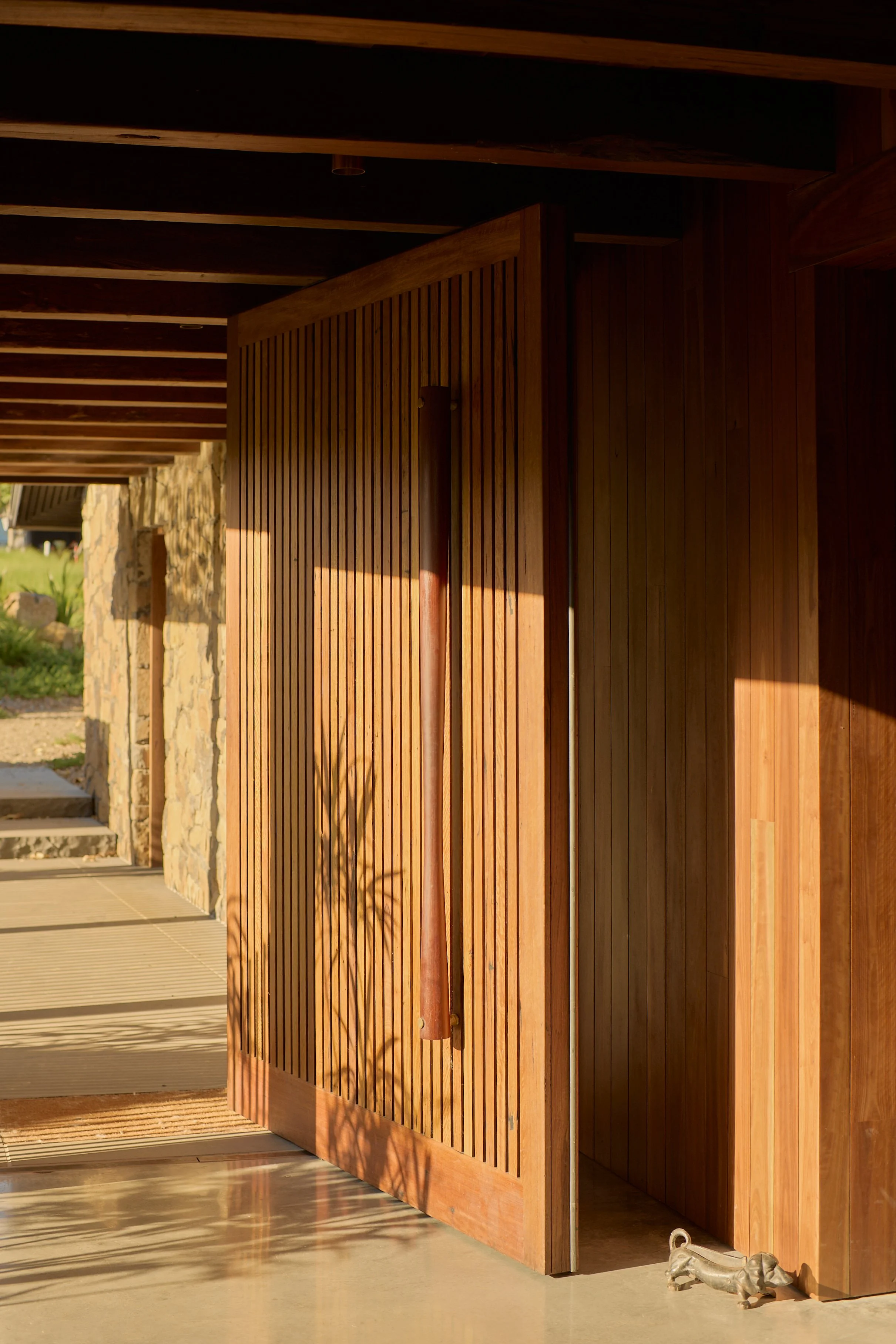
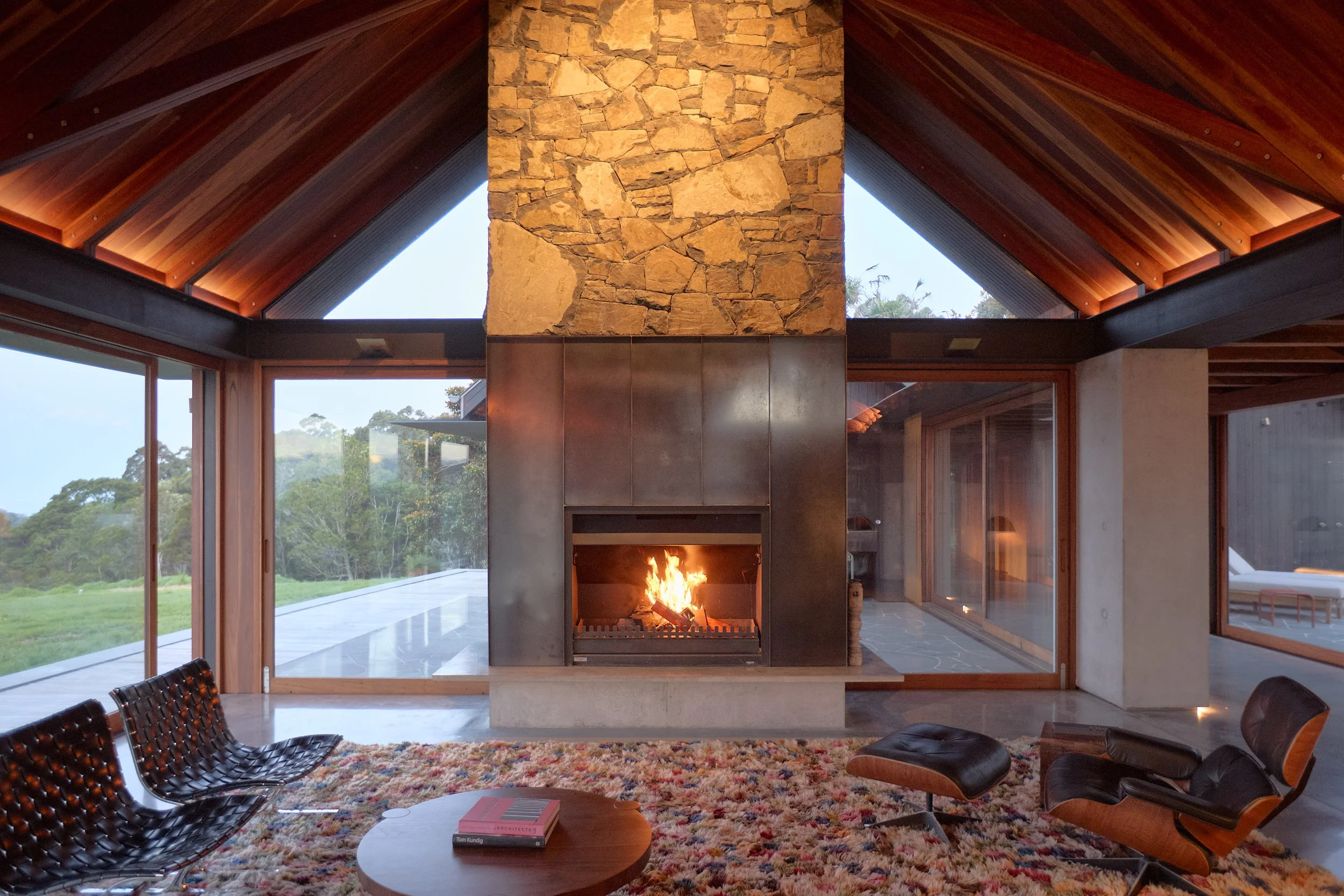
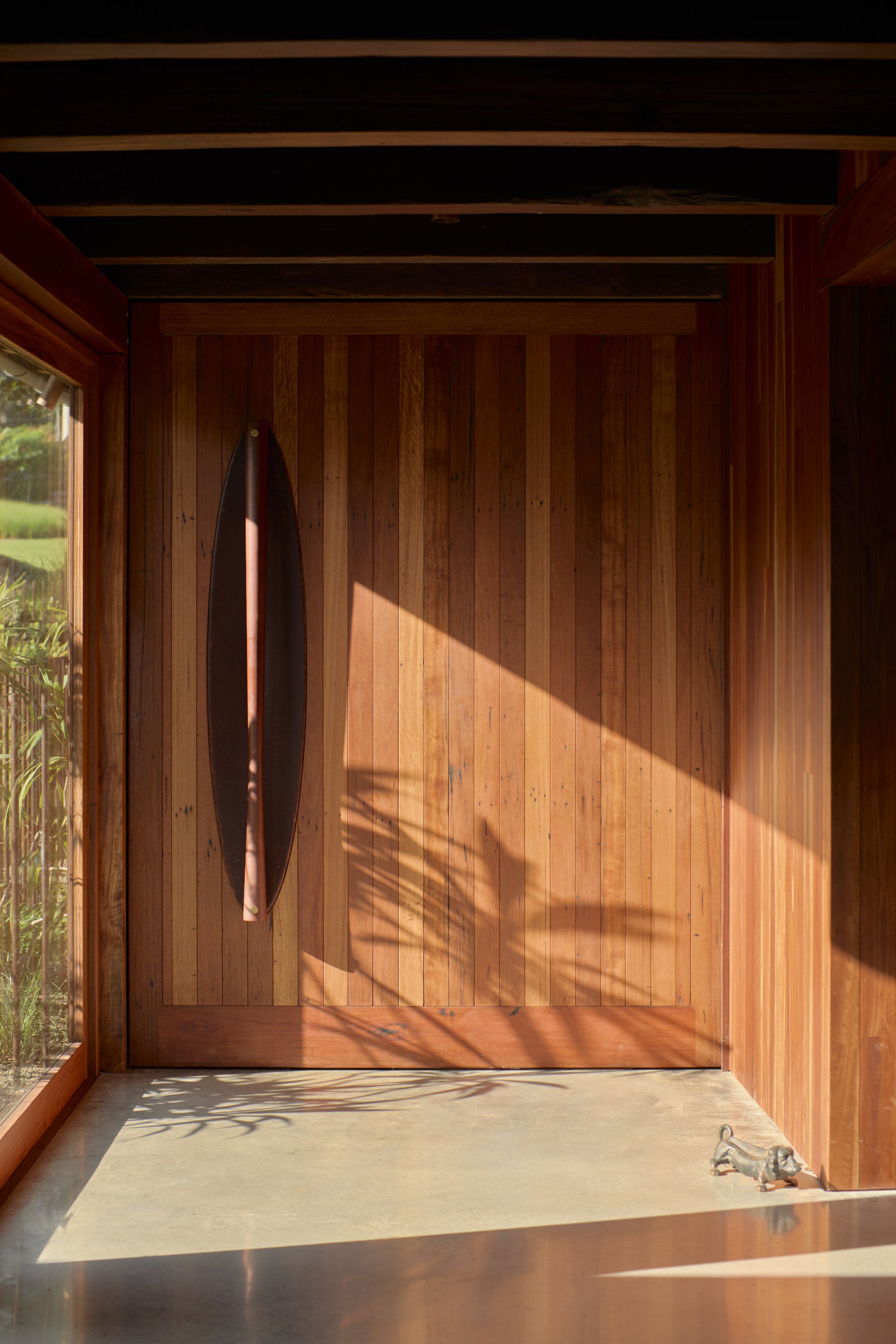
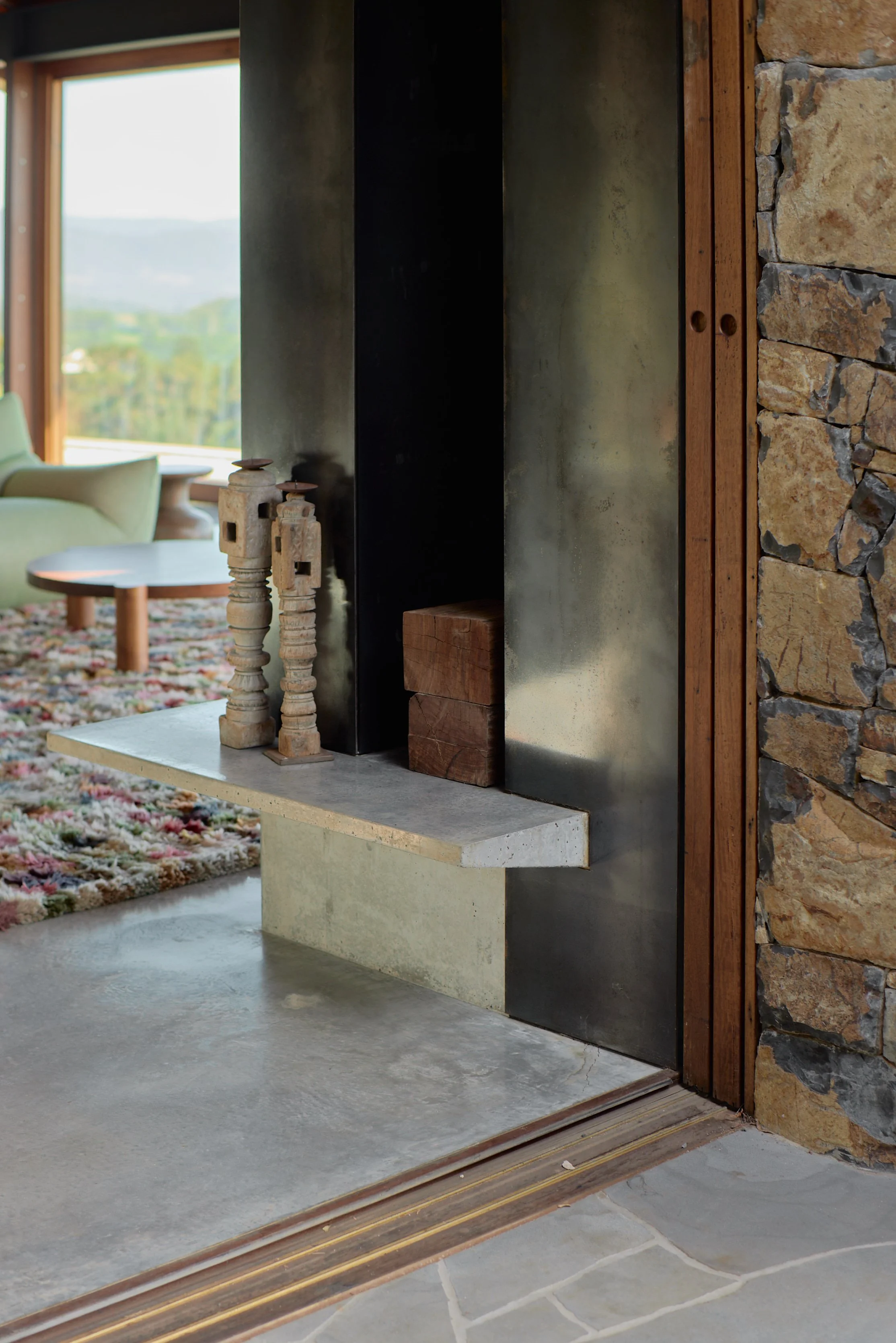
Concrete, and hardwood were chosen for their longevity and tactile presence. Most of the timber in the house is recycled, both from the cottage that was previously on the site, and from the stockpile of beams and posts the clients had spent years collecting from demolished warehouses and wharves in preparation for the build.
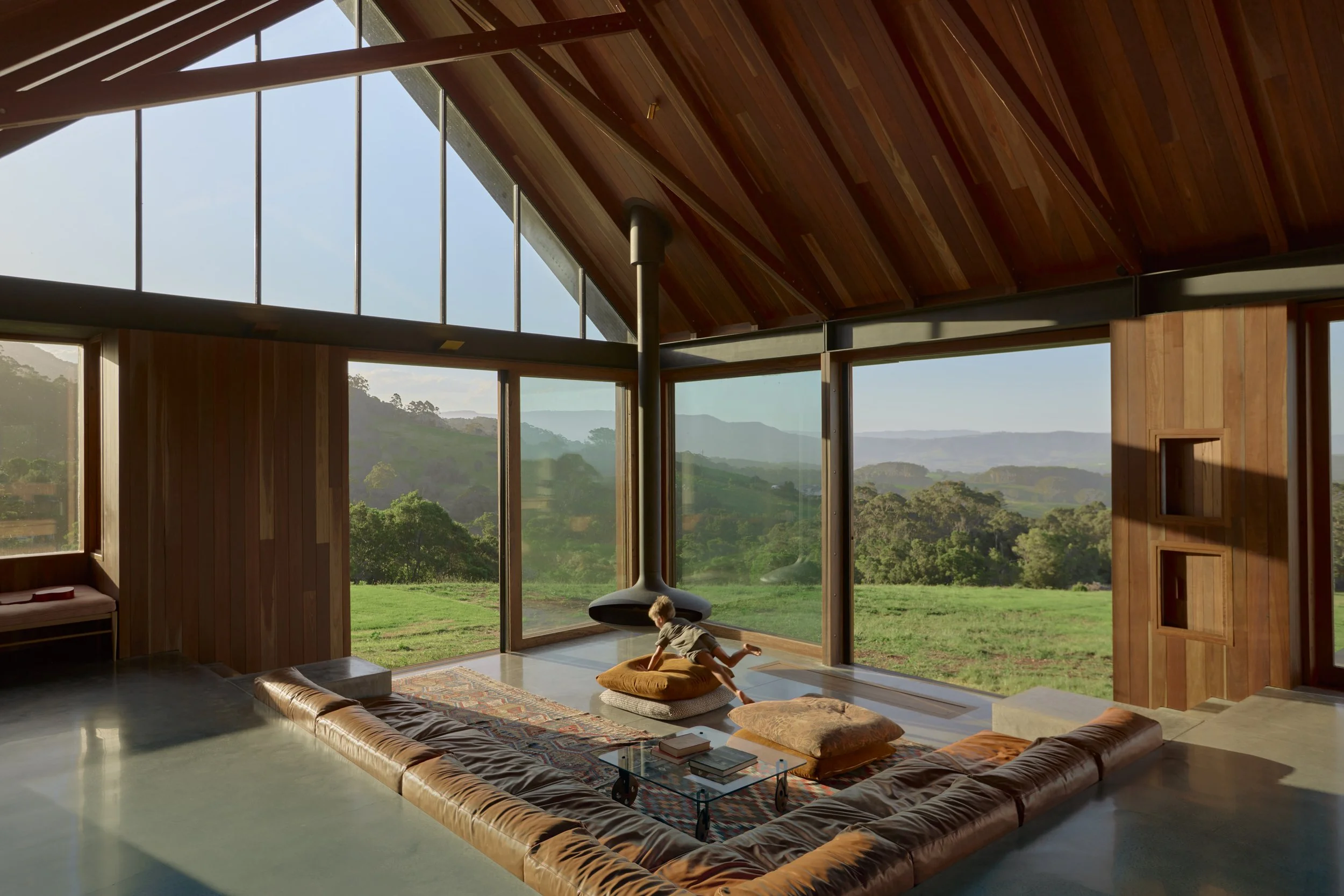
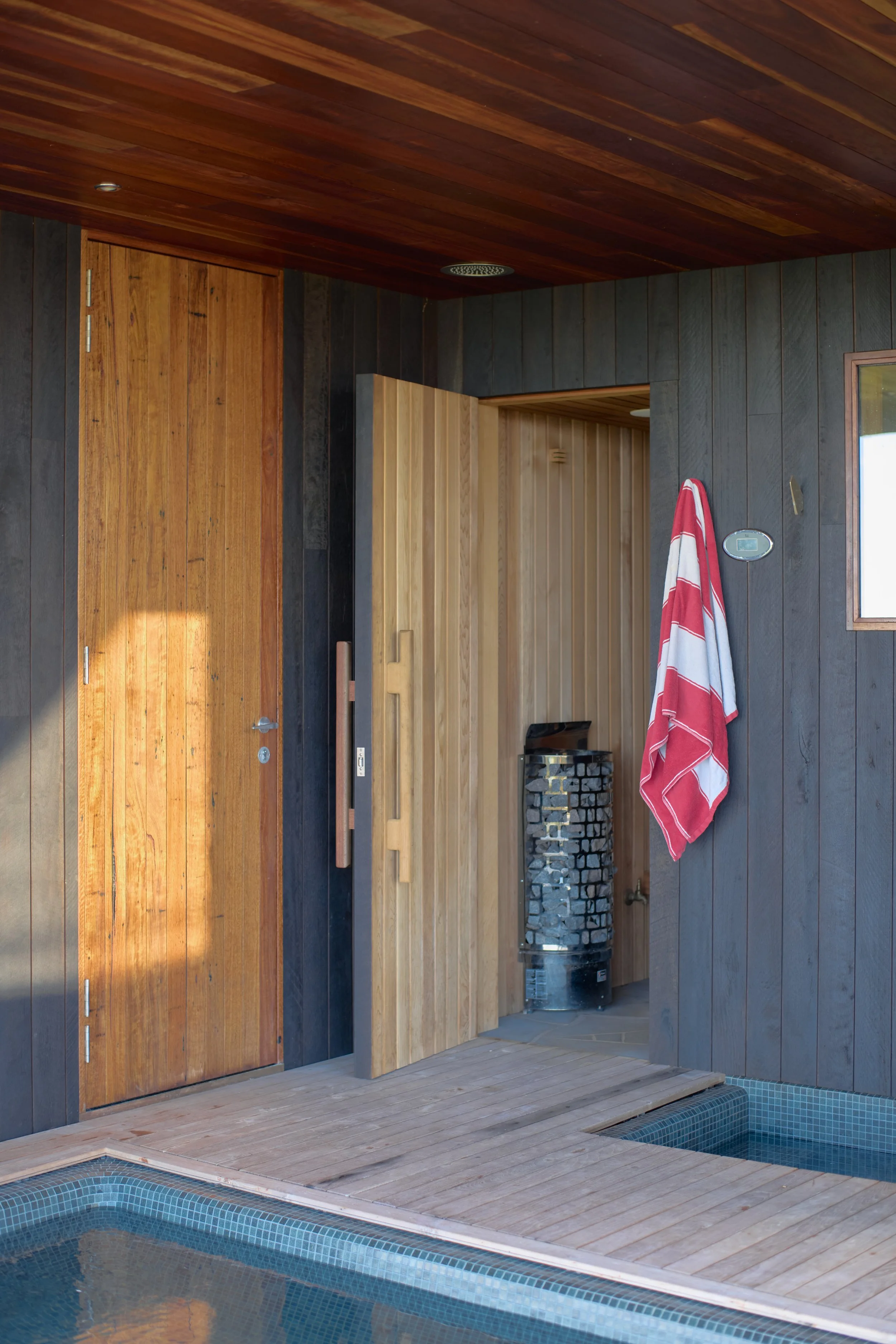
The gently tapering main pavilion contains the family room, kitchen, dining and sunken living areas. A separate pavilion to the south provides a children’s playroom that can evolve over time. The children’s bedrooms are in a separate pavilion to the east across the corridor from a master suite in its own pavilion to the north, offering privacy while maintaining a strong relationship to the landscape through indoor–outdoor bathing and controlled outlooks.
The landscape architecture by Michael Bates is critical to the project. Outdoor rooms are positioned to respond to wind and sun, ensuring the family can live outside throughout the year. The pool in the central courtyard is designed to read more like a pond surrounded by native planting catching sun while being protected from winds that can be quite cold even in summer
The completed home is a testament to the skill of builder Rick Hall, and the dedication of the clients to a robust and climate responsive architectural vision, organised around courtyards, shaped by an ancient fig tree, and deeply connected to the landscape that the family loves.
Project Architect: Daniel Weber
Builder: Rick Hall
Engineer: Cantilever Engineers
Landscape Designer: Michael Bates
Photography: Zella Casey Brown